


Couch seat covers are one of the smartest, most practical ways to protect your furniture from spills, pet hair, and general wear and tear. But they're so much more than just a protective layer. They're also an incredibly affordable method to completely refresh your living space, giving a tired old sofa a second chance or safeguarding a brand-new one from day one.
Why Couch Covers Are a Smart Choice for Australian Homes
Think of a couch cover as a durable, stylish jacket for your sofa. It’s the simplest way to shield your furniture from the realities of everyday life—like muddy paws after a run at the dog park, accidental spills during family movie night, or the gradual fading from that strong Australian sun. For many of us, it’s a practical necessity that extends the life of a significant household investment.
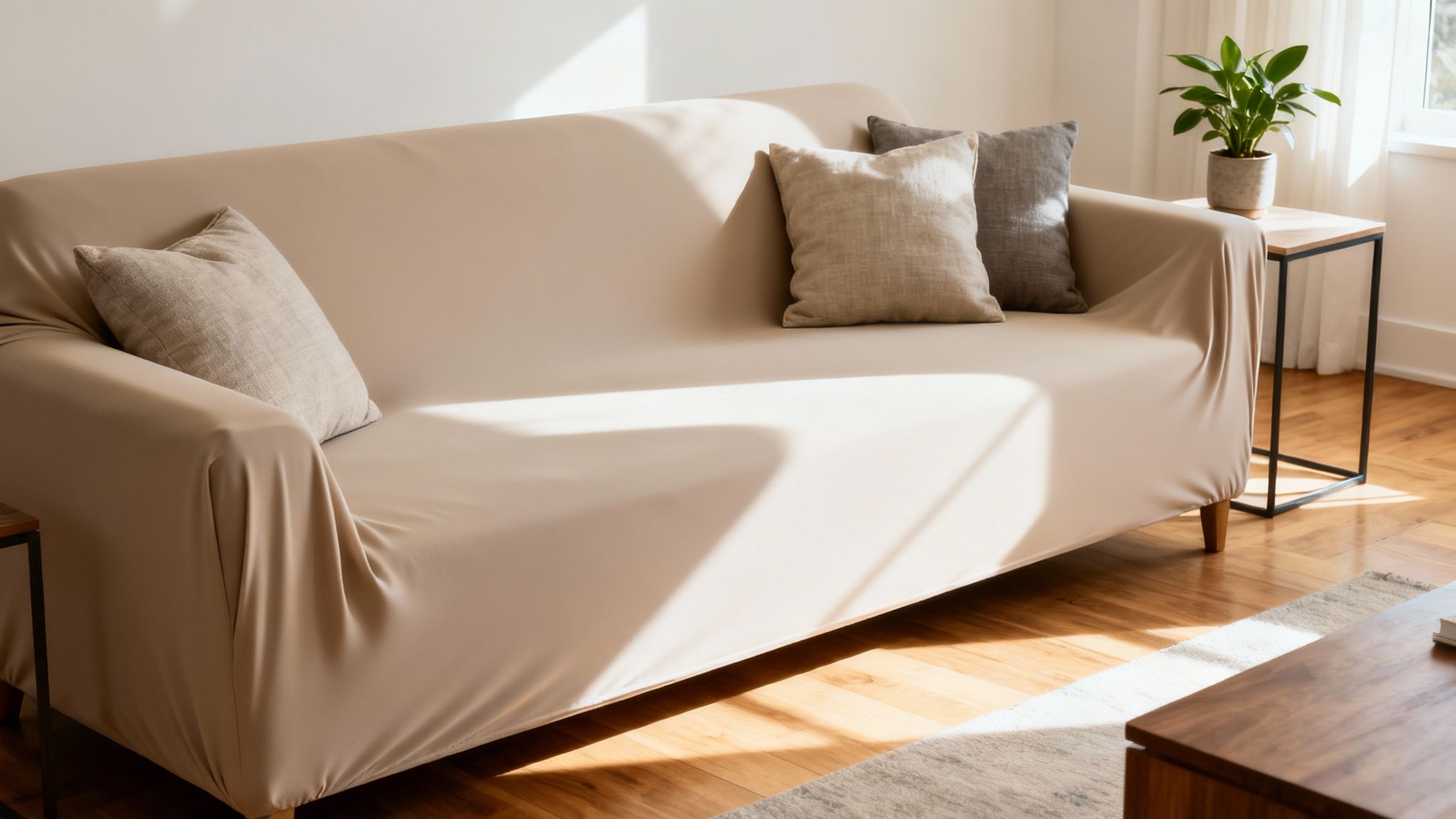
This kind of protection is especially relevant when you consider how much we Aussies invest in our living spaces. The local furniture market is massive, with revenue for seats and sofas alone projected to hit around US$1.49 billion by 2025. It’s a clear sign that we need smart solutions to preserve these valuable assets.
A Tool for Transformation
Beyond pure protection, couch seat covers are a powerful design tool. They give you the freedom to change your living room’s colour scheme with the seasons, update a dated pattern, or simply breathe new life into a tired but beloved piece of furniture. It’s an instant makeover without the hefty price tag of buying a brand-new lounge.
A high-quality cover can make an old sofa look brand new, offering a sustainable and cost-effective alternative to replacement. This approach not only saves money but also prevents perfectly good furniture from ending up in landfill.
This strategy is a key part of many budget-friendly room makeover ideas, proving you don’t need a massive budget to achieve a fresh, modern look. Whether you’re a family with young children, a devoted pet owner, or an Airbnb host wanting to keep furnishings pristine, a cover is a smart, versatile choice. Our guide on the impactful ways sofa covers contribute to furniture longevity explains this in a bit more detail.
Choosing the Perfect Fabric for Your Lifestyle
Selecting the right fabric for your couch seat covers is a bit like choosing the perfect outfit for your sofa. It needs to look great, feel comfortable, and stand up to the occasion of your daily life. This single decision shapes the cover's durability, feel, and how easy it is to keep clean, so it’s worth taking a moment to match the material to what your household actually needs.
The fabric is where function truly meets style. Are you after something that can handle muddy paws and accidental spills, or are you looking for a touch of elegance to give your living room a quick refresh? Let's break down the most popular options to find your perfect match.
Stretch Spandex Blends: The All-Rounder
Think of high-stretch spandex blends as the activewear for your couch. These materials are famous for their incredible elasticity, letting them hug every curve and corner of your sofa for a smooth, almost painted-on look. It’s this snug fit that stops the annoying bunching and shifting you often get with looser slipcovers.
Because they’re usually blended with polyester, these covers are also exceptionally tough and resistant to wrinkling and shrinking. They are a fantastic, practical choice for busy households, offering a sleek, modern finish that’s incredibly easy to live with. If your cover is a stretch material, knowing how to sew stretch fabrics can be a handy skill for any future repairs or tweaks.
Jacquard Fabrics: An Elegant Upgrade
For those chasing a more textured and luxurious look, jacquard is an unbeatable choice. Unlike printed designs, the intricate patterns you see in jacquard fabric are woven directly into the material itself. This clever technique not only creates a rich, tactile feel but also makes the pattern far more durable and much less likely to fade over time.
Jacquard couch seat covers bring a real sense of depth and sophistication to a room. They often feel thicker and more substantial than standard stretch blends, providing an elevated look that can turn a plain old sofa into a genuine statement piece.
Performance Fabrics: For Real-Life Messes
Let's be honest, life is messy, especially in homes with kids and pets. This is where performance fabrics, particularly waterproof or water-resistant options, are an absolute game-changer. These materials are engineered with a protective barrier that stops liquids from seeping through to your precious sofa cushions.
A waterproof couch cover acts as a shield, turning a potential stain disaster into a simple wipe-clean situation. For families, pet owners, or Airbnb hosts, this feature isn't a luxury—it's peace of mind.
This protective quality makes them an invaluable investment, safeguarding your furniture from spills, pet accidents, and all the little mishaps of everyday life. You can finally relax, knowing your sofa is protected underneath.
Natural vs. Synthetic Fibres
The choice between natural and synthetic fibres often comes down to personal preference and the demands of your lifestyle. Each type brings its own distinct advantages to the table.
-
Natural Fibres (like Cotton): Prized for their softness and breathability, cotton covers offer a comfortable, relaxed feel. They are gentle on the skin and tend to have that classic, inviting look. To dig deeper into their benefits, check out our detailed guide on cotton sofa slipcovers. The trade-off? They can be more prone to wrinkling and might not offer the same level of stain resistance as synthetics.
-
Synthetic Fibres (like Polyester): These are the true workhorses of the fabric world. Polyester is known for its exceptional durability, colour retention, and resistance to stains and fading. It’s an incredibly practical choice for high-traffic areas and is ridiculously easy to clean, making it a dream for busy family life.
Your fabric choice is also influenced by broader style trends. For instance, Australian decor tastes have shifted dramatically in recent years. Grey fabric sofas made up around 52% of fabric sofa sales back in 2019, but that figure plummeted to just 10% by 2025. This rapid change in colour preference is driving huge demand for couch seat covers, as people look for clever ways to update their non-neutral sofas without having to buy brand-new furniture.
Couch Seat Cover Fabric Comparison
Choosing a fabric can feel overwhelming, but breaking it down by its strengths and weaknesses makes the decision much clearer. We've put together this quick comparison table to help you pinpoint the best material for your home and lifestyle.
| Fabric Type | Best For | Feel & Appearance | Durability | Care Instructions |
|---|---|---|---|---|
| Stretch Spandex Blend | Busy families, modern aesthetics, and achieving a snug, seamless fit. | Smooth, sleek, and form-fitting with a modern, clean look. | High. Resists wrinkling, shrinking, and wear. | Machine washable on a cold, gentle cycle. Tumble dry low. |
| Jacquard | Homes with pets, hiding minor wear, and adding a touch of elegance. | Textured, thick, and luxurious with woven-in patterns for depth. | Very High. The woven design is incredibly durable and fade-resistant. | Typically machine washable. The texture helps hide wrinkles. |
| Waterproof Fabric | Households with kids, pets, or for protecting furniture in rental properties. | Often a smooth polyester finish with a protective backing. | High. Designed to withstand spills and frequent cleaning. | Wipe clean for minor spills; machine washable for bigger messes. |
| Cotton Blend | Warmer climates and those who prioritise a soft, natural, breathable feel. | Soft, comfortable, and relaxed with a classic, inviting appearance. | Medium. Comfortable but can be more prone to stains and wrinkles. | Check label; usually machine washable on cold. May require low-heat iron. |
Ultimately, the best fabric is the one that fits seamlessly into your daily life. Whether you need the bulletproof protection of a waterproof cover or the breathable comfort of cotton, matching the material to your needs ensures you’ll love your new cover for years to come.
How to Measure Your Couch for a Flawless Fit
Getting your new couch cover to look sharp and seamless all comes down to one crucial step: measuring. Nothing screams "ill-fitting cover" like fabric that's too tight across the arms or saggy in the middle. Think of it like buying a new pair of jeans—you wouldn't just guess the size and hope for the best.
Taking a few minutes to measure your sofa is the single most important thing you can do to get that sleek, almost-custom look. It’s a quick job, and all you need is a flexible measuring tape (like a tailor’s tape), a pen, and some paper. We’ll walk you through exactly what to measure to nail the perfect size.
The Key Measurements for a Perfect Cover
To get a true sense of your sofa’s dimensions, you need to look beyond just the seating area. The overall shape, including the arms and back, plays a massive role in how snugly the cover will fit without pulling or bunching up.
Here are the essential measurements you need to grab:
- Total Sofa Length: This is the big one. Measure your couch from the outer edge of one armrest all the way across to the outer edge of the other. Make sure you’re measuring at the absolute widest point. This is the single most important measurement for standard sofa covers.
- Seat Width and Depth: For individual couch seat covers, you’ll need to measure the width and depth of each seat cushion. If your cushions are T-shaped (jutting out in front of the armrests), be sure to measure them at their widest and deepest points.
- Armrest Height and Width: While not as critical for super-stretchy covers, knowing these numbers helps you anticipate the fit. Measure from the top of the arm down to the seat cushion for height, then measure across the top for width.
Jot down each number as you go. It never hurts to measure twice, just to be sure. A simple slip-up here can mean ordering the wrong size.
Getting the measurements right isn't just a chore; it’s the foundation of a great-looking result. The table below breaks down exactly what to measure and why it's so important for getting that professional finish.
Essential Couch Measurement Checklist
| Measurement | How to Measure | Why It's Important |
|---|---|---|
| Total Length | Measure from the outer edge of one armrest to the outer edge of the other, at the widest point. | This is the primary measurement that determines the overall cover size (e.g., 2-seater vs. 3-seater). |
| Seat Cushion Width | Measure the width of each individual seat cushion from side to side. | Crucial for separate cushion covers to ensure they aren't too tight or baggy. |
| Seat Cushion Depth | Measure each cushion from the front edge to the back where it meets the sofa frame. | Ensures the cover has enough fabric to be tucked in deeply for a secure, non-slip fit. |
| Back Height | Measure from the very top of the sofa's backrest straight down to the floor. | Important for high-backed sofas to guarantee the cover won't be too short at the back. |
| Armrest Width | Measure across the top of the armrest at its widest point. | Helps ensure the cover can accommodate bulky or oversized arms without straining the seams. |
Taking a few moments to fill out this checklist is your best insurance against the disappointment of a cover that just doesn't fit.
Pro Tip: If your measurements fall between two sizes, it's almost always better to go for the slightly larger option. You can easily tuck away a little extra fabric for a neat finish, but a cover that’s too small simply won’t go on.
This simple process helps you see how your lifestyle choices, fabric selection, and the right fit all work together.
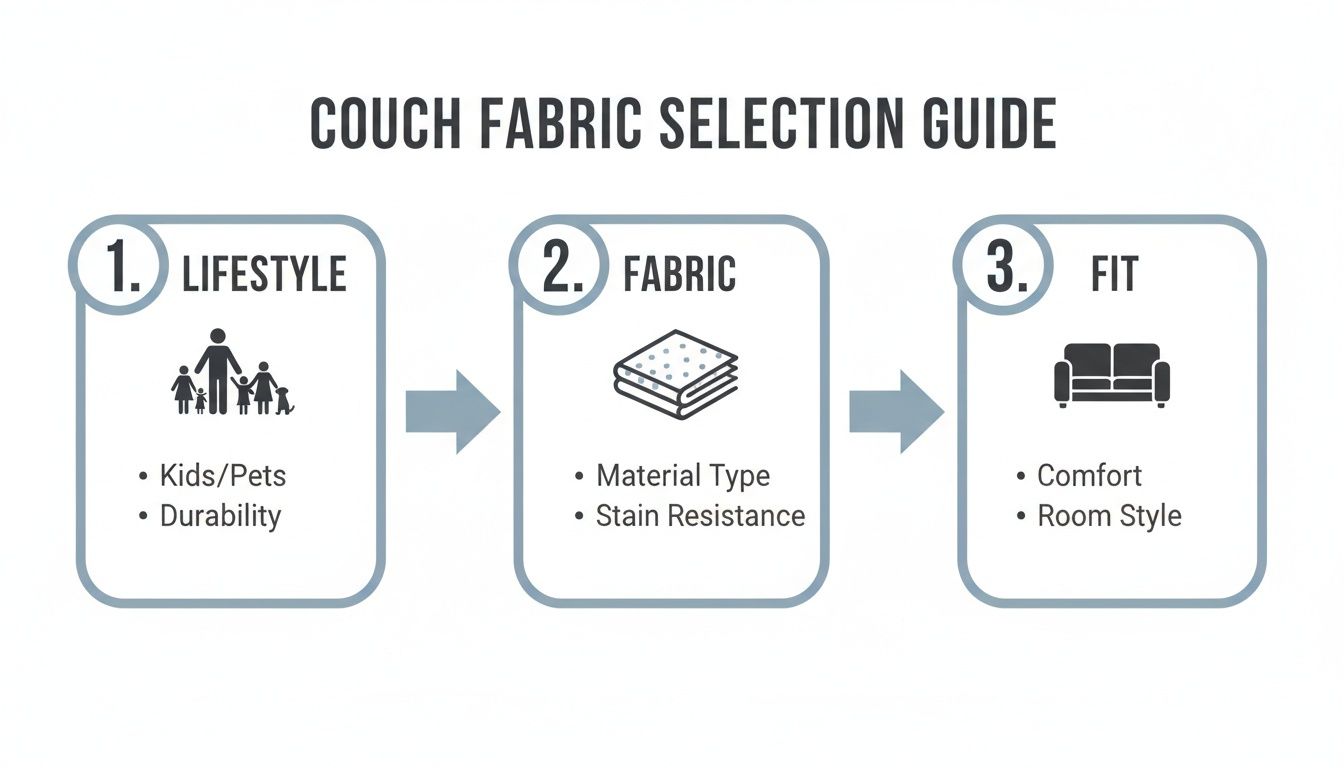
As you can see, getting the fit right is the final piece of the puzzle, bringing your practical needs and style preferences together for a perfect result.
Measuring Special Sofa Types
Not every couch is a straightforward rectangle. If you’ve got a more complex shape, you'll need to take a couple of extra measurements to get it right.
L-Shaped or Sectional Couches
This is where a lot of people get tripped up. For an L-shaped sofa, you have to treat it like two separate couches. Measure the length of the main sofa section first, then measure the length of the chaise or corner section on its own. You'll need to buy a specific sectional cover set, which comes in multiple pieces designed to fit this unique shape.
Sofa Beds
When measuring a sofa bed, make sure you take all the standard measurements while the bed is folded away in its sofa position. The cover is designed to fit the couch in its everyday seating configuration, not when it’s pulled out as a bed.
By following these simple steps, you can measure your furniture with confidence and pick out a couch cover that gives you that truly flawless, professional look.
Getting That Wrinkle-Free, Custom Look
You've picked the perfect cover and measured your couch like a pro. Now for the really satisfying part: fitting it so it looks less like a temporary cover and more like brand-new upholstery. Getting that smooth, professional finish is all in the final touches.
This isn't about wrestling with the fabric. It's more about technique. The whole point is to banish wrinkles and make sure the cover stays put, even with the whole family piling on. A well-fitted cover shouldn't sag, bunch up, or slip off every time you sit down. With a couple of simple tricks, you can get a result that looks sharp and stays that way.
Anchoring the Fabric with Foam Inserts
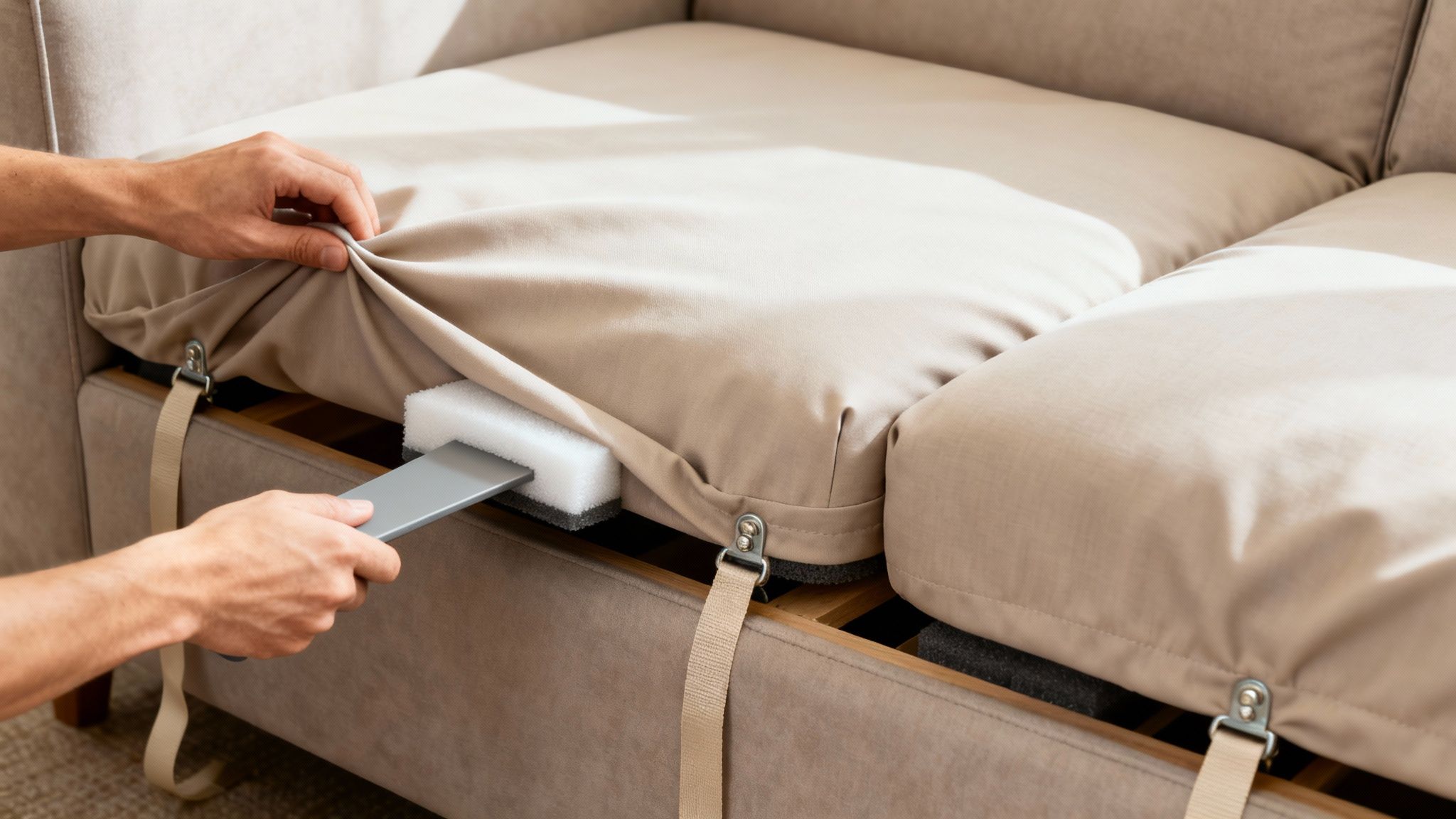
The secret weapon for a flawless fit is often the small foam inserts that come with your cover. Think of these little styrofoam rolls as wedges that lock the material in place. They’re designed to anchor the fabric deep into the crevices of your sofa, creating the tension needed to keep everything taut and smooth.
Start by draping the cover over your sofa and getting it roughly aligned. Then, begin tucking all the excess fabric down into the gaps between the seat cushions and the sofa's back and arms. Once you've pushed the material in, slide the foam inserts firmly into those same crevices right on top of the fabric you just tucked.
Pro Tip: Don't be afraid to push those foam inserts deep into the sofa's gaps. The more securely they're wedged in, the less likely your cover is to come untucked from daily use.
For a really crisp look, some people use a thin, blunt tool like a wooden spoon or a ruler to help guide the fabric into tight corners before adding the foam. This helps create clean, defined lines for a truly professional appearance.
Using Straps for a Secure Hold
Many couch seat covers also come with elastic straps underneath. These are designed to be fastened under the sofa, pulling the whole cover taut from below. This is a crucial step for stopping the bottom edges from riding up or looking loose and untidy.
After you've tucked in the foam inserts, gently tip your sofa forward or have someone help you lift one side to get underneath. Find the matching straps and clip them together, pulling them tight enough to create a gentle, even tension across the fabric. This final step really pulls everything together, securing the cover from all angles.
Troubleshooting Common Fitting Issues
Even with the best intentions, you might run into a few common frustrations. Here’s how to fix them:
- Sagging or Bunching Fabric: This usually just means the cover isn't pulled tight enough or the foam inserts aren't deep enough. Have another go at tucking the fabric and really push those foam anchors further into the crevices. Tightening the under-sofa straps can also pull out that last bit of slack.
- Corners Won't Stay Put: If the corners on the armrests keep slipping off, you may need to pull more fabric towards that area before you tuck it in. Double-check that the cover is centred properly on the sofa so there's an even amount of material to work with on both sides.
- Wrinkles on the Surface: For stubborn wrinkles, especially right after washing, a quick once-over with a fabric steamer works wonders. Just be sure to check the care label first, but most polyester and spandex blends handle low-heat steaming beautifully, leaving you with a perfectly smooth finish. You can learn even more about achieving that perfect look with our guide to fitted slipcovers for sofas.
Styling and Maintaining Your New Couch Cover
Once your cover is fitted perfectly, it's time to make it feel like a part of your home and keep it looking that way. A new cover isn't just a practical shield; it’s a blank canvas ready to transform your living room's entire vibe. With the right care and a few simple styling tricks, you can make sure it stays fresh and becomes the true centrepiece of your space.
Proper maintenance is the secret to making your cover last. The great news is that most modern couch covers, especially the popular polyester and spandex blends, are designed for the chaos of real life and are incredibly easy to clean. Just be sure to follow the care instructions—ignoring them can lead to shrinkage or damage—but a simple routine will keep your cover looking as good as the day it arrived.
Keeping Your Cover Clean and Fresh
The absolute beauty of a quality couch cover is that you can just pop it in the wash—a feature that owners of traditional sofas can only dream about. Before you do anything, though, always check the manufacturer's care tag. It’ll have specific instructions tailored to your exact fabric.
That said, most synthetic blend covers follow a pretty similar cleaning routine:
- Prep It: Carefully strip the cover off your sofa, making sure you’ve taken out any foam inserts first. A good shake outside is a great way to get rid of any loose crumbs, dust, or pet hair.
- Wash It: Pop the cover in your washing machine on a gentle or delicate cycle using cold water. Using hot water is a common mistake and the fastest way to shrink certain fabrics or ruin their elasticity.
- Dry It: The safest way to dry your cover is to air dry it. You can hang it on a clothesline or drape it over a clothes horse. If you absolutely have to use a dryer, choose the lowest heat setting possible or a tumble-dry-low option to prevent any damage.
For those little everyday spills, getting to them quickly is your best friend. Blot the spill with a clean, dry cloth to soak up as much liquid as you can, then use a damp cloth with a tiny bit of mild detergent to gently clean the area.
Transforming Your Space with Styling
Your new couch cover is the foundation. Now for the fun part: accessorising. This is where you get to inject your personality and pull the whole room together. Think of your covered sofa as the main event and your accessories as the supporting cast.
A simple throw blanket is the perfect place to start. Draping a chunky knit or a soft fleece throw over the arm or back of the sofa adds a fantastic layer of texture and a pop of contrasting colour. Not only does it create a cosy, lived-in look, but it’s also perfect for some extra warmth on a chilly evening.
By strategically pairing your couch cover with throw pillows and blankets, you can effortlessly change your living room's entire mood. It’s an affordable way to experiment with seasonal colours or new design trends without committing to a major overhaul.
Next up, pillows. Don't be afraid to mix and match. Combining different sizes, shapes, and textures is what creates real visual interest. For a cohesive look, choose pillows that pick up on other colours in your room—maybe from your rug, curtains, or a piece of wall art. A mix of one or two solid-coloured pillows with a patterned one usually strikes the perfect balance.
The demand for versatile home textiles like couch seat covers is constantly growing, especially here in Australia. With over 180,000 new homes built in 2023 and a home furnishings market valued in the billions, countless households are looking for smart, stylish ways to protect and update their furniture. You can learn more about these market trends and their implications for home decor in this comprehensive Australian furniture market report. By styling your cover, you’re part of a larger trend of making our homes more adaptable and beautiful.
Got Questions About Couch Covers? We’ve Got Answers.
Jumping into the world of couch covers can bring up a few questions. It's smart to get the full picture before you choose, so we’ve pulled together the most common queries to give you clear, straightforward answers.
From worries about leather sofas to how often you should be washing your new cover, let's clear up any doubts so you can buy with total confidence.
Will a Couch Cover Damage My Leather Sofa?
This is a really common and totally valid concern, but the short answer is no, a good one won't. High-quality couch covers are designed to protect your furniture, not harm it. The key for a leather sofa is to choose a cover with a soft, non-abrasive backing. This stops any potential scuffing or friction damage from happening over time.
It’s also a great idea to give your leather sofa a quick clean and make sure it’s completely dry before you pop the cover on. For fabric sofas, a cover is even more of a hero; it acts as a shield against daily wear and tear and can even prevent fading from the sun, which can seriously extend the life of your original upholstery.
How Often Should I Wash My Couch Cover?
Honestly, the perfect washing schedule really depends on your household. It all comes down to how much action your sofa sees and who's using it.
- For homes with pets or young children: Washing your cover every 4-6 weeks is a good rule of thumb. This keeps on top of allergens, dirt, and any little spills before they have a chance to build up.
- For other households: A seasonal wash every 2-3 months is usually more than enough to keep it looking and feeling fresh.
Always check the fabric's specific care label first. Following the manufacturer’s instructions is the absolute best way to keep your cover's colour, quality, and snug fit looking great for years.
Can I Use a Regular Cover on My L-Shaped Couch?
I’d strongly advise against it. While it might seem like a tempting shortcut, trying to force a standard one-piece cover onto an L-shaped or sectional sofa will only end in frustration. The fit will be messy, baggy, and will constantly slip out of place—pretty much the opposite of the polished finish you're after.
L-shaped couches have a unique shape that needs a dedicated multi-piece cover set. These sets come with separate pieces designed for each section of the sofa, making sure every part is fitted correctly. For the best result, measure each section of your couch one by one and buy a cover set made specifically for sectionals.
Are Waterproof Couch Covers Truly Effective?
Yes, they’re incredibly effective, but it helps to know the lingo. There’s a big difference between ‘water-resistant’ and ‘waterproof’.
A water-resistant fabric is treated to make liquids bead up on the surface. This buys you a crucial window of time to wipe away a spill before it soaks in. A truly waterproof cover, on the other hand, is made with a special inner membrane that creates a completely impenetrable barrier, stopping any liquid from getting through to the cushion below. For maximum peace of mind against spills, a waterproof cover is definitely your most reliable choice.
Ready to give your sofa the ultimate protection and a stunning new look? Explore the beautiful and durable range of couch seat covers at The Sofa Cover Crafter. Find the perfect fit, fabric, and colour to refresh your Australian home today. Visit us at https://thesofacovercrafter.com to find your perfect match.