


A recliner cover is hands-down the easiest way to protect your favourite seat from life’s little messes or give it an instant style update. Think of it as a stylish, hard-wearing jacket for your furniture—it shields it from the daily grind while completely refreshing your living space.
Your Guide to Finding the Perfect Recliner Cover
Buyers are deciding between four practical needs, not endless fabric names: something that stays put on leather, something that can handle pets, something that blocks spills, or something that makes an older recliner look properly presentable again. That is the buying decision. If your chair sits in the main living room, appearance usually matters as much as protection. If it’s the family TV chair, durability and washability tend to win.
I’ve found that the covers people like most after a few weeks are rarely the ones with the fanciest product photos. Stretch covers usually look best on day one, waterproof options are the least stressful in messy homes, and multi-piece sets tend to cause the fewest complaints once the chair is being reclined every day. On leather, especially, slick fabrics can drift more than buyers expect; textured weaves and better anchoring almost always behave better in normal use.
Start Here: Pick the Right Type First
- Choose stretch-fit if you want the neatest, most sofa-like appearance and your main goal is to refresh a worn recliner.
- Choose waterproof if kids, pets, drinks, or medical use make easy wipe-down protection more important than a fitted appearance.
- Choose multi-piece if your recliner has a pronounced footrest, control panel, or shape that a one-piece cover tends to bunch around.
- Choose textured fabric if you want better visual depth, a more decorative finish, or a surface that disguises lint and light pet hair better than smooth fabric.
What You Will Learn in This Guide
To help you make a brilliant choice, we’ll walk through the entire process in simple, actionable steps. You'll get a clear understanding of:
- Different Cover Types and Fabrics: We’ll look at everything from ultra-stretchy spandex blends that hug every curve to waterproof materials perfect for homes with kids and pets.
- Measuring for a Flawless Fit: Learn the simple techniques for measuring your recliner’s back, seat, and arms to avoid the common frustration of a saggy, ill-fitting cover.
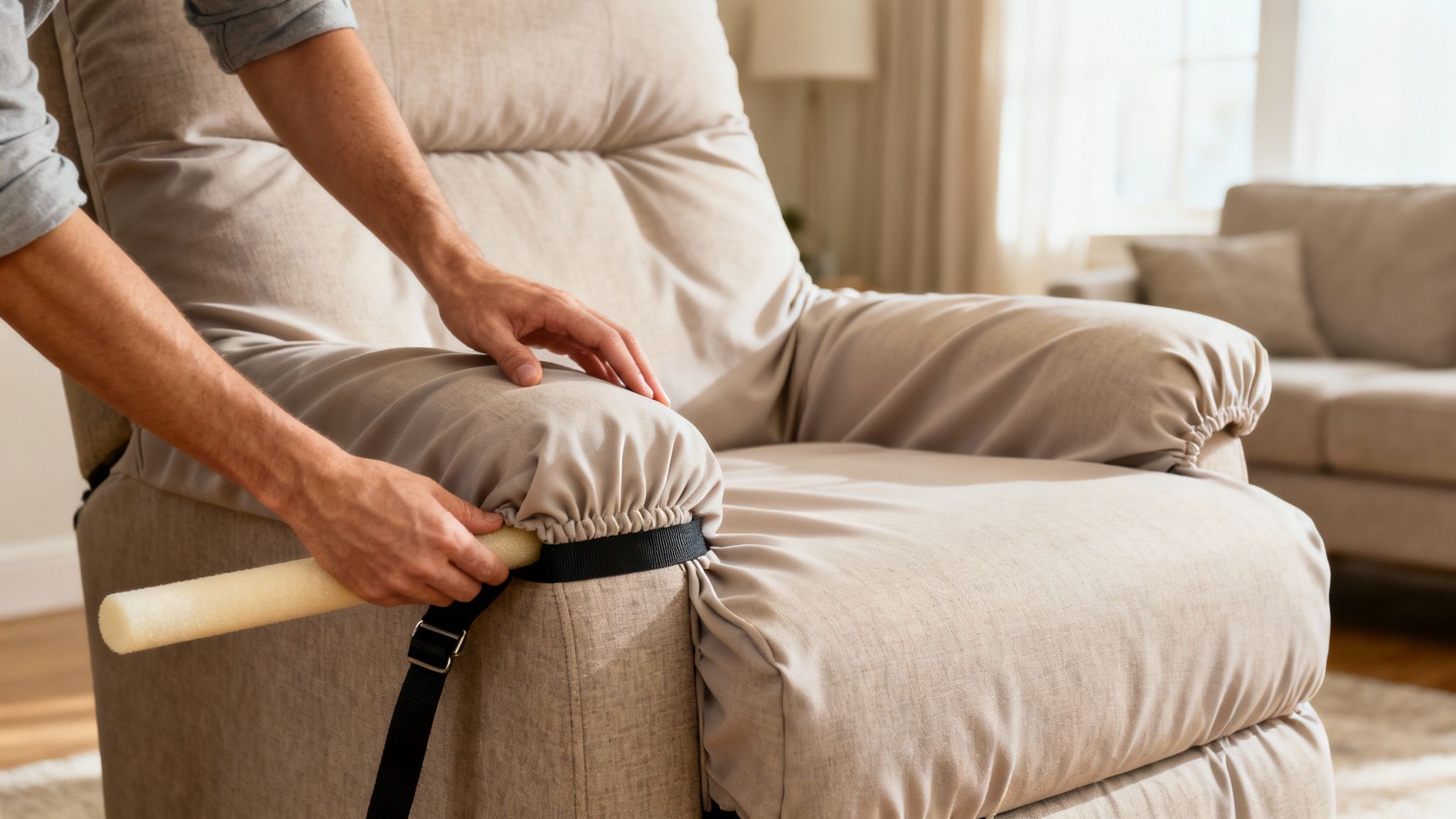
- Simple Installation Techniques: Discover how to use clever foam inserts and straps to get a smooth, non-slip finish that looks like it was custom-made.
- Styling and Care Tips: Get some inspiration for blending your covered recliner into your home’s aesthetic and learn how to keep it looking fresh for years.
By the end of this guide, you’ll have all the know-how you need to choose the perfect recliner chair covers with ease.
How We Evaluated Recliner Chair Covers
To keep this guide useful rather than generic, we judged covers against the things that matter once they’re on the chair: fit, stability, comfort, protection, washability, and whether the cover interferes with reclining. A cover that looks good in a flat product image but twists around the footrest or blocks the lever is not a good cover in real life.
Here’s the criteria behind the recommendations in this guide:
-
Fit range: whether the fabric and cut can handle the wide shape differences common in recliners.
-
Stability in use: whether the cover tends to stay anchored while sitting, reclining, and returning upright.
-
Protection level: whether the material is mainly cosmetic, everyday-wear resistant, or useful for spills and pet accidents.
-
Comfort and breathability: whether the added layer changes how the chair feels during longer sitting sessions.
-
Ease of installation: whether one person can fit it without constant re-tucking.
-
Washability and care: whether routine cleaning is realistic for busy households.
-
Mechanism compatibility: whether side levers, control panels, cup holders, and footrests remain usable.
I also put more weight on manufacturer care and measuring advice than on marketing copy. Fabric behaviour varies, but guidance from upholstery and textile sources is more reliable on issues like fibre performance, stretch recovery, and cleaning limits. For example, Kovi Fabrics’ measuring guide and Wayfair’s slipcover measuring guide both emphasise measuring recliners upright first and then accounting for the chair at full extension—a step many buyers skip and later regret.
Decoding the Different Types of Recliner Covers
The useful way to compare covers is not by asking which fabric sounds nicest. It’s by asking what problem you need the cover to solve. Some are best when appearance comes first. Others are built to survive pets, drinks, snacks, and constant movement. The right answer changes depending on whether your recliner is a formal living-room chair, a leather TV lounger, or the seat everyone in the house fights over.
Stretch-Fit Covers: Best for a Cleaner, More Finished Look
Stretch-fit covers are usually the best pick when the priority is making a recliner look refreshed without spending much. They are typically made with elastic fibres that let the fabric contour around the back, arms, and seat. Elastane-based blends are commonly used for this because they recover shape well and allow close fitting; textile guidance from Sewport’s elastane overview explains why these blends are popular in products that need flexibility and shape retention.
Who should buy this type:
-
Anyone trying to improve the appearance of an older recliner quickly
-
Homes where the chair is visible from the main seating area
-
Buyers who want easy machine washing and broad colour choice
Where it falls short:
-
Smooth leather upholstery can reduce grip underneath
-
Oversized arms or unusual silhouettes can create tension in the wrong places
-
Heavy daily reclining may require frequent re-tucking on cheaper cuts
From what I’ve seen, this is the safest “looks good fastest” option. It’s also the one most likely to disappoint if the chair is especially slick or heavily segmented.
Jacquard Covers: Best for Formal Living Rooms and Visual Texture
Jacquard covers earn their place when you want a recliner to look intentional rather than protected. Because the pattern is woven into the fabric rather than printed onto the surface, the finish feels more decorative and usually does a better job of disguising mild wear. The Britannica overview of jacquard weaving is useful here: woven structure is what gives jacquard its patterned depth rather than surface treatment alone.
Who should buy this type:
-
Formal or front-room recliners that need a more refined visual finish
-
Homes where you want subtle texture instead of a flat block of colour
-
Buyers trying to disguise scuffs, faded upholstery, or minor unevenness
Where it falls short:
-
Usually less stretchy than basic spandex-heavy covers
-
Pattern and texture can make poor fit more obvious around moving sections
-
Not always the easiest choice for very bulky recliners
For living-room-facing furniture, this is often the best compromise between decoration and practicality. I especially like textured jacquards when the recliner sits beside more structured furniture, because a plain quilted protector can look too casual in that context.
Waterproof Covers: Best for Spills, Pets, and Stress-Free Maintenance
Waterproof covers are the practical answer when the upholstery underneath matters more than achieving a reupholstered look. They rely on coated, backed, or tightly built materials that slow or block liquid penetration. Fibre and finish details vary by brand, so care instructions matter; Milliken’s fabric care guidance and manufacturer care labels generally stress that protective performance depends on both construction and following washing directions correctly.
Who should buy this type:
-
Homes with children, pets, or regular food-and-drink use
-
Recliners used for recovery, mobility, or medical support
-
Anyone who wants easy cleanup more than a sculpted fit
Where it falls short:
-
The drape is often looser and less furniture-like
-
Some waterproof backings can feel warmer during long sits
-
The best barrier styles may not blend into formal rooms as easily
This is the category I recommend most often for pet households. If a dog claims the recliner as its bed or a cat sheds heavily on one arm, protection wins over elegance very quickly.
Multi-Piece Sets: Best for Shape Accuracy and Daily Reclining
Multi-piece covers solve the problem one-piece covers struggle with: recliners are not static shapes. They move, separate, tilt, and extend. Covering the back, seat, arms, and footrest individually usually gives a more secure fit and better access to controls. You can find a great selection of these versatile options among our relax armchair covers, designed to fit snugly without getting in the way of how your chair works.
Who should buy this type:
-
Power recliners or chairs with side controls
-
Recliners with pronounced footrests and deep seat channels
-
Buyers tired of one-piece covers sliding every time the chair opens
Where it falls short:
-
Installation takes longer
-
More pieces means more chances to mix up orientation on wash day
-
Matching each section neatly can be fiddly on first setup
In my experience, these are the least frustrating once installed properly. They ask more upfront, but they usually repay that effort with a tidier fit over time.
Best Option by Real-World Use Case
For leather recliners
Leather needs extra grip help because the surface itself is smoother than woven upholstery. A textured stretch cover or a multi-piece set is usually the safer choice than a slick one-piece protector. If stability matters most, go textured and use foam anchors or underlay support. The Leather Care Guide from the Leather Hide Store also notes that leather surfaces should be maintained carefully to avoid unnecessary abrasion, which is another reason a shifting, constantly rubbing cover is not ideal.
For pet-heavy homes
Prioritise washable fabric, visible hair control, and claw tolerance over perfect tailoring. Quilted waterproof designs and thicker textured weaves tend to cope better with repeated jumping on and off the chair. Smooth velvet-like surfaces can look nice, but they often show every strand of fur.
For waterproof needs
If accidents are the real problem, choose function first. A waterproof recliner cover is usually better as a defensive layer than as a design statement. For mobility-related seating or specialised chairs, purpose-built protective products can also be useful; for example, waterproof chair protection is available via DME Superstore for certain powered seating setups.
For a formal living room
A recliner facing the main room should usually prioritise fit and texture over maximum spill shielding. Jacquard and tailored stretch covers look more deliberate, especially when the chair sits near a sofa, console, or accent chairs with cleaner lines.
Comparing Recliner Cover Fabrics
| Fabric Type | Best Use Case | Key Features | Likely Drawbacks | Fit/Stability Notes |
|---|---|---|---|---|
| Stretch-Fit (Spandex Blend) | Everyday living rooms, quick visual refreshes | Elastic, easy to wash, broad colour range | Can shift on slick upholstery; not ideal for highly unusual shapes | Best when measurements are close and the chair has clear tuck points |
| Jacquard | Formal spaces, decorative updates, disguising wear | Woven texture, richer appearance, visually hides minor imperfections | Less forgiving stretch; can cost more | More stable than very smooth fabric, but fit needs to be closer |
| Waterproof (Treated or Backed Fabric) | Kids, pets, frequent spills, recovery seating | Liquid barrier, wipeable performance, practical protection | Usually less tailored; may feel warmer | Stability depends on straps and quilting; not always the neatest silhouette |
| Multi-Piece Sets | Leather recliners, power recliners, daily heavy use | Better sectional fit, easier control access, reduced bunching | More setup time, more pieces to align | Usually the best option for moving parts and footrest coverage |
Choosing the right fabric is really a trade-off between appearance, protection, and how much movement your chair sees every day. For most homes, the best chair cover is the one that solves the biggest problem first.

| Fabric Type | Best For | Key Features | Considerations |
|---|---|---|---|
| Stretch-Fit (Spandex Blend) | A quick, seamless makeover for most recliner shapes. | Extremely elastic for a snug fit, huge colour range, machine washable. | May slip on leather; fit can vary on unusual chair shapes. |
| Jacquard | Adding texture, elegance, and hiding minor wear. | Woven patterns add depth, thicker and more durable, conceals pet hair well. | Less stretchy than standard blends, may have a higher price point. |
| Waterproof (Treated Fabric) | Homes with pets, kids, or frequent spills. | Provides a barrier against liquids, often quilted for comfort. | More focused on protection than a perfect tailored look. |
How to Measure Your Recliner for a Flawless Fit
Bad fit usually starts with incomplete measuring. Recliners vary much more than standard armchairs because the back, arms, seat, and footrest all need to work in motion. That’s why reputable sizing guides consistently tell buyers to begin with the chair upright, then check the chair again in its fully extended position. Both Kovi Fabrics and Wayfair recommend this two-stage approach, and it’s the simplest way to avoid buying a cover that fits only when the recliner is closed.
I’d strongly suggest measuring with a flexible tape and writing each number down as you go. Trying to remember “roughly 82 cm” later is how people end up ordering twice.
Step-by-Step Measurement Checklist
-
Put the recliner fully upright first. Start with the chair in its normal seated position. This is the reference position most sizing charts are built around.
-
Measure the outside arm-to-arm width. Go from the outer edge of one armrest to the outer edge of the other. This is often the most important number for overall fit.
-
Measure the back height. Measure from the top of the backrest down to the base of the chair or floor, depending on the sizing chart you’re using.
-
Measure the seat width. Measure across the sitting area from the inside of one arm to the inside of the other.
-
Measure the seat depth. Go from the front edge of the seat back to where the seat meets the backrest.
-
Measure each arm width. Record the top width of the arm and, if relevant, the arm length. Wide padded arms can make a cover feel too tight even when the seat width looks correct on paper.
-
Extend the footrest and measure it separately. Record its width and length. This matters most for sectional or multi-piece sets.
-
Check the chair at full recline. Measure the recliner again in its furthest open position so you understand the maximum envelope the cover has to accommodate.
-
Note controls and moving hardware. Mark where a side lever, handle, or power panel sits so you can choose a cover that won’t block access.
-
Compare every number to the sizing chart. Don’t rely on one dimension alone. Cross-check width, height, and any reclined-length guidance against the product listing or our recliner cover size guide.
How to Know What Size Your Recliner Is if You’re Between Sizes
If your measurements land between two size bands, use the largest essential measurement to guide the choice. In practice, that usually means outside-arm width or total body coverage rather than seat width alone. A cover that is slightly generous can often be tucked and anchored. A cover that is too small will pull at seams, expose the footrest, or interfere with reclining.
My rule of thumb is simple: if you are between sizes on a stretch cover, sizing up is usually safer; if you are buying a structured multi-piece set, compare each section more strictly and don’t assume “stretch” will rescue a mismatch.
Choosing Between One-Piece and Multi-Piece After Measuring
Your measurements can also tell you which cover style makes the most sense.
-
Choose one-piece if your chair has a simpler outline, standard arms, and you want quick installation.
-
Choose multi-piece if your footrest is prominent, the back and seat have deep separations, or the chair has power controls.
-
Choose textured or tighter-grip fabric if your measurements are right but the underlying upholstery is leather or very smooth.
If the chair has large dimensional differences between the upper body and lower section, I’d lean toward multi-piece every time. That shape mismatch is exactly where one-piece covers start bunching.
Common Measuring Mistakes to Avoid
-
Measuring loose cushions instead of the chair frame
-
Skipping the footrest entirely
-
Ignoring lever or control-panel clearance
-
Checking only upright size and not full recline
-
Using just one number from the sizing chart instead of all relevant dimensions
This flow chart outlines the different types of covers designed to handle these unique needs, from simple stretch-fit to multi-piece sets.
As you can see, choosing the right type—like a multi-piece set for a more complex chair—is just as important as getting the measurements spot-on.
Installing Your Recliner Cover Like a Pro
You've done the hard yards of measuring and picking the perfect cover, now for the really satisfying part. Getting your new recliner chair covers on correctly is the final step to that sleek, almost-reupholstered look. While it might look a bit daunting at first, it’s a straightforward process that just needs a little patience.
Think of it like dressing a mannequin. You get the main garment in place first, then you smooth, tuck, and adjust until every line is perfect. With a few simple techniques, you can sidestep common frustrations like wrinkles, bunching, and slipping, giving you a polished finish that actually stays put.
Step-by-Step Installation
Getting a professional result is all about following a logical sequence. Don't just chuck the cover on and hope for the best; work through these steps to ensure an even, secure fit from top to bottom.
- Find Your Starting Point: First things first, find the tag that says "back". This little label is your north star. Drape the cover over the recliner, lining up the tag with the centre of the chair’s back. Getting this right ensures everything else will fall into place properly.
- Drape and Smooth: Gently pull the cover down over the backrest, then work your way over the arms and the seat. Try to avoid yanking too hard on one side, as this can pull the seams out of alignment. The goal is to get the fabric distributed evenly across the whole chair.
- Tuck and Tidy: Once the cover is roughly in place, run your hands over all the surfaces to smooth out any major wrinkles or folds. Pay extra attention to the armrests and the front of the seat, as these are the bits you’ll be looking at the most.
For a more visual walkthrough, you can also check out our detailed recliner slipcover installation guide, which has videos and diagrams for all sorts of recliner types.
Mastering the Secret Weapons: Foam and Straps
A non-slip finish depends on two simple accessories: foam inserts and elastic straps. These are the tools that stop your cover from shifting every single time you sit down or recline.
Foam Inserts: These are just small foam rods designed to be wedged deep into the crevices of your chair. Their whole job is to anchor the fabric in place, stopping it from pulling out.
- Where to Tuck: Push the foam inserts firmly into the gaps where the armrests meet the seat, and where the backrest meets the seat.
- How to Tuck: Use the handle of a wooden spoon or a ruler to really shove them in as deep as you can. This is what gives you that secure hold.
Pro Tip: If your cover didn't come with any foam inserts, no worries. You can easily substitute them with tightly rolled-up magazines or even small pool noodles cut to size. The goal is just to create firm anchors that grip the fabric.
Elastic Straps: Most modern recliner covers have elastic straps that connect underneath the chair. These create tension, pulling the cover taut and stopping it from riding up. Just tilt the recliner forward and clip the straps together, making sure they’re snug but not overstretched.
Troubleshooting Common Installation Issues
Even with a careful installation, you might run into a couple of common hiccups. Here’s how to sort them out quickly.
- Fabric Bunching at the Footrest: This usually happens when there's a bit too much fabric. After you've tucked in the foam inserts, fully recline the chair and smooth the material down over the footrest. Tuck any leftover loose fabric into the sides of the footrest mechanism.
- Cover Blocking the Recline Lever: If the cover is getting in the way of a manual lever, carefully make a small vertical cut with sharp scissors right where the lever is. The stretchy fabric of most recliner chair covers is very resistant to fraying, so a small, neat slit won't run.
- Slipping on Leather Recliners: Let's face it, leather is notoriously slippery. On top of using the foam inserts and straps, think about placing a non-slip rug gripper or shelf liner on the seat before you put the cover on. This adds extra friction and helps lock everything in place.
Styling Your Covered Recliner in Your Home
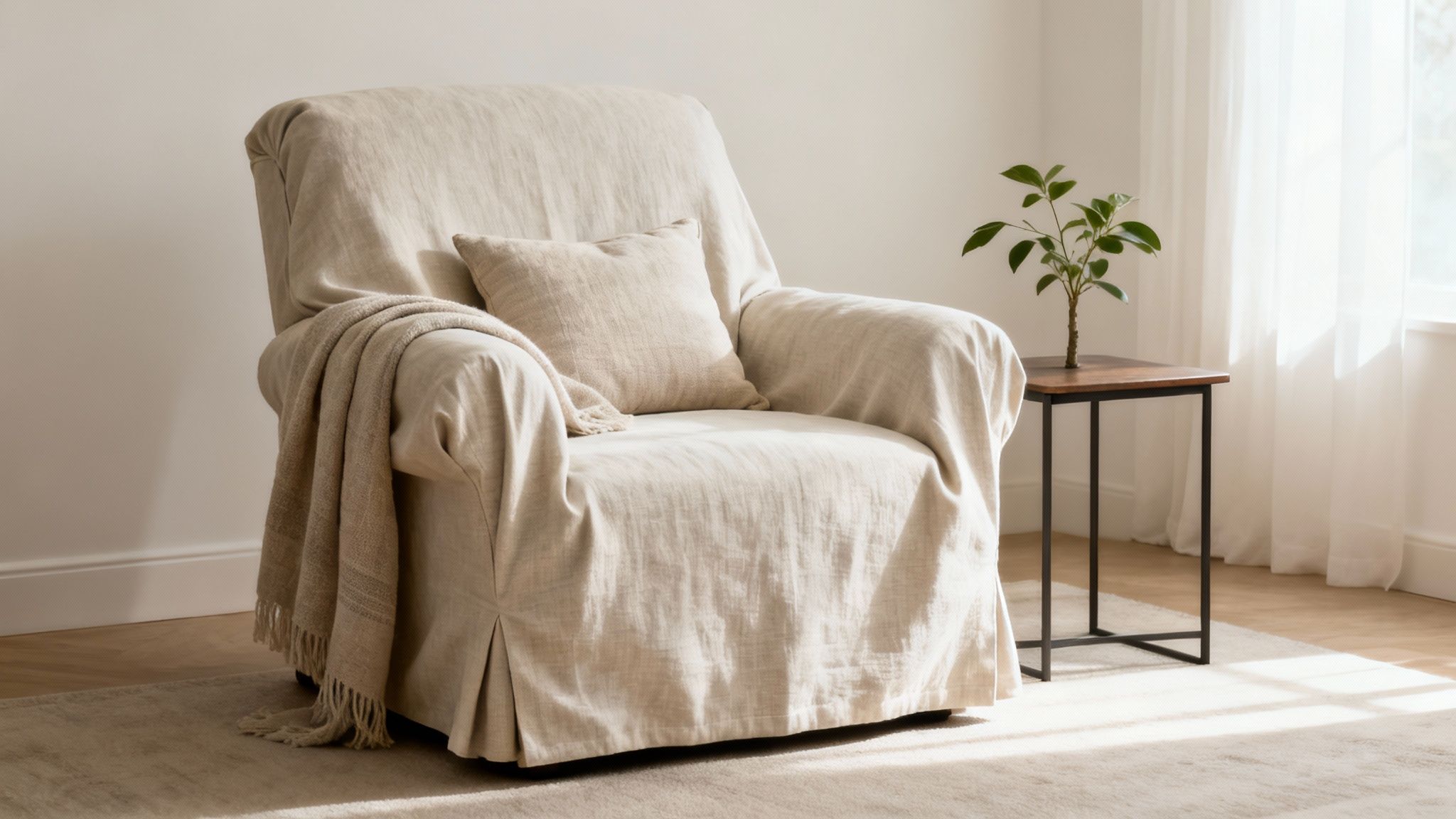
A cover should suit the room it sits in, not just the chair it wraps. The best styling decisions usually come down to visibility, traffic, and how much mess the recliner realistically sees. A chair that faces the television in a busy family room can tolerate a more practical look. A recliner that sits opposite the main sofa in a front room usually needs a neater silhouette and a fabric that feels intentional.
Choose Colour Based on Wear, Not Just Taste
Light covers can make a room feel more open, but they also show shoe marks, denim transfer, snack crumbs, and pet paw traces faster. Darker covers are usually more forgiving in high-use spaces, especially charcoal, taupe, olive, and mid-tone brown. If the chair is used every evening, a pure cream or bright white cover often requires more maintenance.
That said, very dark covers can highlight pale pet hair. In homes with a light-coloured dog or cat, a mid-tone textured fabric is often easier to live with than either extreme. I’ve found this matters more than shoppers expect: the “right” colour on day one can become the wrong colour once fur, lint, and everyday friction show up.
Texture Changes How Mess Looks
Texture does more than add style. It also changes what the eye notices. Woven and lightly patterned covers tend to disguise minor creasing, lint, and scattered pet hair better than flat, smooth fabric. This is one reason jacquard and other textured finishes work well in real homes: they soften the visual impact of daily use.
For pet households, a cover with visible weave can be kinder visually than a sleek surface that shows every strand. For cleaner, more formal rooms, a smoother fitted stretch cover may still be worth it if the chair is used less often.
When to Prioritise Tailored Fit Over Maximum Protection
If the recliner is one of the first things people see when they walk into the room, a close fit usually matters more than heavy-duty spill defence. A close-fitting stretch or multi-piece cover keeps the shape of the chair readable and prevents the “blanket thrown over furniture” effect. In a more private den or media room, the opposite can be true: practical protection can outrank visual polish.
A simple way to decide is this:
- Main living room recliner: prioritise fit, texture, and colour harmony
- Family TV recliner: prioritise washability and grip
- Pet favourite recliner: prioritise durability and hair management
- Occasional-use guest recliner: prioritise appearance first
Accessorising Your Covered Recliner
Alright, the final step in styling your recliner is accessorising. You can tie the whole look together and inject personal flair. A few well-chosen additions will lift your covered recliner from merely protected to thoughtfully styled.
Cushions and Throws
These are your best friends for adding colour, pattern, and comfort.
- Create Contrast: If your recliner cover is a solid neutral, add a pop of colour with vibrant cushions. If your cover is dark, light-coloured cushions can brighten it up.
- Play with Pattern: A striped or geometric cushion can add a modern touch to a plain cover, while a floral pattern can soften the look.
- Layer Textures: Drape a chunky knit throw blanket over the arm or back of the recliner. This not only adds a cosy, inviting feel but also introduces another layer of texture, making the space feel more curated.
By pairing a stylish cover with the right accessories, your recliner becomes an integral part of your room's design story, proving that comfort and style can beautifully coexist.
Caring for Your Recliner Cover to Make It Last
Getting a quality recliner cover is a smart move to protect your favourite chair, but making it last really comes down to how you look after it. A little bit of proper maintenance is all it takes to keep the fabric looking vibrant and fresh, ready to handle whatever life throws its way.
Think of it like a good jacket—a little routine care ensures it continues to look and perform its best for years. The great news is that most modern recliner chair covers are designed for easy, real-world maintenance. Forget complicated cleaning rituals; a simple wash routine is usually all it takes to tackle everything from biscuit crumbs to accidental spills.
Decoding the Care Label
Before you do anything, the first and most important step is to find that tiny care label. Think of it as your official instruction manual, with specific advice straight from the manufacturer. Ignoring it is a fast track to a shrunken, faded, or damaged cover.
Here’s a quick rundown of what those little symbols mean:
- Washing Tub Icon: This tells you if it’s machine washable. A number inside shows the maximum water temperature, while a hand symbol means it needs a gentle hand wash instead.
- Triangle Icon: This one’s all about bleach. An empty triangle means any bleach is fine. One with diagonal lines means only use non-chlorine bleach, and a big 'X' through it means no bleach at all.
- Square Icon: This is your guide to drying. A circle inside the square means it's safe for the tumble dryer, with dots showing the heat level (one for low, two for medium). A square with a curved line at the top means to line dry it.
Getting to know these symbols is the secret to preserving the colour, shape, and texture of your recliner cover for the long haul.
Spot Cleaning for Minor Spills
For those small, everyday spills like a splash of coffee or a drop of wine, acting fast is key. You don’t always need to wrestle the entire cover off and throw it in the wash. Spot cleaning can tackle isolated messes in minutes.
DIY Stain Remover Recipe: For a lot of common stains, a simple mix does the trick. Just combine a few drops of clear dishwashing liquid with a cup of cool water. Gently dab—never rub—the stain with a clean white cloth dipped in the solution. Blot with a dry cloth to soak up the liquid, and repeat until the stain lifts.
Removing Stubborn Pet Hair and Odours
Pets bring so much joy, but they also bring a whole lot of fur and their own unique smells. To get rid of stubborn pet hair, a rubber glove is your secret weapon. Seriously. Just put on a dry washing-up glove and wipe your hand over the cover; the static electricity makes the hair clump together so you can easily pick it off.
For any lingering odours, a sprinkle of baking soda works wonders. Lightly dust it over the fabric, let it sit for about 30 minutes to absorb the smells, and then vacuum it all up using a brush attachment. It's a simple, cheap trick that keeps your recliner chair covers smelling fresh between washes.
Common Questions About Recliner Chair Covers
Even after digging into all the different styles, fabrics, and fitting guides, a few practical questions almost always come up when you’re about to make a final decision. Getting these last few details sorted is the key to buying with confidence and ending up with a recliner cover you’ll absolutely love.
Let’s tackle some of the most common questions we hear all the time.
Will a Standard Cover Fit My Electric or Lift Chair?
This is a really important one, and the honest answer is almost always no. Electric and lift recliners are a different beast to their manual cousins. They often have side pockets for remote controls or unique parting lines where the footrest extends, and a standard cover will just get in the way.
For these chairs, you absolutely need to look for covers specifically designed for electric or lift models. These are usually multi-piece sets, often with 4 to 8 separate pieces, that are engineered to accommodate all the moving parts. This design ensures you can always get to the control panels and stops the fabric from snagging or tearing when the chair is in motion. Always double-check the product description for "power recliner" or "lift chair" compatibility before you buy.
Can I Use a Cover if My Recliner Has a Centre Console?
Yes, you can, but a standard one-piece cover won't do the job. If you have a loveseat or sofa-style recliner with a handy centre console for storage or cup holders, you’ll need a specialised multi-piece set designed for this exact setup.
These sets are cleverly designed to fit each component perfectly. They typically include:
- Separate covers for each of the reclining seats.
- A dedicated cover that fits neatly over the console lid.
This modular approach means every part of your furniture is protected while staying completely functional. You can still flip open the console and use your cup holders without any hassle.
What Can I Do if My Recliner Cover Keeps Slipping?
Slipping fabric is a common frustration, but it's almost always fixable. The first thing to check is that you’re using any included foam inserts or anti-slip tucks correctly. You need to really push them deep into the crevices between the arms and the seat, and at the back of the seat, to create a solid anchor.
If it still slips, which can sometimes happen on a leather recliner, you can buy extra non-slip furniture grips to place under the cover for more friction. The most effective way to prevent slipping from the start is to make sure your cover is the right size. A snug, proper fit is your best defence against movement.
Ready to give your favourite recliner a fresh new look while protecting it from the realities of everyday life? Explore the stylish and durable collection at The Sofa Cover Crafter and find the perfect fit for your home. Visit The Sofa Cover Crafter