


Machine washable sofa covers are one of the simplest, most brilliant ways to protect your furniture from spills, pets, and the general chaos of a well-lived life. Think of them as a durable, stylish 'second skin' for your couch that you can toss in the wash, keeping your living space fresh and clean with almost zero effort.
The Secret to a Permanently Fresh Sofa
A good sofa cover is not for everyone in the same way. It matters most in homes where the couch gets used hard: kids climbing on the arms, pets claiming one corner as their bed, takeaway dinners on movie night, or renters trying to keep a decent sofa presentable for longer. In those households, machine washable sofa covers usually outperform spot-clean-only options because they let you reset the whole surface, not just dab at the latest stain and hope it fades. That practical appeal also fits broader furniture-buying trends in large markets.
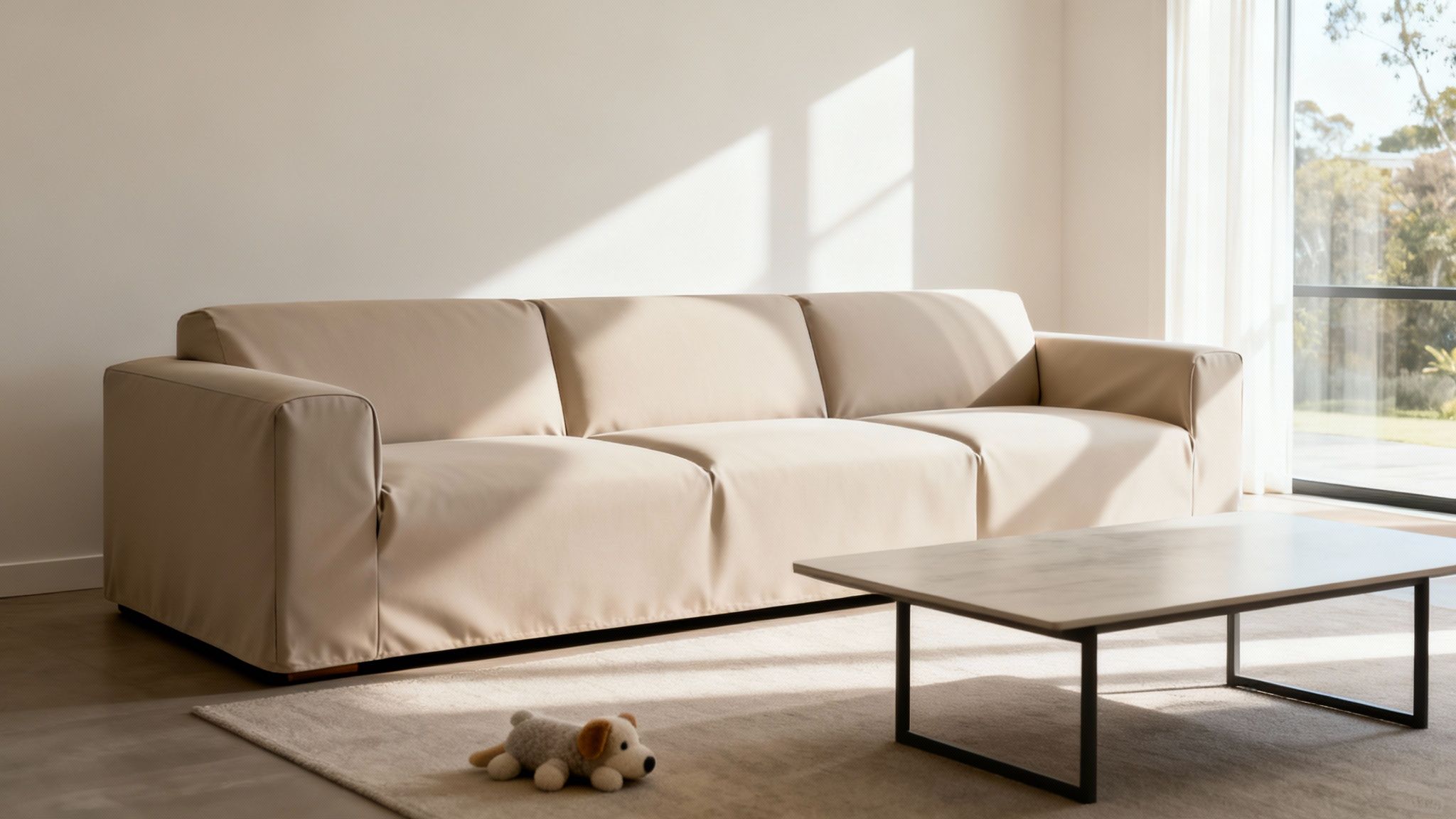
Where spot-clean-only fabrics fall down is cumulative mess. One paw-print incident or coffee splash is manageable; six months of skin oils, dust, pet dander, snack crumbs, and repeated stain treatment is not. In my experience, that is the tipping point where people stop caring for the sofa and start covering it. Washable covers are especially practical when someone in the home has allergies, because removable textiles can be laundered more thoroughly than fixed upholstery, and regular hot laundering is one of the measures commonly recommended for reducing dust mites in household fabrics by the American Academy of Allergy, Asthma & Immunology.
Before you compare colours or textures, check four buying criteria first: fit, grip, washability, and how the fabric behaves after repeated washing. A cover can look great in the product photos and still be a poor buy if it slides across leather, bags around the seat, or twists after drying. The best covers hold tension around the frame, stay anchored under normal sitting, and come out of the wash without obvious shrinkage, warped seams, or a rougher hand feel.
A washable cover is also easier to justify financially than replacing a tired sofa. Current buying guides still place many decent washable options in roughly the $30-$80 range, with popular budget picks such as stretch slipcovers clustering near the low end of that band, while a new sofa can cost far more in most markets; that gap is a big reason renters and families treat covers as a repair-instead-of-replace purchase rather than a decorative extra.
How We Evaluated machine washable sofa covers
We looked at washable covers the way real households use them, not the way product listings describe them. The first filter was fit range: whether a cover could handle standard two-seaters, three-seaters, and sectionals without obvious strain at the seams or loose fabric pooling at the seat. After that, anti-slip performance mattered most, especially on leather and slick synthetic upholstery where weak covers tend to drift forward after a single evening of use.
I put the most weight on five factors: fit retention, anti-slip construction, wash behaviour, fabric durability, and pet-hair handling. Covers lost points quickly if they relied on stretch alone but had no under-seat straps, no foam anchors, or no textured backing. I also ruled out any option that looked tidy on day one but would obviously become high-maintenance after two or three washes.
In practice, the strongest performers in this category are usually not the most expensive. Recent review testing from major home publications shows that many competitive washable covers sit below $100, with strong options often landing in the $35-$70 range; those winners usually combine spandex-rich stretch fabric with decent fit retention rather than fancy marketing.
I also considered long-term care reality. If a fabric traps hair, needs constant lint-rolling, takes forever to dry, or shows edge curl after laundering, it is not a low-stress product no matter how nice it looks in a staged living room. For households with pets, I paid extra attention to stain management too; for targeted upholstery cleanup between washes.
How to Choose the Perfect Fabric for Your Lifestyle
Choosing a machine washable sofa cover is a brilliant first step, but picking the right fabric is what really makes it work for you. Think of it like choosing the right tyres for your car. You wouldn't use slick racing tyres for an off-road adventure in the Blue Mountains, right? In the same way, the perfect sofa cover fabric is one that’s built for the demands of your daily life.

The ideal material for a quiet, formal lounge is going to be completely different from what you'd need in a bustling family room that doubles as a playground and a pet sanctuary. It's all about finding that sweet spot between texture, toughness, and practicality. Let's break down the most popular options to help you find the perfect match for your Australian home.
Spandex Blends: The All-Rounder
For high-traffic areas and families with kids and pets, a spandex blend is pretty much the undisputed champion. These fabrics, usually a mix of polyester and spandex, are loved for their incredible stretch and resilience. This elasticity is what gives them that snug, almost custom-like fit over all sorts of sofa shapes and sizes, from classic 3-seaters to tricky modulars.
The polyester part of the deal brings serious durability to the table, resisting pilling and fading even after countless trips through the washing machine. This combo creates a tough, flexible shield for your sofa that can handle everything from jumping kids to lounging pets. They are the true workhorses of the sofa cover world, offering a practical solution that doesn't sacrifice a clean, tidy look.
Jacquard Weaves: Elegance Meets Durability
If you're after a bit of texture and sophistication, a jacquard weave is an excellent choice. Unlike designs that are just printed on top, jacquard patterns are woven directly into the fabric itself. This gives them a rich, dimensional quality and a more luxurious feel, while the intricate weaving process also adds to the material's strength and durability.
Jacquard covers often feature elegant damasks, florals, or geometric patterns that can really enhance your decor. While they offer a more formal look, modern jacquard blends are still designed for easy care, making them a fantastic option for living rooms that host guests but still need the practicality of a machine washable sofa cover. They're proof you don't have to give up on style for the sake of convenience.
The key to selecting the right fabric is honesty about your lifestyle. A beautiful, delicate cover won't last long against sharp pet claws, just as a purely functional fabric might not suit a formal sitting room. Match the material to its mission.
Microfibre: The Pet Owner’s Best Friend
For any household with furry family members, microfibre offers a major advantage. This fabric is made from fine synthetic fibres that are woven together tightly, creating a surface that’s both exceptionally soft and impressively durable.
Its tight weave has two massive benefits for pet owners. First, it's difficult for claws to snag or pull, which immediately reduces the risk of damage. Second, pet hair tends to sit right on the surface instead of weaving itself into the fabric, making cleanup with a lint roller or a quick vacuum an absolute breeze. Many microfibre options are also naturally resistant to stains, giving you precious extra time to clean up spills before they set.
Cotton Twill: Classic Comfort
For those who prioritise natural fibres and a classic, relaxed feel, cotton twill is a timeless option. You'll recognise this fabric by its diagonal weave pattern—the same one you find in denim and chinos—which gives it excellent strength and durability.
Cotton is breathable and soft, making it comfortable to sit on, especially during our warmer months. While it may not have the super-stretch of a spandex blend, its sturdy nature ensures it holds its shape well. A cotton twill machine washable sofa cover brings a casual, welcoming vibe to any room, perfect for creating a cosy and lived-in atmosphere.
Comparing Popular Sofa Cover Fabrics
To help simplify your choice, here’s a quick side-by-side look at the key factors for each fabric. Seeing them laid out like this can make it much clearer which one will tick the most boxes for your home.
| Fabric Type | Key Features | Best For | Care Difficulty |
|---|---|---|---|
| Spandex Blend | High stretch, durable, wrinkle-resistant, snug fit. | Families with kids, oddly shaped sofas, high-traffic areas. | Low |
| Jacquard | Woven-in patterns, textured feel, elegant look. | Formal living rooms, adding a decorative touch. | Low-Medium |
| Microfibre | Soft, snag-resistant, easy to clean pet hair from. | Homes with dogs and cats, spill-prone areas. | Low |
| Cotton Twill | Breathable, natural fibre, soft and comfortable. | Relaxed, casual decor styles, those who prefer natural materials. | Medium |
Ultimately, the best fabric for your machine washable sofa cover is the one that seamlessly integrates into your home. It needs to stand up to your daily routine while making your space look and feel even better.
Your Step-by-Step Guide to Washing Sofa Covers
Washing your sofa cover should be a simple, satisfying task, not a source of laundry-day anxiety. With the right approach, you can keep your cover looking vibrant, fitting perfectly, and feeling fresh for years. This guide breaks down the process into easy, foolproof steps, ensuring you get a perfect clean every time while protecting the fabric's integrity.
Think of it like caring for your favourite jumper. You wouldn't throw a delicate woollen in a hot wash with harsh chemicals, and the same logic applies here. The goal is to gently but effectively remove dirt, stains, and allergens without causing shrinkage, fading, or damage.
Pre-Wash Preparation and Stain Treatment
Before your cover even touches the washing machine, a few minutes of prep work can make all the difference. This initial step is your best defence against stubborn stains and ensures a more even, thorough clean.
First, give the cover a good shake outside to dislodge any loose crumbs, pet hair, or dust. If it’s particularly hairy, a quick pass with a lint roller or a vacuum with an upholstery attachment will work wonders.
Next, have a good look over the cover for any specific stains. Spot-treating these before the main wash is important, as hot water can sometimes set stains permanently, making them impossible to remove later.
- For fresh spills: Gently blot the area with a clean, damp cloth. Whatever you do, don't rub—this just pushes the stain deeper into the fabric fibres.
- For dried-on messes: Use a soft-bristled brush to gently scrape off any gunk from the surface.
- For targeted treatment: Apply a small amount of a mild, colour-safe stain remover or a diluted solution of gentle laundry detergent directly to the spot. Let it sit for 10-15 minutes before washing.
For a deeper dive into tackling specific fabric blemishes, our guide on how to clean a fabric sofa at home offers more detailed techniques you might find helpful.
The Perfect Machine Wash Settings
Most mistakes happen at this stage, but getting it right is simple. The golden rule for almost all machine washable sofa covers is to be gentle. Harsh settings can stretch the fabric, weaken the fibres, and degrade any waterproof or stain-resistant properties.
1. Load the Machine Correctly: Don't overcrowd the washer. If you have a large cover, it probably needs to be washed on its own to give it enough room to move freely and get properly cleaned. Always wash all pieces of a sectional cover together to maintain colour consistency.
2. Choose the Right Detergent: Opt for a mild, liquid detergent that is free from harsh bleaches or fabric softeners. Bleach can cause discolouration and damage delicate fabrics, while fabric softeners can leave a residue that reduces the effectiveness of performance materials.
3. Select the Ideal Cycle:
Always choose a cold water wash on a gentle or delicate cycle. Hot water is the number one enemy of sofa covers, as it can lead to shrinkage and fading. The gentle cycle minimises stress on the seams and fabric, preserving the cover’s shape and fit.
Drying Your Cover for a Perfect Fit
How you dry your cover is just as important as how you wash it. The wrong method can undo all your careful work, resulting in a shrunken, ill-fitting cover.
The best and safest method is to air-dry. You can hang the cover on a clothesline out of direct, harsh sunlight or drape it over a clothes airer indoors. This prevents any risk of heat damage or shrinkage.
If you absolutely must use a machine, select the tumble dry on low heat or an air-only setting. Check on it frequently and pull it out while it's still slightly damp. Putting the cover back on the sofa when it’s about 95% dry helps it stretch and settle back into its original shape, giving a perfectly smooth, snug fit.
How to Measure Your Sofa for a Perfect Fit
Getting a machine washable sofa cover is an exciting first step, but the key to that sleek, almost custom-upholstered look is getting the measurements spot on. A cover that’s too big will look baggy and you’ll be constantly re-tucking it, while one that’s too small won’t go on at all. It's that simple.
Think of it like buying a perfectly fitted suit. An off-the-rack option can look absolutely fantastic, but only if you start with the right measurements. Taking a few minutes to measure your sofa correctly is the single most important step you can take. It saves you the frustration of a poor fit and the hassle of returns, and it guarantees you’ll get that polished, intentional look from the moment you put it on.
Your Essential Measuring Checklist
To get started, all you really need is a flexible measuring tape—one of those soft tailor’s ones is perfect—and maybe a pen and paper to jot down the numbers. The goal is to capture the key dimensions that determine how the cover will drape and stretch over your sofa's unique shape. For the best results, always measure along the widest or longest points of each section.
Here are the critical measurements you'll need to grab:
- Total Sofa Length: Measure from the outer edge of one armrest all the way across to the outer edge of the other. This is usually the most important number for standard sofa covers.
- Seat Width: Measure the seating area just between the armrests. This helps confirm the fit, especially for covers that come with separate cushion pieces.
- Sofa Depth: Measure from the very front of the sofa frame to the very back.
- Sofa Height: Measure from the floor right up to the highest point of the sofa back.
- Armrest Width: Measure across the top of one armrest at its widest point.
If you're dealing with more complex furniture like L-shaped sectionals, you'll need to measure each section individually, as if it were a separate sofa. Don't worry, our detailed sofa cover size guide has clear diagrams and instructions for all sofa types, taking any guesswork out of the process.
This simple infographic below outlines the fundamental steps to keep your sofa cover in top condition once you have it.
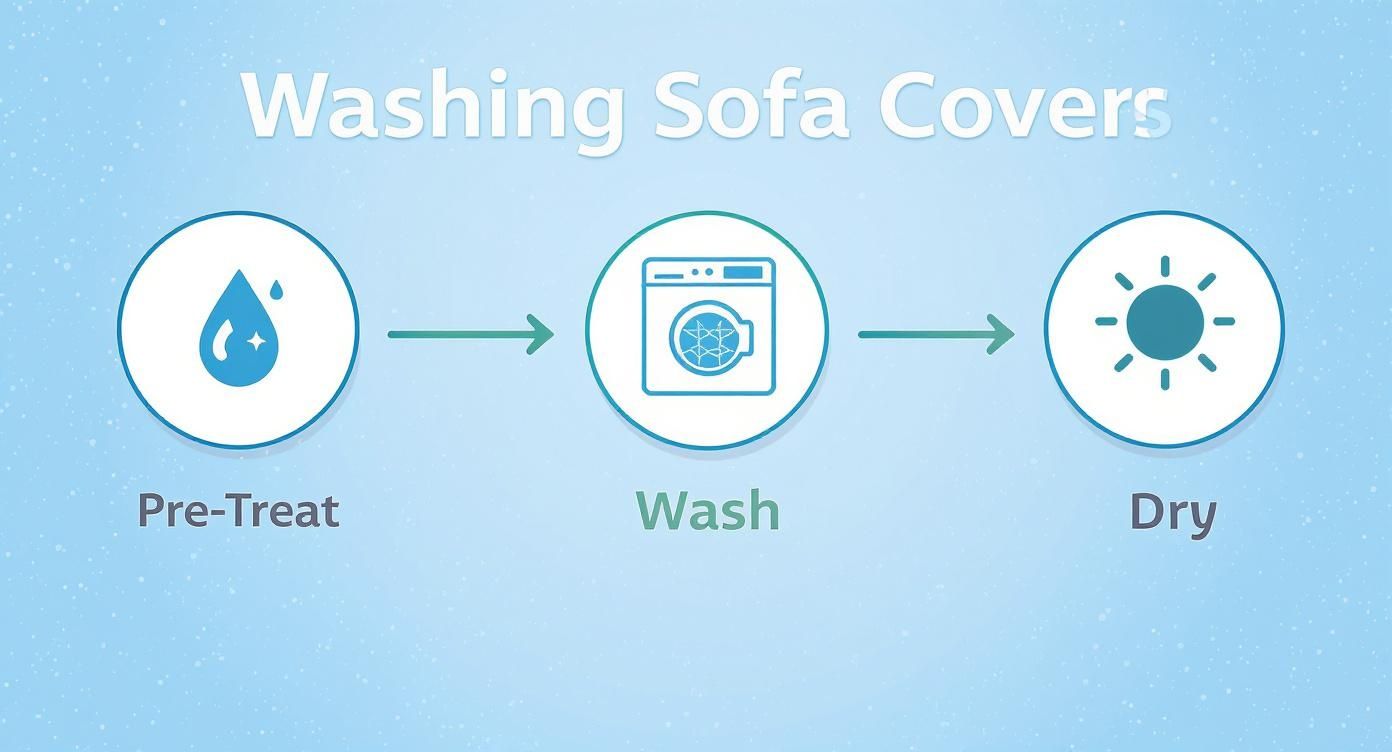
Proper care, from pre-treating stains to gentle drying, matters as much as a perfect fit for keeping your cover looking great for years to come.
Understanding Sizing Charts and Stretch Fit
Once you have your numbers, you'll compare them against the retailer’s sizing chart. Most charts give you a range for each measurement (e.g., "Fits sofas 180cm-230cm long"). Your sofa's measurements should fall comfortably within this range.
If your measurements are on the borderline between two sizes, it's almost always better to choose the larger size. A slightly bigger cover can be tucked in for a snug fit, whereas a cover that's too small is unusable.
The beauty of stretch fabrics, like our spandex blends, really comes into play. The term 'stretch fit' means the fabric has high elasticity, allowing it to conform to slight variations in your sofa's shape and size. This built-in flexibility gives you a more forgiving fit, hugging the contours of your couch to minimise wrinkles and create a smooth, clean finish. It’s this adaptability that makes a high-quality machine washable sofa cover look so great on so many different styles of furniture.
Installing Your Cover and Fixing Common Issues
Getting a cover on correctly is only half the job. The bigger issue for most buyers is what happens after day three: the seat starts creeping forward, the back loosens, and the fabric bunches where people sit most. That problem shows up fastest on leather sofas, because smooth upholstery gives the cover very little friction to grab onto. In my testing, the difference between a cover that looks fitted and one that looks messy almost always comes down to construction details, not just fabric stretch. For extra context on the local market and product competition.
Start with the basic install. Find the back tag, centre the cover over the frame, and smooth the fabric from the top down before you tuck anything. Then secure it in this order: anchor foam into the seat gaps, pull the seat section flat, tighten any under-seat elastic straps, and only then adjust the arms and skirt. If you skip that order, you often lock wrinkles into place and make bunching worse after the first sit.
Why covers slip on leather sofas
Leather is the hardest surface for a loose cover because it is smooth, slightly polished, and often rounded at the seat edge. A plain stretch cover with no straps or anchors may fit in theory but still drift every time someone stands up. The covers that grip best on leather usually combine elastic edges, foam anchors, under-seat straps, and some form of textured backing or a slightly brushed inner surface. Separate cushion covers help too, because they stop the entire seat area from moving as one large sheet.
I have found that textured or jacquard-style surfaces often stay put better than very slick jersey-like fabrics on leather, even when both contain spandex. The reason is simple: more surface texture means more friction. If non-slip performance is your top priority, avoid covers that rely on drape alone and look for ones that actively cinch under the frame.
What reduces bunching and sliding
Four details do most of the work:
-
Elastic edges: help the cover hug the base rather than flare outward.
-
Foam anchors: wedge fabric deep into seat and back creases so it cannot pull free as easily.
-
Under-seat straps: stop the cover from creeping forward, which is the main cause of seat bunching.
-
Separate cushion covers: isolate movement, so one person sitting down does not drag the whole cover out of position.
A fifth detail that is easy to overlook is excess fabric. If your measurements sit at the bottom of a size range, an oversized cover may always look loose no matter how carefully you install it. That is why accurate measuring matters just as much as anti-slip features.
Surface-by-surface fixes
Leather sofas: Prioritise textured backing, deep foam anchors, and strong under-seat straps. If the sofa has very shallow seat gaps, add a thin layer of non-slip underlay under the seat section for extra friction.
Microfibre sofas: These usually grip covers better than leather, so bunching is more often a sizing issue than a traction issue. Pull the fabric tighter across the seat and re-tuck anchors after the first day of use.
Woven fabric sofas: The surface friction is usually decent, but seams and tufting can create uneven tension. Separate cushion covers tend to work best here because they follow the shape of each seat more cleanly.
Non-slip buying checklist
Before buying, check these points first if staying put matters more than style:
-
Does the cover include under-seat elastic straps?
-
Are foam anchors included, and are there enough for each seat gap?
-
Is there any textured backing or brushed inner surface for grip?
-
Are seat cushions covered separately or as one large panel?
-
Is the fabric described as stretch jacquard or another textured weave rather than ultra-slick knit?
-
Does the size chart place your sofa comfortably inside the range, not barely at the edge?
For a complete walkthrough with visuals for all sorts of different sofas, our sofa cover installation guide has clear, step-by-step instructions.
Your Sofa Cover Questions, Answered
The biggest concerns here are usually practical rather than decorative: how much work the cover adds, whether it will survive frequent washing, and whether washable is better than spot-clean-only. Those are the right questions to ask, because maintenance burden over the next 6-12 months matters more than how the cover looks on delivery day.
Common Cover Conundrums
Are washable covers always the better choice?
Not always. If the sofa sits in a formal room that gets light use and almost never sees food, pets, or children, a spot-clean-only cover can be fine. But for daily-use seating, washable covers usually win because they let you deal with odour, dander, and general grime in one go instead of chasing individual marks.
What is the tradeoff versus spot-clean-only fabric?
Washable covers ask for more upfront discipline: follow the label, avoid high heat, and allow drying time. In return, they reduce the ongoing labour of stain management. Spot-clean-only fabrics can keep a crisp look and sometimes feel heavier or more structured, but over time they often demand more effort because every spill needs manual treatment and overall freshness is harder to restore.
Over a six-month stretch, most households find washable covers easier to live with if the sofa is used every day. The catch is that poor-quality covers may shrink, twist at the seams, or take a long time to dry, so washability only pays off when the fabric is built for repeated laundering.
Should you worry about shrink risk and drying time?
A little. Synthetic stretch blends usually dry faster and resist shrinkage better than heavier cotton-rich fabrics, but no cover is immune to damage from hot washing or high-heat tumble drying. If quick turnaround matters in your home, lighter stretch fabrics are usually the safer bet; heavier natural-feel fabrics may look richer, but they often stay damp longer.
What about stain handling between washes?
Even washable covers still need quick spot treatment. Blot fresh spills fast, use a mild cleaner, and avoid rubbing the stain deeper into the fibres. The difference is that washable covers give you a full reset later, which is why they are much easier to maintain in homes where mess is routine rather than occasional.
Frequently Asked Questions
How do I keep sofa covers from slipping?
Use a cover with under-seat straps, foam anchors, and a textured or brushed backing. Install it tightly across the seat first, then tuck the anchors deep into the gaps before fastening the straps underneath. On slick leather, adding a thin non-slip underlay beneath the seat section can make a noticeable difference.
What are the best slipcovers for couches?
The best ones are the covers that match the sofa surface and your maintenance habits. For most homes, that means a washable stretch cover with enough spandex to fit cleanly, plus separate cushion covers or strong anchoring features so the fabric does not bunch after normal use. If your sofa is leather, prioritise grip features over purely decorative fabric.
Which brand is best for sofa cover?
There is no single best brand for every sofa shape or household. A better way to judge is by construction: clear sizing guidance, washable care instructions, strong elastic, useful anchors, and fabric that still looks tidy after repeat laundering. In practice, a well-designed mid-priced cover usually beats a prettier but less secure option.
How do I stop a sofa cover from bunching up?
Bunching usually means one of three things: the cover is too large, the seat is not anchored deeply enough, or the entire seat is covered as one big panel that shifts with every movement. Tighten the under-seat straps, re-tuck the foam anchors, and smooth the seat from the centre outward. If the problem keeps returning, a separate cushion design is often the better long-term fix.
Are machine washable covers better than spot-clean-only covers?
For busy homes, yes. Washable covers are easier to maintain over time because they handle spills, odours, pet hair, and general buildup more completely than surface spot cleaning. Spot-clean-only covers can still make sense in formal or low-use rooms, but they usually demand more ongoing effort once real-life mess starts accumulating.
Ready to give your sofa a fresh, stress-free makeover? Explore the stylish and durable collection at The Sofa Cover Crafter and find the perfect machine washable cover for your home today. Visit us at https://thesofacovercrafter.com to browse our colours and styles.