


Trying to clean your sofa without doing the prep work is a bit like trying to paint a wall without sanding it first—you’re just setting yourself up for a bigger mess. A proper pre-clean ritual is non-negotiable, and it really boils down to two crucial steps: deciphering the care tag and giving the sofa a thorough vacuum.
Getting these two things right ensures you don’t accidentally damage the fabric and stops you from turning loose crumbs into mud.
The Pre-Clean Ritual for a Spotless Sofa
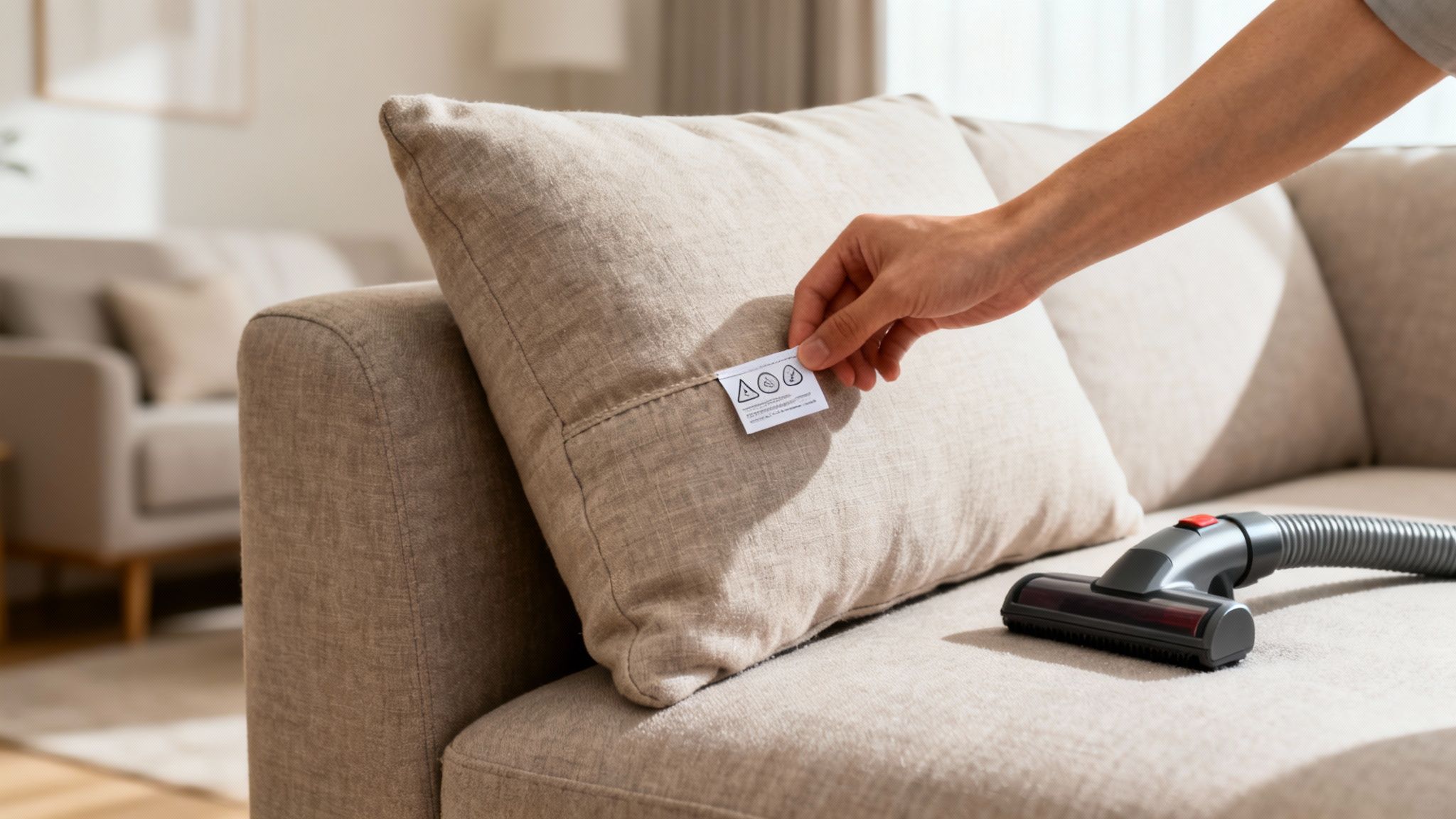
Before a single drop of cleaner even comes near your upholstery, you need a game plan. Honestly, this initial prep work is the single biggest factor in getting a professional-looking result at home. It’s what prevents those all-too-common disasters like water rings, fabric shrinkage, or colours bleeding everywhere.
Think of it this way: you wouldn't chuck a "dry-clean only" shirt in a hot wash cycle, would you? Your sofa is no different. All the info you need is usually hiding on a small tag, often tucked under a cushion or along an inside seam.
Decode Your Sofa's Cleaning Tag
That little fabric care tag is your cleaning bible. It has a simple letter code on it that tells you exactly what you can—and definitely cannot—use on your upholstery. Ignoring this is a costly mistake just waiting to happen.
To make it easy, we've broken down what those codes actually mean for you.
Decoding Your Sofa's Cleaning Codes
| Code | Meaning | Safe Cleaning Method |
|---|---|---|
| W | Water-Based Cleaner | You're in luck! You can safely use water-based shampoos and solutions. |
| S | Solvent-Based Cleaner | Water is a no-go. Stick to a water-free, solvent-based cleaner to avoid permanent stains. |
| WS | Water or Solvent | You've got options. Both water-based and solvent-based cleaners are safe to use. |
| X | Vacuum Only | The most restrictive code. Do not use any water or solvent cleaners. Vacuuming is the only safe method. |
Getting to know your sofa’s cleaning code is the first, most critical step. It ensures you use the right method for your specific fabric type and protects your furniture from irreversible damage.
Give It a Thorough Vacuum
Once you know your cleaning code, it’s time to get rid of all the loose debris. Here in Australia, where fabric sofas are a staple in most homes, a good vacuum is part of the regular routine for managing daily dust and pet hair.
If you skip this, any liquid cleaner you apply will just mix with the dirt, creating a sludgy mess that’s much harder to get out. This is especially true for managing the pet hair and crumbs that build up between professional cleans, which most of us do every 12 to 18 months.
Grab your vacuum's upholstery attachment and the crevice tool to get into every single nook and cranny. Take all the cushions off and vacuum the sofa frame itself, paying close attention to the seams where dirt loves to hide.
This simple act lifts away all the surface-level grime, letting your cleaning solutions get straight to work on the actual stains. For sofas that see a lot of daily action, you might want to explore our guide on the top 10 machine washable couch covers for an easier long-term solution.
Your Go-To Guide for Banishing Common Stains
Life happens on the sofa. From a morning coffee spill to an evening wine mishap, stains are an inevitable part of owning fabric furniture. But they don’t have to be a permanent feature. With the right approach and a few household staples, you can tackle most common stains yourself.
The golden rule for any fresh spill is to blot, never rub. Rubbing just grinds the stain deeper into the fabric fibres, making it much, much harder to remove. Instead, gently dab at the spill with a clean, dry cloth to soak up as much of the liquid as possible before you even think about cleaning.
Simple DIY Solutions for Fresh Spills
For sofas with a 'W' or 'WS' cleaning code, a simple homemade solution can work wonders. This gentle cleaner is perfect for tackling many everyday accidents, from food smudges to dirt marks from the dog.
- The Go-To Recipe: Combine two cups of distilled water, one tablespoon of gentle dish soap, and one tablespoon of white vinegar in a small bowl. It's best to use distilled water, as tap water can sometimes leave behind pesky mineral deposits.
- Application: Lightly dampen a clean microfibre cloth with the solution. Gently blot the stained area, working from the outside of the stain inwards to stop it from spreading.
- Rinsing: Grab a separate, fresh cloth dampened with only distilled water and blot the area again. This step is all about removing any soapy residue left behind.
- Drying: Finally, press a dry cloth firmly onto the spot to absorb any excess moisture.
Pro Tip: Always, always perform a spot test before you go all-in with any cleaning solution, whether it's homemade or from a bottle. Dab a small amount on a hidden spot—like behind a skirt or under a cushion—to make sure it doesn't mess with the colour or damage your fabric.
When to Use a Commercial Cleaner
While a good DIY solution is fantastic for fresh, minor stains, some situations call for something with a bit more muscle. Stubborn, set-in stains from things like ink, grease, or that red wine spill from last week often need a dedicated commercial fabric cleaner.
The market for these products has grown significantly, which tells you that plenty of people prefer a convenient, grab-and-go option. In fact, data shows that over 60% of Australian households with fabric sofas have used a commercial cleaner, getting great results by following the simple instructions. You can discover more insights about fabric cleaner market trends on datainsightsmarket.com.
Reaching for a commercial cleaner is often your best bet for:
- Greasy or oily stains that just laugh at water-based solutions.
- Older, set-in stains that have had time to properly bond with the fabric.
- Stains on 'S' code sofas, which need a specific solvent-based product to be cleaned safely.
For those persistent spills, or if you just want an extra layer of defence for your furniture, you might want to check out our guide to waterproof settee covers. They offer a practical and stylish solution to stop future stains before they even start.
When a quick spot clean just isn't going to cut it, it’s time to think about a full sofa refresh. Sometimes you need to move beyond individual stains to tackle the accumulated grime, allergens, and odours that build up over time. The two most effective ways to deep clean a fabric sofa at home are with a dedicated machine or by taking a more hands-on, manual approach.
Your choice really comes down to your sofa's fabric code, your budget, and how much elbow grease you're willing to put in. A machine offers a powerful, almost professional-style clean, while a manual method gives you complete control and is incredibly cost-effective.
This simple decision tree can help you visualise which path to take when you're staring down different types of stains.

The key takeaway here is that acting fast with a simple DIY solution is often enough for fresh spills. It’s those older, more stubborn stains that might need the targeted power of a commercial cleaner.
Using a Steam Cleaner or Shampooer
For any sofa with a 'W' or 'WS' code, an upholstery steam cleaner or shampooer is your best bet for a truly deep clean. These machines are brilliant; they work by injecting a cleaning solution deep into the fabric and then powerfully sucking the dirty water back out, pulling dirt from right within the fibres.
When you're picking a machine, look for one that has a dedicated handheld upholstery attachment. This gives you much better control on tricky areas like cushions and armrests. You can either buy one outright or just rent one for the day from a local hardware or grocery store.
Crucial Tip: The biggest mistake people make is overwetting the fabric. Always use the machine on its lowest moisture setting and make several slow, overlapping "dry" passes over each section to suck up as much water as possible. This is vital to prevent mildew and those annoying watermarks from forming.
The Manual Low-Moisture Method
If you don't have access to a machine or your sofa just needs a more delicate touch, a manual low-moisture clean is a fantastic alternative. This technique uses minimal water, which seriously reduces the risk of saturation and makes it a safer option for a wider range of fabrics.
You'll just need a simple cleaning solution, like the vinegar and dish soap mix we mentioned earlier, and a couple of microfibre cloths.
- Apply the solution: Lightly dampen one cloth with your cleaning mix, wringing it out so it's not dripping wet.
- Clean in sections: Gently wipe down one section of the sofa at a time—tackle a single cushion or an armrest, for instance.
- Rinse the area: Straight away, follow up with the second cloth, dampened with only clean water, to "rinse" away any soapy residue.
- Blot dry: Press a dry towel firmly into the fabric to absorb any excess moisture before you move on to the next section.
This methodical approach stops the fabric from getting too wet and ensures you get an even clean without patches or streaks. It’s also incredibly budget-friendly. Here in Australia, a professional clean for a 3-seater sofa can cost anywhere between $95 and $180. By doing it yourself, you can stretch the time between those professional visits from 18 months to over two years, saving a significant amount. You can learn more about the value of at-home upholstery care from SMK Carpet Cleaning.
Ultimately, both methods get the job done. A machine will give you a deeper, more restorative clean, while the manual approach offers a gentle and controlled refresh that's perfect for regular maintenance.
The Art of Drying and Finishing Your Sofa
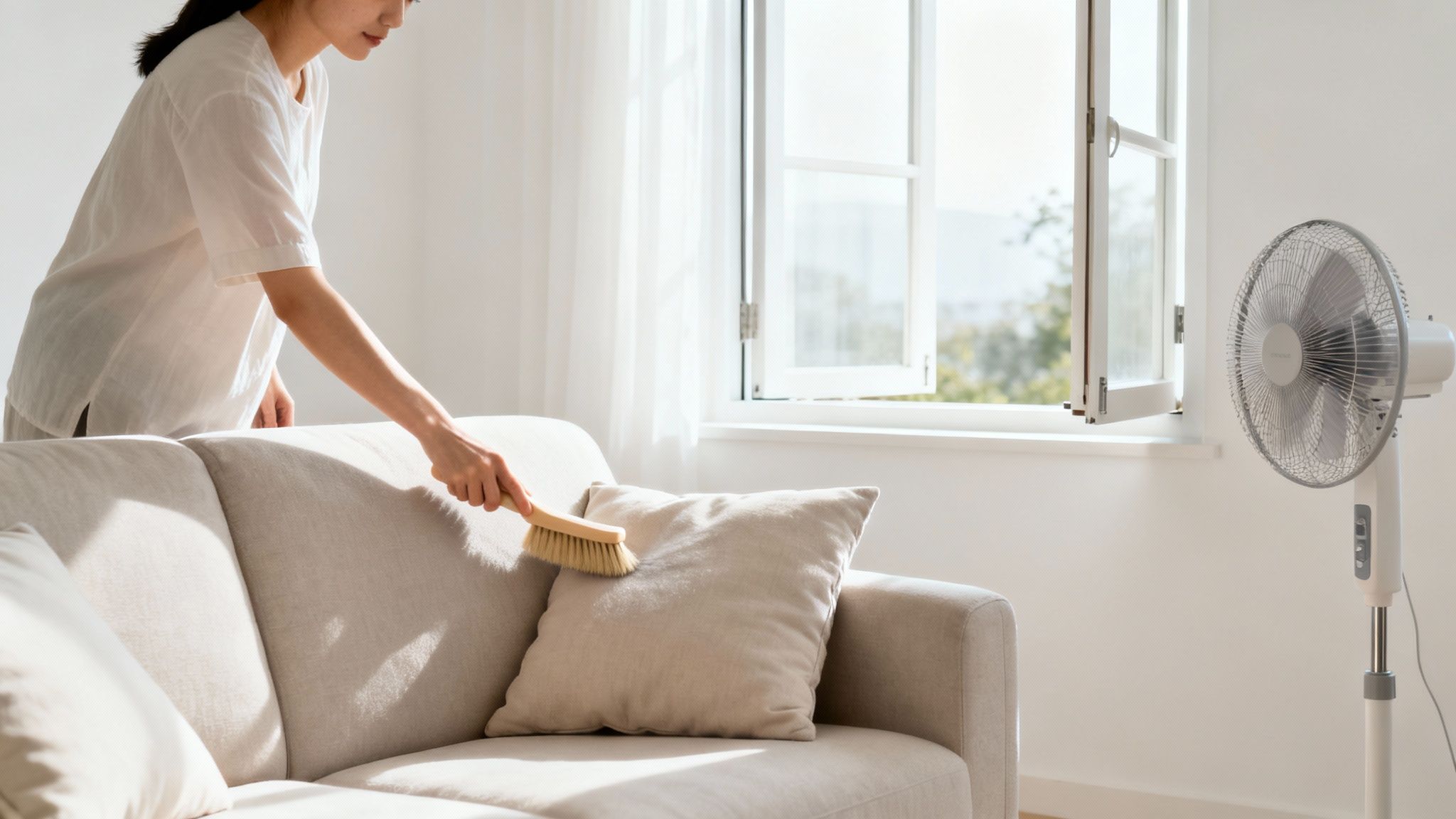
Getting your sofa clean is a huge win, but the job isn't quite finished yet. Honestly, how you dry your sofa is just as critical as how you wash it. Rushing this final stage is a fast track to musty smells, mildew, and even watermarks, which undoes all your hard work in an instant.
Proper drying all comes down to one thing: airflow. You need to get air circulating around the damp fabric to wick away moisture effectively. This simple step is what prevents that damp, closed-in smell that can develop if a sofa stays wet for too long—a common problem in humid Aussie climates.
Promoting a Speedy and Safe Dry
Your goal is to speed up the natural evaporation process without blasting it with direct heat, which can shrink or damage delicate fibres. The best approach is simply to create a well-ventilated environment around your freshly cleaned sofa.
Here are a few practical methods that I’ve found work a treat:
- Open the Windows: If it’s a dry, breezy day, just opening windows on opposite sides of the room creates a natural cross-breeze. Simple, but effective.
- Bring in the Fans: Position one or two standing or box fans and aim them at the sofa. I'd keep them a metre or so back and set them to a low or medium speed to circulate air gently, not violently.
- Use a Dehumidifier: For those damp or humid days, a dehumidifier is your best friend. It will pull moisture directly from the air and the fabric, dramatically cutting down the drying time.
Be patient and thorough. The best way to check is to press a clean, dry paper towel firmly into a few different spots, especially in the thickest parts of the cushions. If it comes away with any hint of dampness, your sofa needs more time.
Adding the Perfect Finishing Touches
Once you're 100% certain the sofa is bone-dry, it's time for the final touches that bring back its original texture and look. The cleaning process can sometimes leave fabric fibres feeling a little stiff or matted down once they dry.
A simple trick can bring back that plush, new-sofa feel. Grab a soft-bristled upholstery brush—or even a new, clean shoe brush—and gently go over the fabric in light, overlapping strokes. This simple action fluffs up the fibres, softens the texture, and gets rid of any lingering marks left from cleaning. It’s the small detail that makes a huge difference, giving you a truly professional-looking result.
Keeping Your Sofa Looking New for Longer
So, you’ve put in the work and your sofa is looking immaculate again. The real trick now is keeping it that way without turning cleaning into a part-time job. While a good deep clean hits the reset button, a smart care strategy is what really preserves that fresh, just-cleaned feeling for the long haul.
It's all about working smarter, not harder, to protect your biggest furniture investment.
One of the first things people reach for is a fabric protector spray. These products create an invisible shield over the upholstery that helps repel liquids. This gives you a few precious extra seconds to grab a cloth and blot up a spill before it has a chance to soak in and become a real stain. They can be a decent first line of defence against minor, everyday accidents.
A More Permanent Protection Plan
While those protector sprays offer a bit of peace of mind, let's be honest—they aren't a foolproof solution for the realities of a busy household. Spills, pet hair, and general wear and tear will eventually find a way through that temporary shield. For a truly durable and stylish solution, a high-quality, machine-washable slipcover is an absolute game-changer.
Think of a slipcover not just as a cover-up, but as a renewable layer of defence for your sofa. Instead of panicking and spot-treating a new stain on your actual upholstery, you can simply pull the cover off and toss it in the wash. This transforms a potential cleaning emergency into a simple laundry task.
A slipcover offers a practical and stylish way to extend the life of your furniture. It acts as a barrier against the daily grind, effectively shielding your sofa from kids, pets, and accidental spills, making maintenance significantly easier and more effective.
The Benefits of a Quality Slipcover
Modern sofa covers are a world away from the ill-fitting, sheet-like things of the past. Brands like The Sofa Cover Crafter offer clever stretch-fit designs made from durable spandex blends. They conform snugly to your furniture, whether you have a standard sofa or a tricky L-shaped sectional.
Here’s why they are the ultimate hack for keeping that ‘just-cleaned’ look alive:
- Complete Stain Protection: A cover shields your entire sofa from spills, dirt, and pet fur, not just the surface you happen to spray.
- Easy Cleaning: The vast majority of future messes can be sorted with a simple machine wash, which means no more constant, frantic spot treatments.
- Style Refresh: A new cover can instantly update the look of your room. It's a brilliant way to hide old, faded fabric and give your sofa a whole new lease on life.
- Cost-Effective Longevity: Protecting your sofa's original upholstery from fading and friction is one of the most impactful ways sofa covers contribute to furniture longevity.
Ultimately, investing in a quality slipcover is the most effective strategy for any household that wants to keep their sofa looking new for years. It turns reactive cleaning into proactive protection, saving you a whole lot of time, effort, and stress in the long run. It really is the secret to maintaining that deep-cleaned freshness with absolute ease.
Got Questions About Sofa Cleaning? Let’s Clear Things Up
Even with the best guide in hand, cleaning a sofa for the first time can feel a bit daunting. It’s totally normal to have questions pop up. You might be wondering about that strange musty smell, how often you really need to do a deep clean, or if you can just use your carpet cleaner and hope for the best.
We hear these questions all the time, so we’ve put together some clear, straightforward answers. Think of this as your go-to cheat sheet for keeping your sofa in top shape, giving you the confidence that you’re doing the right thing for your furniture.
How Can I Get Rid of That Lingering Smell From My Sofa?
A funky odour can completely ruin that cosy, inviting feel you want from your sofa. Luckily, the solution for most general mustiness is probably already in your pantry.
Baking soda is your best friend here. Just sprinkle a generous amount all over the sofa, making sure to work it into the crevices and under the cushions. Leave it to work its magic for a few hours—or even overnight if you’re dealing with a more stubborn smell—then vacuum it all up with your upholstery tool. It’s a brilliant first step.
For more potent smells, like pet urine, you’ll need to step things up a notch.
- First, get to the source. Mix up a 50/50 solution of white vinegar and water and spot-treat the area (but please, test it on a hidden spot first!).
- Blot it gently, don't rub, and let it dry completely.
- If that scent is still hanging around, it might be time to bring in a commercial upholstery cleaner specifically designed for pet odours.
Quick tip: Getting your sofa bone-dry after cleaning is non-negotiable. Any lingering moisture is a welcome mat for mildew, which creates a whole new smell and defeats the entire purpose of your hard work.
How Often Should I Really Be Deep Cleaning My Fabric Sofa?
Honestly, there’s no magic number here. It all comes down to your lifestyle and how much action your sofa sees on a daily basis.
If you’ve got a busy household with pets, young kids, or allergy sufferers, aiming for a deep clean every 6 to 12 months is a solid plan. It helps keep on top of pet dander, dust mites, and the inevitable spills.
On the other hand, if your sofa is in a quieter, adults-only home, you can probably stretch that out to every 18 to 24 months.
The real secret is regular maintenance. A quick weekly vacuum and dealing with spills the moment they happen will make a massive difference and extend the time between those big deep cleans.
Can I Use My Carpet Cleaner on the Sofa?
You often can, but you need to be careful. Many carpet cleaners come with a handheld upholstery attachment for this very reason, but it's not a free-for-all. Before you do anything, you must check your sofa's cleaning code. This method is only safe for sofas marked with a ‘W’ (water-based cleaning) or ‘WS’ (water or solvent-based cleaning) code.
The biggest risk is oversaturation. Using too much water can soak the cushions and frame, leading to watermarks, mould, or mildew. Go easy, and make sure you have a plan for thorough drying.
If the thought of deep cleaning and tackling stubborn stains feels like too much, you can always opt for a long-term protective solution. At The Sofa Cover Crafter, we offer stylish, machine-washable slipcovers that act as a durable shield against spills, pet hair, and daily life. Check out our collection and make sofa care completely effortless.