


Imagine sinking into your sofa, wrapped in a throw that’s not just warm but feels like it truly belongs in your space. This guide is your roadmap to finding that exact feeling. We're going to move beyond just shopping and dive into what makes a cotton throw blanket an absolute must-have for a cosy, stylish home.
Why a Cotton Throw is the Ultimate Home Essential
A great throw blanket does so much more than just keep you warm; it's a versatile styling tool and a source of everyday comfort. Unlike synthetic materials that can feel sweaty or abrasive, cotton has this brilliant combination of softness, breathability, and durability. It’s the perfect year-round companion for any Australian home.
This guide will help you navigate the surprisingly rich world of cotton, so you can pick a high-quality throw with total confidence. We’ll explore:
- Material and Weave Differences: You'll learn why some cottons feel silky smooth while others are built for rugged, everyday use.
- Sizing and Weight: Discover how to choose the perfect dimensions and density for your sofa or favourite armchair.
- Styling and Care: Get expert tips on making your throw look amazing and keeping it soft for years to come.
A Growing Trend in Australian Homes
That desire for a comfortable and stylish home is definitely on the rise. Globally, the throw blanket market is booming, and cotton is leading the charge, making up 33% of the market share. Here in Australia, our own market for blankets and quilts is growing at 6.9%, showing just how much we value these cosy additions.
A well-chosen cotton throw isn’t just another accessory; it's an investment in your home's comfort and personality. It’s one of the simplest ways to add a layer of texture, a pop of colour, or an instant sense of warmth to your living space.
From minimalist designs to bold, textured patterns, there's a huge world of options out there. You can explore a beautiful collection of beautiful throw blankets to find the perfect match for your decor. And if you're curious about other ways to stay cosy, this guide to wearable blankets for adults has some interesting alternatives.
By the end of this guide, you’ll have all the know-how you need to choose the perfect cotton throw.
Decoding Cotton Types and Weaves
The real magic of a perfect cotton throw lies in its DNA—the specific type of cotton used and the way its threads are woven together. Getting your head around these two elements is the secret to choosing a throw that doesn't just look good, but feels exactly how you want it to. It’s the difference between a light, airy blanket for a summer evening and a chunky, insulating one for a winter night in.
Think of cotton fibres like strands of hair. Some are short and coarse, while others are long, smooth, and silky. This fundamental difference in fibre length, known as the "staple," is what sets various cotton types apart and directly shapes the final feel of your throw.
This visual guide helps connect the dots from the raw cotton type to the weave, and ultimately to the feel and function of your blanket.
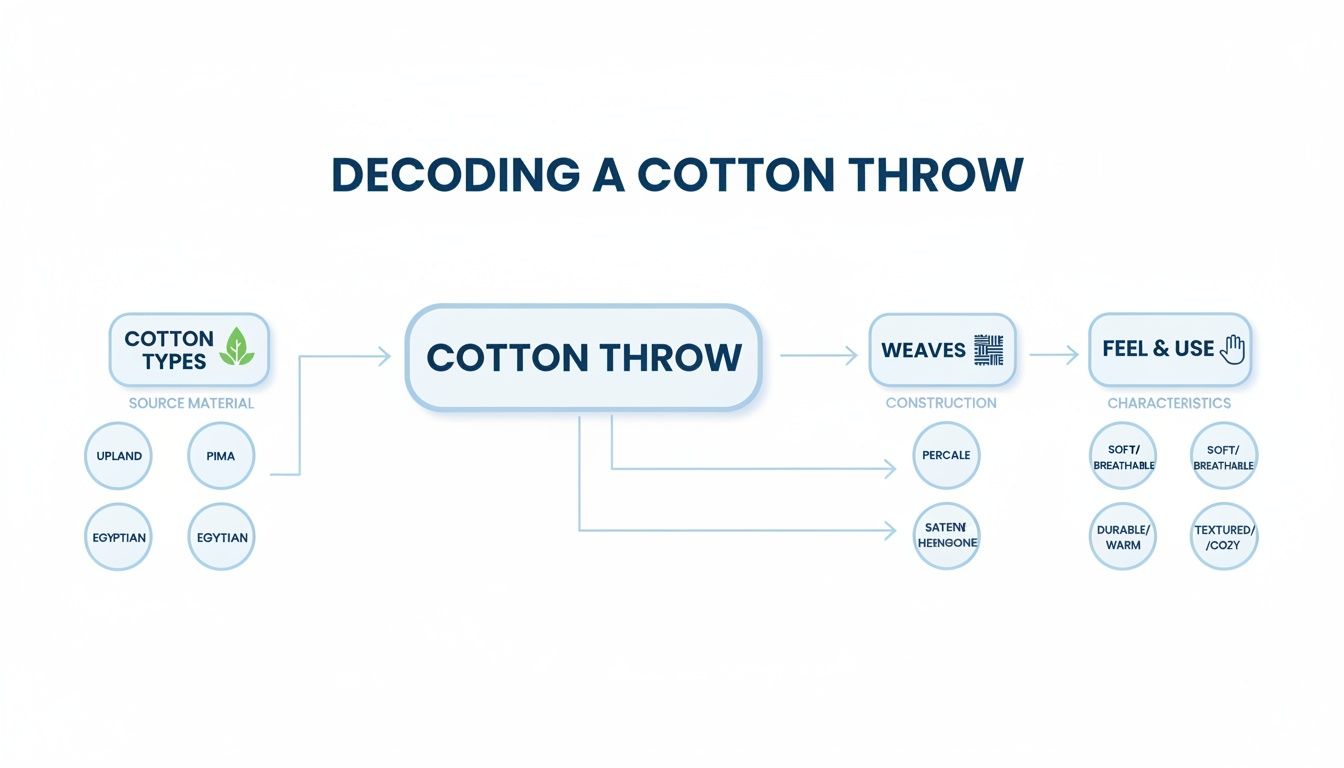
As you can see, the journey from a simple cotton plant to a cosy throw on your sofa involves deliberate choices in both material and construction that define its character.
The Foundation: Your Cotton Type
Not all cotton is created equal. The plant's variety and growing conditions determine the length of its fibres, which in turn dictates the softness, strength, and longevity of the finished product.
- Long-Staple Cotton (like Pima or Egyptian): This is the premium stuff. Its extra-long fibres can be spun into finer, smoother, and stronger yarns. A throw made from long-staple cotton will be incredibly soft, resistant to pilling, and will only get better with age.
- Organic Cotton: Grown without synthetic pesticides or fertilisers, organic cotton is a fantastic choice for those with sensitive skin or allergies. Its fibres are often untreated with harsh chemicals, resulting in a naturally soft and pure material.
- Standard Cotton (Upland): This is the most common type, making up the vast majority of cotton products. While not as luxurious as long-staple varieties, a well-made throw from high-quality Upland cotton is still durable, breathable, and provides excellent value.
The Australian home textiles market shows a clear preference for quality. Within this sector, cotton maintained a commanding 41.2% market share in 2024. Many local brands strategically blend Aussie-grown cotton with imported long-staple varieties to hit that sweet spot between durability and luxurious softness.
The Art of the Weave: How Texture Is Born
Once you have the yarn, the weave is how it’s all put together. The weaving pattern is what gives a cotton throw its specific texture, weight, and function. It's the architecture of the blanket.
A blanket’s weave isn't just for looks; it's a functional design choice that determines its breathability, warmth, and drape. The right weave can turn simple cotton threads into a cosy masterpiece.
Let's break down some of the most popular weaves you'll come across when looking for a cotton throw.
Comparing Cotton Weaves for Your Throw Blanket
To give you a clearer picture, this table breaks down the most common weaves you'll find in Australia. It should make it easier to pinpoint which one is the right fit for your home and the feeling you're after.
| Weave Type | Texture & Feel | Best Season | Key Benefit |
|---|---|---|---|
| Waffle | Plush, grid-like texture | All Seasons | Traps air for insulation without the weight; highly absorbent. |
| Herringbone | Smooth with a V-shaped pattern | All Seasons | Adds subtle, sophisticated texture; drapes beautifully over furniture. |
| Muslin/Gauze | Incredibly light, open, and airy | Summer | Maximum breathability for a barely-there layer on warm nights. |
| Jersey Knit | Soft, stretchy, like a favourite t-shirt | Autumn/Winter | Unbeatable comfort and a familiar, cosy feel. |
Each of these weaves gives cotton a completely different personality, turning the same raw material into a blanket that can be either breezy and light or warm and snuggly.
A Closer Look at Common Weaves
- Waffle Weave: This creates a distinctive grid-like pattern of recessed squares. These little pockets are brilliant at trapping air, providing excellent insulation without adding a lot of weight. It’s cosy, absorbent, and has a wonderful, plush texture.
- Herringbone Weave: Named for its resemblance to a fish skeleton, this V-shaped pattern creates a sophisticated and timeless look. A herringbone weave adds subtle texture and is known for its durability and beautiful drape over furniture.
- Muslin or Gauze Weave: If you need a blanket for warmer weather, this is the one. A muslin weave is incredibly lightweight and open, allowing for maximum airflow. It’s perfect for a breezy layer on a summer night or as a light covering in an air-conditioned room.
- Jersey Knit: Unlike the woven options, this is a knit fabric, just like your favourite t-shirt. This gives it a natural stretch and a super soft, familiar feel. It’s less about structured texture and more about pure, uncomplicated comfort. These same soft, stretchy properties make it a popular choice in bedding, as detailed in our guide on the https://thesofacovercrafter.com/blogs/sofa-cover-ideas/jersey-cotton-bed-sheets.
To really appreciate the unique qualities of cotton, it helps to see where it sits in the broader world of textiles. Exploring the best blanket material for different needs really highlights why cotton's versatility makes it such an enduring favourite. By understanding both the fibre and the weave, you can read any product description and know exactly how that blanket will feel and perform.
Choosing the Right Size and Weight
Okay, you’ve got a handle on the different cottons and weaves. Now comes the fun part: turning that knowledge into the perfect choice for your own home. Picking the right size and weight for your cotton throw blanket is what separates a throw that looks effortlessly stylish from one that just feels awkward and out of place. It’s all about matching the blanket's scale to your furniture and its heft to what feels comfy to you.
This is where function and form really need to work together. An oversized throw can completely swamp a delicate armchair, while a tiny one will get lost on a big, sprawling sofa. Let's break down the typical sizes and make sense of the numbers, so your new throw is both beautiful and genuinely useful.
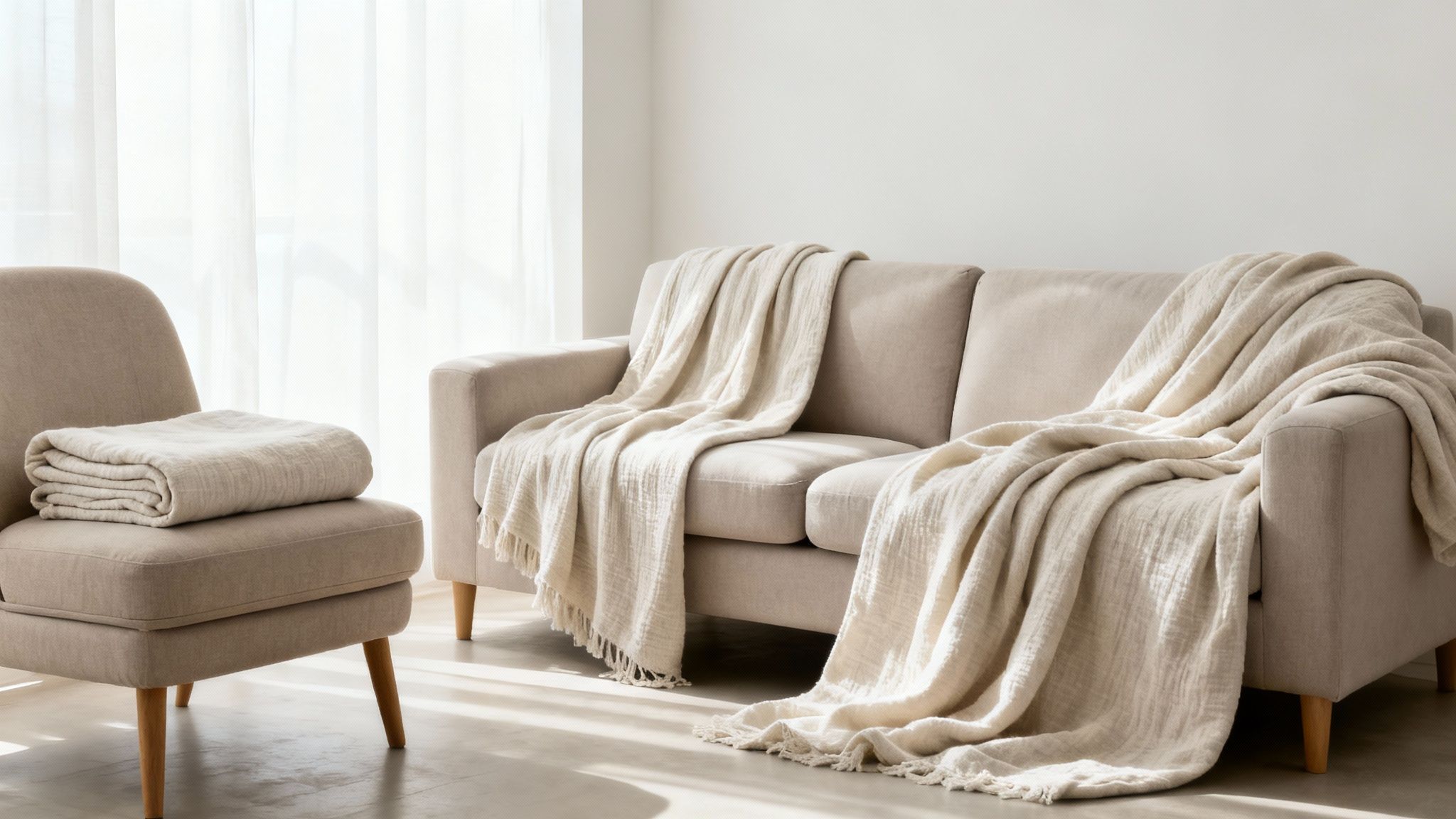
Finding the Perfect Fit: Common Throw Blanket Sizes
Unlike bedding, throw blankets don’t really have standardised sizing, but they do tend to fall into a few common categories. Figuring out which one you need comes down to how you actually plan to use it.
-
Small/Accent Throw (approx. 125cm x 150cm): This is the ideal size for draping over a single armchair, adding a touch of colour to the corner of a small loveseat, or even styling at the end of a child's bed. It’s perfect for adding a pop of texture without overwhelming the furniture.
-
Standard Throw (approx. 130cm x 170cm): This is the go-to, the most versatile and popular size out there. It’s big enough to be draped artfully across the back of a two or three-seater sofa, folded neatly over an armrest, or to properly snuggle under while you’re watching a movie. Most throws you see in stores will be around this size.
-
Large/Oversized Throw (approx. 150cm x 200cm or larger): Got a big sectional couch or want something to drape across the foot of a Queen or King bed? This is the one for you. An oversized throw is built for serious cuddling and gives you enough coverage for two people to share without fighting over it.
Think of your throw's size in relation to your furniture. The goal is to create balance. A standard throw is a safe bet for most sofas, offering maximum styling flexibility without looking too big or too small.
Demystifying Blanket Weight: The GSM Scale
Ever seen "GSM" in a product description and just scrolled past? GSM stands for Grams per Square Metre, and it's simply a measure of how dense or heavy a fabric is. Getting your head around GSM is the secret to picking a blanket that feels just right for our Aussie climate and your own comfort levels.
Think of it like paper thickness. A low GSM is like a thin sheet of notebook paper—light and breezy. A high GSM is more like a thick, premium piece of card—it feels substantial, durable, and a bit more luxurious.
Low GSM (Under 300):
These are your lightweight, airy blankets. A cotton throw in this range is perfect for Australian summers, giving you a bit of comfort without trapping any heat. They’re often made with those open weaves we talked about, like muslin or gauze.
Medium GSM (300-500):
This is the versatile, all-season sweet spot. A cotton throw with a medium GSM has a noticeable sense of comfort and warmth without being too heavy. Waffle, herringbone, and jersey knit throws often fall right into this popular category.
High GSM (500+):
These are the heavyweights. A high-GSM cotton throw feels thick, plush, and incredibly cosy, making it the one you’ll reach for during those colder winter months. These blankets have a substantial, luxurious drape and are built for maximum warmth and comfort.
Ultimately, the right GSM comes down to when and how you’ll be using your blanket. If it’s mostly a decorative accent that gets occasional use, a low-to-medium GSM is perfect. But for a true workhorse blanket meant for daily snuggling through winter, a higher GSM will give you that satisfying, comforting weight you’re looking for.
Styling Your Cotton Throw Like a Designer
A cotton throw blanket is so much more than just a source of warmth. It’s one of the most powerful and versatile styling tools in your home decor arsenal. With just a few simple techniques, you can transform it from a humble blanket into a deliberate design element that adds texture, colour, and a sense of effortless sophistication to any room.
Forget just folding it into a neat rectangle. We're going to explore how interior designers use throws to create inviting, chic, and lived-in spaces. Whether your sofa is brand new, a beloved vintage piece, or protected by a slipcover, the right styling method can elevate its entire look in an instant.
Master the Foundational Folds and Drapes
Before you start layering, it helps to get a handle on a few core techniques. Each one creates a distinct mood, from relaxed and casual to structured and polished. Have a play and see which one best suits your personal style and furniture.
1. The Effortless Drape
This is the secret to that "perfectly imperfect" magazine look. It’s all about appearing casual and inviting, as if someone just set it down a moment ago.
- How to do it: Pinch the throw from the centre and let the fabric hang down. Then, gently lay it over one corner of your sofa, allowing it to cascade naturally over the back and seat cushion. Tuck it in slightly at the back and fluff out the folds for a relaxed, organic shape.
2. The Polished Fold
For a more formal, clean, and organised appearance, the polished fold is your go-to. This method works beautifully in minimalist or traditional spaces where clean lines are key.
- How to do it: Fold your throw lengthwise into thirds to create a long, neat strip. You can then drape this over the arm of the sofa, across the back, or neatly over one of the seat cushions. The look should be crisp and intentional.
3. The Corner Tuck
This is a fantastic way to add a pop of colour or texture without having the throw take over the entire sofa. It's a subtle but really effective touch.
- How to do it: Fold the blanket neatly in half or thirds. Place it diagonally over one corner of the sofa, tucking the top edge neatly behind the back cushion to secure it. This frames the seating area and adds a cosy, welcoming vibe.
Using Throws to Solve Design Challenges
Beyond just looking pretty, a strategically placed cotton throw can fix common decorating dilemmas. It’s a functional tool that can soften hard lines, introduce new textures, and create visual harmony in your living space.
Think of your cotton throw as a paintbrush for your room. You can use it to add a splash of bold colour to a neutral space, break up a large expanse of a single fabric, or introduce a tactile element that makes a room feel more inviting.
A well-placed throw can completely change the character of a piece of furniture.
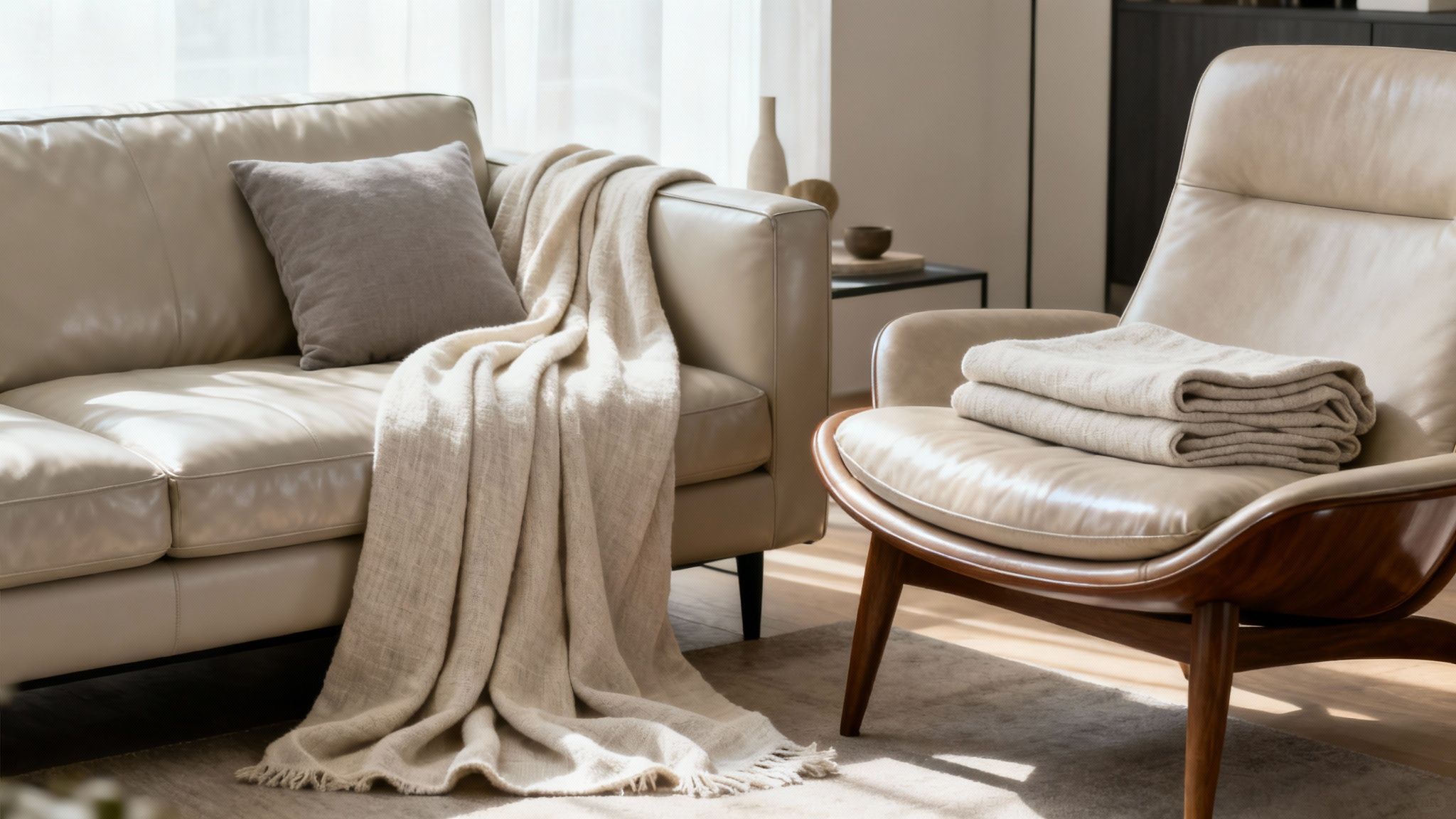
- Soften a Leather Sofa: Leather is timeless, but it can sometimes feel cold or visually hard. Draping a soft, textured cotton throw—like one with a waffle or cable-knit weave—over the back or arm instantly adds warmth and a welcoming softness.
- Add Depth to a Modern Armchair: Sleek, modern armchairs with sharp lines can be softened by adding a throw. The effortless drape works perfectly here, breaking up the chair's rigid silhouette and making it look much more comfortable.
- Enhance a Slipcovered Sofa: Throws and slipcovers are a match made in heaven. A cotton throw can add a layer of texture and colour that complements your sofa cover. For those looking to get creative, there are many ways to style a sofa with covers and throws to achieve a layered, designer look.
Layering Colours and Textures Like a Pro
The real artistry of styling comes from layering. Combining different textures and colours is what gives a room that rich, curated feel, and a cotton throw blanket is the perfect place to start.
Start with your largest element—the sofa—and build from there. If you have a neutral sofa, use a throw to introduce a seasonal colour like a warm terracotta for autumn or a cool blue for summer. Don't be afraid to mix textures, either. A smooth, plain sofa cover provides the perfect canvas for a chunky knit or a herringbone weave throw.
Finally, complete the look by adding cushions. Choose cushions in complementary colours but different textures or patterns to create a dynamic and visually interesting arrangement. The throw will act as the unifying element that ties the sofa and the cushions together into one cohesive, stylish vignette. Your living room will instantly feel more complete.
How to Care for Your Cotton Throw Blanket
You’ve found the perfect cotton throw, the one that adds just the right splash of colour and comfort to your living room. Now, let’s make sure that cosy companion stays soft, vibrant, and inviting for years to come. Looking after natural cotton fibres is surprisingly simple, but a little know-how goes a long way.
With just a bit of attention, you can easily sidestep common issues like shrinking, fading, or those annoying little fluff balls. This guide will walk you through washing and using your throw without any stress, making sure it remains a favourite part of your home.
First Things First: Read the Care Label
Before you do anything else, find the care tag on your throw. Think of this little label as a personalised instruction manual from the people who made it—they know the fabric best. It’ll tell you everything you need to know, from the ideal water temperature to the best drying method.
While most cotton throws are made for easy living, some have unique needs because of their specific weave or dyes. A delicate, open-knit throw, for example, will need a much gentler cycle than a sturdy herringbone one. Always follow the tag’s advice for the best results.
A Step-by-Step Guide to Washing
Keeping your cotton throw clean is refreshingly straightforward. Unlike fussier materials that demand a trip to the dry cleaner, most cotton can be washed right at home. Following these simple steps will help maintain its shape, softness, and colour.
-
Get it Ready: Give your blanket a good shake outside to get rid of any loose dust or pet hair. It’s also a great idea to wash your throw on its own or with similar colours, just in case any dyes decide to run.
-
Choose the Right Settings: Select a gentle or delicate cycle on your washing machine. This puts the least amount of stress on the cotton fibres, which helps prevent any stretching or damage to the weave.
-
Use Cold Water: Always, always opt for cold water. Hot water is the number one cause of shrinking and can make colours fade over time. A good-quality, gentle detergent is all you need to get it perfectly clean.
Pro Tip: Steer clear of fabric softeners when washing your cotton throw. It sounds backwards, I know, but these products can leave a waxy film on the natural fibres, which actually makes them less soft and absorbent over time.
The Great Debate: Drying Your Throw
How you dry your cotton throw is just as important as how you wash it. You’ve got two main options, and each one has its own benefits for keeping your blanket’s texture and shape just right.
-
Air-Drying (The Gentle Method): Whenever you can, air-drying is your best bet. It’s the kindest method by far and completely removes any risk of heat-related shrinkage. Just drape the blanket over a clothesline or drying rack, but try to keep it out of harsh, direct sunlight, which can fade the colours.
-
Tumble Drying (The Quick Method): If you’re short on time and need to use a machine, choose the lowest heat setting you have—often called "air fluff" or "delicate." High heat is the enemy of cotton. Tossing in a few wool dryer balls can help fluff up the blanket and even speed up the drying time a bit.
Tackling Common Problems Head-On
Even with the best care, life happens. Here’s how to handle a few common issues without any fuss.
For pilling—those tiny balls of fluff—a fabric shaver or a de-pilling comb will gently whisk them away without harming the blanket. If you get a snag, resist the urge to cut it! Instead, gently stretch the fabric around the snag and use a needle to carefully poke the loose thread back through to the other side. For spills, act fast. Blot the area (don't rub!) with a clean, damp cloth to lift the stain before it has a chance to set.
A Smart Shopper's Guide to Buying in Australia
Right, you’re now armed with all the expert knowledge on weaves, weights, and styling. The only thing left to do is actually buy the perfect cotton throw. Navigating the Australian market is pretty straightforward once you know what to look for, ensuring you bring home a piece that’s not just beautiful, but built to last.
The local appetite for quality home textiles is booming. In fact, Australia's blankets and quilts market is valued at USD 421.4 million in 2024 and is only expected to grow. This tells us one thing: Aussies care about quality home comforts, making it a fantastic time to be a discerning shopper. You can read more about the trends in the Australian blankets market to see how our tastes are evolving.
This surge means you've got more choice than ever, from the big-name retailers to gorgeous little online boutiques. To make the right call, you need to look past the price tag and understand what really makes a quality throw.
What to Look for on the Label
That small tag on a throw blanket tells a surprisingly big story. It’s your first checkpoint for quality, giving you crucial details that go way beyond simple washing instructions.
- Material Composition: Always, always check that it says "100% Cotton." Be a bit wary of vague terms like "cotton blend." While not always a bad thing, those other materials can definitely change the feel, breathability, and how it washes over time.
- Certifications: A label like OEKO-TEX STANDARD 100 is a fantastic sign. It means the blanket has been independently tested and is completely free from harmful levels of over 100 substances known to be dangerous. This is a big deal for anything that’s going to be in close contact with your family’s skin.
Seeing these details gives you confidence that you’re buying something that’s not just comfy, but also safe and responsibly made.
Where to Shop: Boutique vs. Big Retailers
Your shopping experience can be wildly different depending on where you look. Both the major retailers and smaller boutique stores offer their own unique advantages.
Big-box retailers are great for convenience and competitive pricing, making them a solid starting point. But if you’re after something truly special, I’d highly recommend exploring local Australian homeware boutiques or online brands. These smaller businesses often curate unique collections with a real focus on exceptional craftsmanship and distinctive designs you just won’t find anywhere else.
Supporting local Australian brands not only gives you access to unique, high-quality products but also strengthens our creative communities and local economy. It’s an investment in both style and substance.
When you’re shopping online, customer reviews are your best friend. Look for comments that mention the blanket's softness after washing, how accurate the colour is in real life, and its long-term durability—not just how it looks straight out of the packaging. And before you hit "buy," make sure you understand the return policy, just in case the colour or texture isn’t quite what you had in mind. Being a savvy shopper means looking for quality, safety, and a style you’ll love for years to come.
Got Questions About Cotton Throws? We’ve Got Answers.
Even when you’ve got the basics down, a few specific questions always seem to pop up when you're choosing or looking after a new cotton throw blanket. Let's get straight into the most common queries we hear from our shoppers here in Australia.
How Do I Stop My New Cotton Throw From Shedding?
Don't panic if your new throw is a bit fluffy at first. Shedding is completely normal for new natural fibre blankets, as loose little particles from the weaving process need to work their way out. The fix is simple: give your throw a gentle wash on a cool, delicate cycle before you start using it properly. This one step will wash away most of those initial excess fibres.
For an extra helping hand, you can tumble dry it on a very low heat setting with a couple of wool dryer balls. They'll help catch any lingering fluff. After this initial care, the shedding will drop off dramatically as the threads settle in.
Is a 100% Cotton Throw Actually Better Than a Blend?
This really comes down to what you’re looking for in a throw. If pure, gentle comfort is your top priority, then a 100% cotton throw is the clear winner. It’s unbeatable for its natural breathability and hypoallergenic properties, making it an absolute dream for sensitive skin.
However, a blend isn't a bad thing; it’s just different. Adding a fibre like linen can make a throw more durable and give it a lovely, rustic texture. A small amount of polyester might be added to help it resist wrinkles. So, for that classic, natural softness, pure cotton is king. For a specific feature like extra toughness, a blend could be the right call.
What’s the Best Cotton Throw if I’m a Hot Sleeper?
If you’re someone who tends to run warm, you'll want a lightweight and incredibly breathable cotton throw. The trick is to look for a blanket with a low GSM (Grams per Square Metre) and, most importantly, a noticeably open weave.
For maximum airflow, you can’t go wrong with weaves like muslin, gauze, or a light waffle knit. Their open structure allows air to circulate freely, giving you that comforting bit of weight without trapping any body heat. They're perfect for our warmer Aussie climates or for anyone who wants a cosy layer all year round.
Ready to add that perfect layer of comfort and style to your home? The Sofa Cover Crafter offers a curated collection of beautiful, high-quality throw blankets designed to complement any Australian living space. Explore our range and find your new favourite throw today!