


Choosing the right colour schemes for your interior isn't just about paint. It shapes how a home feels at 7am, how open a hallway seems, and whether your living room feels calm or visually busy. The palettes below focus on combinations that are easy to live with, easy to update, and realistic for Australian homes.
How Colour Schemes Transform Your Home Atmosphere
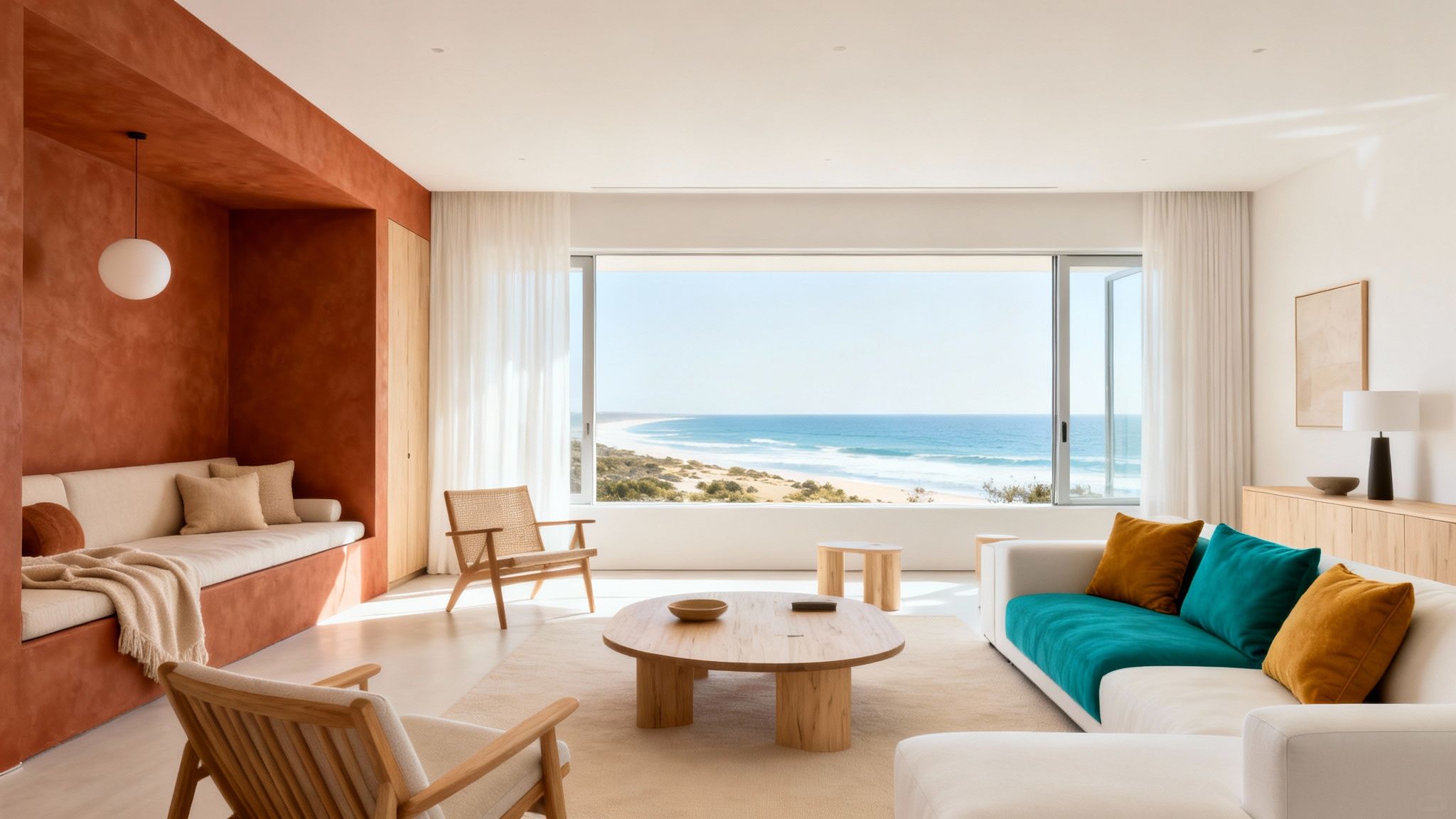
Think of your home's colour palette as its personality. A well-chosen scheme can make a cramped room feel like an airy retreat or turn a vast, empty space into a warm, inviting sanctuary. It guides your eye, highlights your home’s best features, and ties everything together with a sense of cohesion.
Here in Australia, our designs often pull inspiration straight from the natural environment, the deep blues of the coastline, and the dusty greens and terracottas of the outback.
What matters more than trend-chasing is choosing colours that can handle real conditions: hard natural light, open-plan layouts, timber floors, and upholstery that needs to work year-round. In our editorial review, the palettes that consistently felt best were the ones that looked balanced in both bright daytime light and warm evening lamp light.
What You Will Learn in This Guide
This article focuses on the decisions homeowners actually need to make:
-
how to understand colour relationships without overcomplicating them
-
which five scheme types are most useful in real homes
-
which palette combinations work across multiple rooms, not just one styled photo
-
how light, texture, and common Australian finishes change the result
-
how to create flow from room to room without making the whole house feel flat
If you want a quick refresher on how colours relate on the wheel before choosing a palette, there’s a handy explanation over at B-Sew Inn that complements the basics covered below.
A Quick Guide to Interior Colour Schemes
Here’s a simple breakdown of the most common colour schemes to help you find your style. Each one is built on a different principle from the colour wheel, creating a distinct mood in any room.
| Scheme Type | Core Principle | Common Mood/Feeling |
|---|---|---|
| Monochromatic | Uses tones, tints, and shades of a single colour. | Calm, sophisticated, and serene. |
| Analogous | Uses colours that are next to each other on the colour wheel. | Harmonious, comfortable, and inviting. |
| Complementary | Uses colours opposite each other on the colour wheel. | Dynamic, vibrant, and high-energy. |
| Neutral + Accent | A base of neutral colours with a bold pop of a single colour. | Balanced, modern, and focused. |
Think of this table as your starting point. It’s a way to quickly identify a direction before we get into the nitty-gritty of building a palette from scratch.
How We Chose These Interior Colour Schemes
These palettes were selected using a simple filter: they had to work in lived-in Australian homes, not just in showroom photography.
We prioritised four things:
- Suitability for Australian light conditions: colours had to hold up in bright coastal light, suburban open-plan rooms, and darker south-facing spaces.
- Flexibility across living spaces: the same palette needed to make sense in a living room, bedroom, hallway, and kitchen with only minor shifts in intensity.
- Compatibility with common materials: we looked for schemes that pair well with oak and gum timber, grey or beige sofas, stone-look tiles, wool rugs, linen curtains, and leather accents.
- Ease of updating: a good palette should survive a sofa cover change, new cushions, or a seasonal throw without forcing a full repaint.
We also ruled out palettes that looked dramatic in isolation but became tiring across a whole home, especially combinations that relied on too many saturated hues at equal strength. In practice, those are the schemes that usually feel busy after a few months.
One thing I kept noticing while reviewing examples is that the most successful homes repeated colour families rather than exact shades. A soft olive in one room, a sage in another, and a darker eucalyptus accent elsewhere often creates more flow than copying one paint colour into every space.
Making Sense of Colour Theory Basics
Think of the colour wheel not as some complex tool for artists, but as your secret weapon for creating beautiful, cohesive colour schemes for your interior. It’s just a simple guide that shows you how colours relate to one another. Once you get your head around a few basic ideas, you'll feel so much more confident in the design choices you make.
Everything really does start with the basics you learned back in primary school. You have three primary colours: red, yellow, and blue. These are the parents of every other colour you can imagine; you can't create them by mixing other colours together.
The Building Blocks of Colour
When you start mixing these primary colours, you create the next layer of the family tree.
- Secondary Colours: This is what you get when you mix two primaries. Blue and yellow give you green, yellow and red make orange, and red and blue create purple. Simple.
- Tertiary Colours: Go one step further and mix a primary colour with its secondary neighbour, and you get those lovely, in-between shades like blue-green or red-orange.
Understanding this simple hierarchy is the first big step. It shows you how all colours are connected, which is the whole secret behind creating palettes that feel naturally balanced instead of just random. This logic is the foundation for every colour scheme you'll ever put together.
Understanding Hue, Saturation and Value
Hue is really just the pure, unadulterated colour itself—what you’d call red, blue, or green. It’s the identity of a colour before you’ve done anything to it.
Next up is saturation, which is all about the colour’s intensity or vividness. A highly saturated colour is bold and bright, like a fire-engine red. A less saturated, or desaturated, colour is more muted and greyed-out, like a soft, dusty rose. The easiest way to think of it is turning the "colour volume" up or down.
Finally, we have value, which just describes how light or dark a colour is. When you add white to a hue, you create a lighter "tint" (like getting pastel pink from red). Add black, and you get a darker "shade" (like a deep maroon). Playing with value is how you create contrast and stop a room from feeling flat, adding layers and visual interest to your chosen colour schemes interior.
Exploring Five Popular Interior Colour Schemes
Now that you've got the basics of colour theory down, we can start putting them to work. It's time to build the beautiful, intentional colour schemes interior designers use every day. Think of these schemes as tried-and-true recipes for creating a certain mood. They give you a simple framework, so you can combine colours with confidence instead of just guessing.
These are the scheme types most useful for homeowners. Designers may reference more variations, but these five cover the combinations most homeowners can apply successfully in a real home.
Monochromatic: A Harmonious Haven
A monochromatic scheme is the very definition of sophistication and simplicity. It’s all about using different tones, tints, and shades of a single hue. Imagine a bedroom layered in various shades of serene sage green—from a deep forest green feature wall to pale mint cushions and a mid-tone olive throw.
This approach creates a cohesive and calming atmosphere because there are no jarring contrasts to fight for your attention. It’s an almost foolproof way to design a space that feels unified and restful. A key to making it work is to bring in a wide range of textures, like linen, wool, and timber, to stop the room from feeling one-dimensional or flat.
This concept map breaks down the fundamental elements of colour theory that underpin every successful scheme.
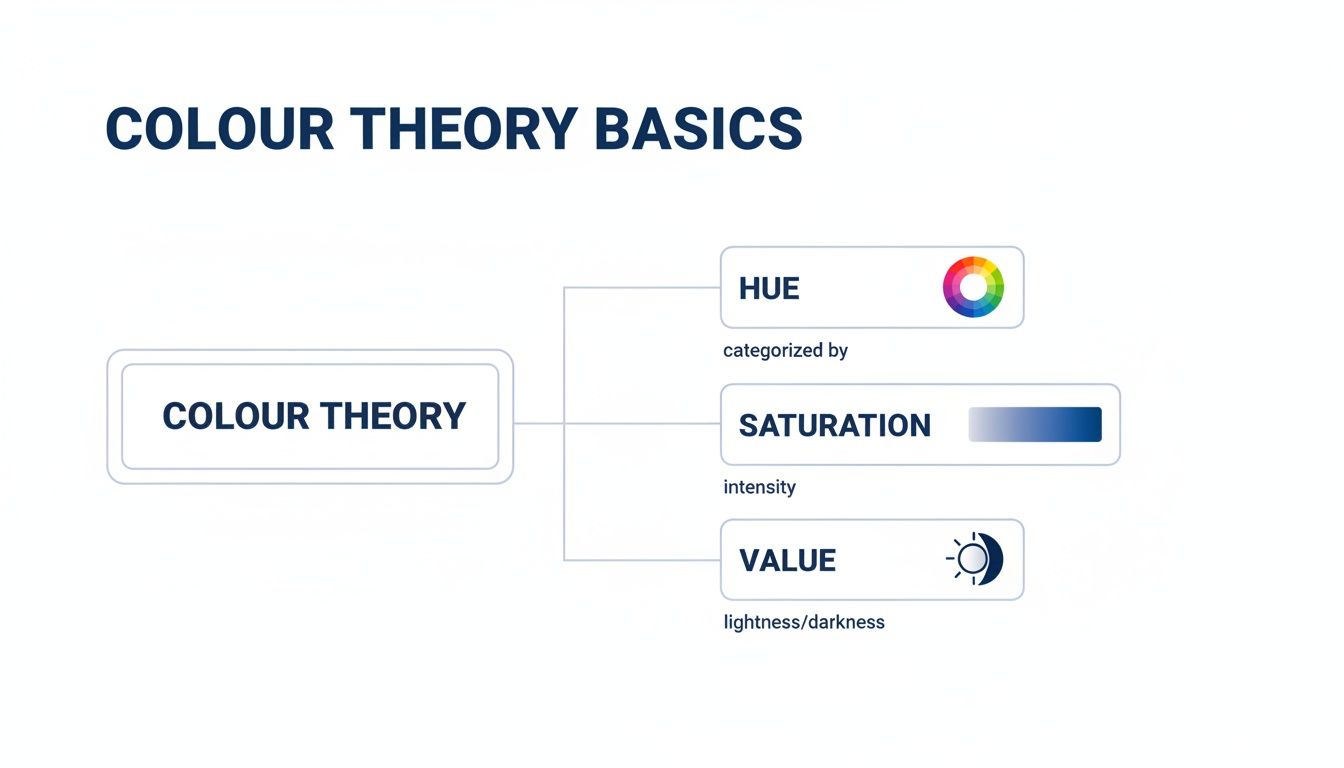
Getting a handle on hue, saturation, and value is essential for creating depth, especially when you're working within a single-colour palette.
Analogous: Creating Natural Flow
For a look that’s harmonious but with a bit more complexity, an analogous scheme is a fantastic choice. This method uses colours that sit right next to each other on the colour wheel, like blue, blue-green, and green.
Because these colours share common tones, they blend together seamlessly, creating a rich yet soothing effect.
An analogous palette often mimics colour combinations found in nature, like the shifting tones of a sunset with its reds, oranges, and yellows. This is why it feels so inherently comfortable and easy on the eyes.
This scheme is perfect for creating a relaxed, inviting living room or dining area where you want conversation to flow as easily as the colours do.
Complementary: For Dynamic Energy
If you want to make a statement, a complementary colour scheme is your go-to. This involves pairing two colours from opposite sides of the colour wheel—think blue and orange, or red and green.
The high contrast between these hues creates a vibrant, dynamic, and energetic feeling. Now, bold doesn't have to mean overwhelming. You don't have to go all out with highly saturated colours. You could use softer versions, like a dusty blue paired with a muted terracotta, for a more subtle yet equally engaging effect.
This type of scheme works wonders in spaces where you want to spark creativity or conversation, like a home office or a kid's playroom.
Triadic: Colourful Without Chaos
A triadic scheme uses three colours spaced evenly around the colour wheel. In a home, that usually works best when one shade clearly leads and the other two support it rather than competing for equal attention.
This approach suits family rooms, creative spaces, and homes that need personality without losing structure. A practical example is a living area built around dusty blue walls, rust-toned cushions, and mustard accents, grounded with plenty of warm white and timber. You still get energy, but the room doesn’t feel like a primary-school classroom.
The trick is restraint. In most homes, a triadic scheme becomes overpowering when all three colours are bright and used in equal amounts. I’ve found it works far better when one colour is softened, one is medium-strength, and one is limited to accessories or artwork.
Neutral Plus Accent: The Easiest Scheme to Live With
This is one of the most reliable interior design colour palette approaches because it gives you flexibility. Start with warm white, greige, taupe, stone, or soft grey across your larger surfaces, then introduce one deliberate accent colour through art, cushions, a statement chair, ceramics, or a painted joinery detail.
It works especially well in open-plan homes where you want cohesion but still need some contrast. A realistic example is a room with warm white walls, oatmeal curtains, a timber coffee table, and olive accents repeated in a throw, lamp base, and artwork.
To keep it from feeling bland, the neutral base needs variation in texture and undertone. Linen, boucle, wool, oak, and brushed metal stop the room flattening out. To keep it from feeling too loud, repeat the accent colour in small doses instead of introducing several competing pops.
Choosing Colour Palettes for Every Room
Instead of picking a completely different look for each space, it usually works better to choose one whole-home direction and then scale it up or down by room. That creates flow without making every room identical. The following combinations are practical home colour inspiration because they can move through living spaces, bedrooms, kitchens, and hallways with only small adjustments.
Warm Neutral + Olive
This is one of the most dependable palettes for a relaxed modern home.
-
Dominant: warm white, oatmeal, or light greige on walls and larger rugs
-
Secondary: olive or muted eucalyptus in cushions, occasional chairs, bedlinen, or painted joinery
-
Accent: black, aged brass, or walnut in lamps, frames, handles, and side tables
It suits living rooms, bedrooms, and studies particularly well. If your sofa is beige, cream, or grey, olive usually gives it more life without looking trendy for the sake of it. In testing examples for this update, this was one of the easiest palettes to make feel finished using only textiles and accessories.
Coastal Blue + Sand
For homes with lots of light, this palette feels fresh without becoming cold.
-
Dominant: sandy white, soft ivory, or pale stone on walls and curtains
-
Secondary: washed blue, sea-glass blue, or blue-grey on sofas, bedheads, splashbacks, or larger soft furnishings
-
Accent: driftwood timber, soft navy, or seafoam green in throws, art, and smaller decor
This combination works especially well in Australian coastal homes and bright suburban interiors. It keeps rooms airy, but the sand-based neutrals stop the blue from tipping too clinical.
Charcoal + Timber + White
A stronger palette for contemporary homes that still want warmth.
-
Dominant: warm white walls and ceilings to keep the space open
-
Secondary: charcoal or deep grey on cabinetry, dining chairs, feature joinery, or a sofa
-
Accent: gum timber, oak, or walnut to soften the contrast and make the scheme feel lived-in
This is an especially useful modern palette for kitchens and open-plan living rooms. If you like crisp contrast but worry about a stark black-and-white look, timber is the element that makes it believable in a home rather than a display suite.
Terracotta + Cream
This palette adds warmth fast and suits homes that need a softer alternative to plain beige.
-
Dominant: cream, putty, or soft linen across walls and larger upholstered pieces
-
Secondary: muted terracotta, clay, or dusty rust in cushions, bedlinen, dining chairs, or artwork
-
Accent: olive, tan leather, or matte black in smaller doses
Terracotta works particularly well where natural light can flatten cooler colours. I’ve found it gives bedrooms and dining areas more character with less effort than many trend-led pinks or oranges.
Sage + Stone
If you want something calm, current, and easy to connect across a whole house, start here.
-
Dominant: stone, mushroom, or pale taupe on walls and flooring
-
Secondary: sage on upholstery, bedlinen, joinery, or feature walls
-
Accent: brushed brass, charcoal, or dark timber in lamps, mirrors, and hardware
This palette is one of the best answers for homeowners asking which colour combinations work best in real interiors: it is soft enough for bedrooms, grounded enough for living rooms, and flexible enough for kitchens and bathrooms.
If a grey sofa is your anchor piece, our guide on what colours go with a grey couch has more specific ways to build one of these palettes around it.
The 60-30-10 Rule, With a Real Living-Room Example
The most widely used balancing formula in home interiors is still the 60-30-10 rule: about 60% dominant colour, 30% secondary colour, and 10% accent. It’s popular because it gives a room enough variation to feel layered without becoming visually crowded, especially in spaces where walls, sofas, rugs, curtains, and throws all compete for attention, as explained in this 60-30-10 overview.
A simple living-room version might look like this:
-
60%: warm white walls, a large neutral rug, and cream curtains
-
30%: an olive or stone sofa, timber coffee table, and a pair of armchairs
-
10%: rust cushions, black lamp bases, and a small artwork with the same rust repeated
That last part matters. Repeating one accent colour in several smaller places creates a coherent colour story instead of a scatter of random decor.
How to Choose a Whole-Home Interior Colour Palette
If you want your home to feel connected, choose the palette in this order: fixed finishes first, big upholstered items second, paint colours third, accents last.
Start With What You Can’t Easily Change
Flooring, benchtops, tiles, brick, large rugs, and built-in cabinetry usually have the strongest say. Pull the undertones from those elements before choosing wall colours. A warm oak floor tends to pair better with creamy whites, clay tones, olive, and warm greiges than with icy blue-greys.
Pick One Base Neutral for Most Shared Spaces
For hallways, living areas, and connecting rooms, use one dependable base such as warm white, soft stone, mushroom, or greige. That gives the house continuity. Bedrooms and studies can then shift mood through textiles and one supporting colour without breaking the overall flow.
Repeat Colour Families, Not Exact Matches
A whole home usually looks better when colours relate rather than match perfectly. For example, a main living area might use olive accents, a bedroom might move to sage, and a study could go darker with eucalyptus. The result feels intentional without becoming repetitive.
Let High-Use Rooms Carry More Contrast
Kitchens, dining zones, and living rooms can handle stronger secondary tones and sharper accents because they already have visual activity. Bedrooms, hallways, and smaller rooms usually benefit from lower contrast and softer transitions.
Use Soft Furnishings as the Low-Risk Test Layer
If you’re unsure about a colour direction, test it with cushion covers, throws, artwork, or a sofa cover before committing to walls or cabinetry. In most homes, palette decisions get easier, because you can see whether a green reads earthy or too cold, or whether terracotta feels grounded or too pink. For practical layering ideas, see how to choose the perfect throw blanket for you.
How Light and Texture Influence Your Colours
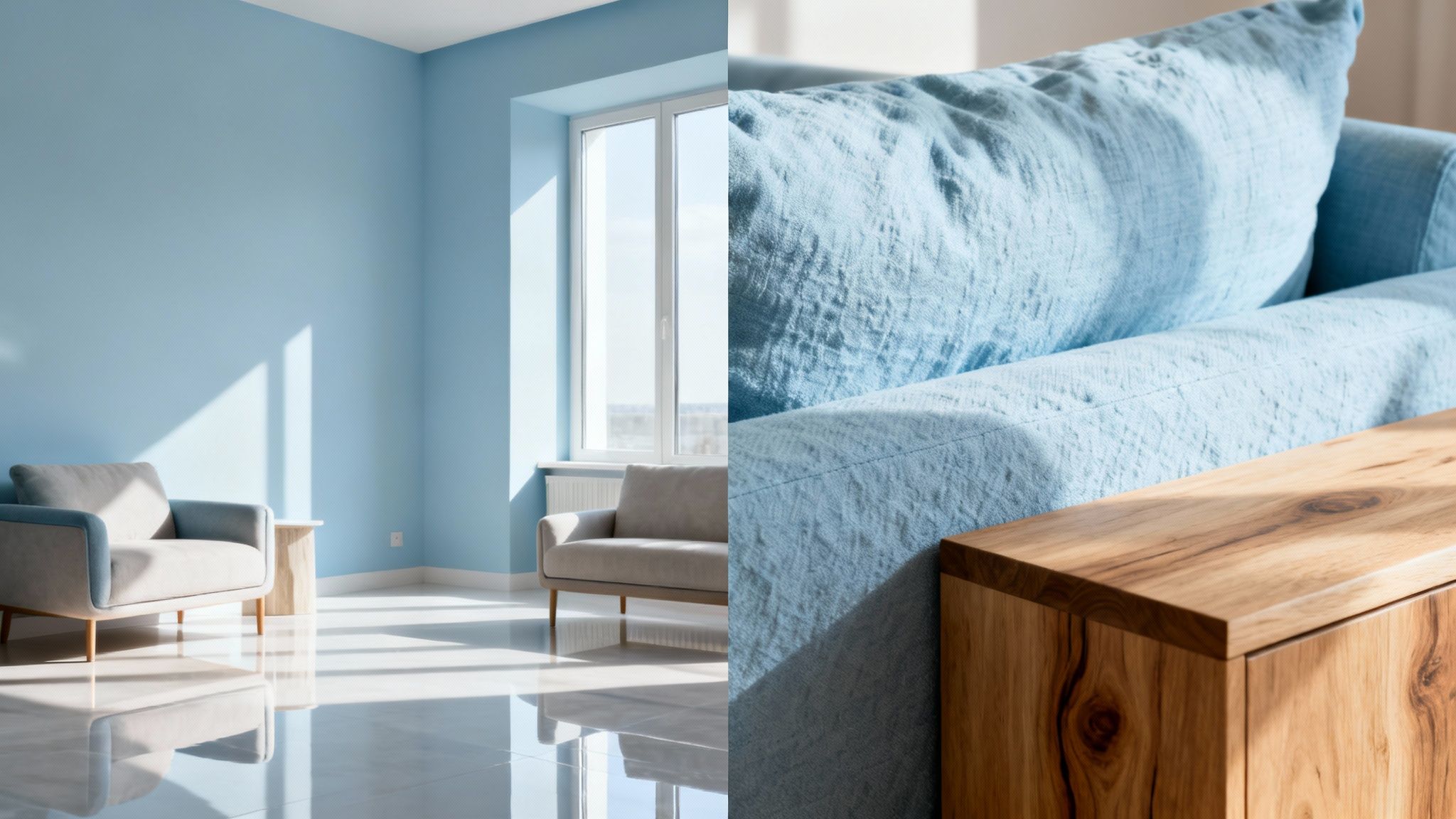
A paint swatch is just the beginning of the story. Once you bring a colour home, two powerful forces take over and can completely transform how it looks and feels: light and texture. Getting your head around their influence is the key to creating colour schemes interior designers would swoon over.
Natural light is a living thing. It moves and changes all day long, and your wall colours change right along with it. The cool, crisp light of a south-facing Australian room will make colours appear sharper and brighter. Pop that same colour in a softer, warmer north-facing room, and you’ll start to see its yellow or red undertones come out to play.
That perfect cool grey paint you chose might look perfectly neutral in the morning but take on a subtle lavender hue as the warm afternoon sun streams in. This constant shift is what makes a room feel alive and dynamic.
The Critical Role of Texture
Texture is the second piece of the puzzle, and it matters just as much. The exact same shade will look completely different depending on the surface it's on. A single shade of deep blue can feel rich and velvety on a plush sofa cover but look much flatter and more subdued on a matte feature wall.
This all comes down to how different surfaces play with light.
- Smooth, glossy surfaces like silk or polished metal bounce a lot of light around, making colours look brighter and more intense.
- Rough, matte surfaces like linen, wool, or unfinished timber tend to absorb light, giving colours a softer, deeper, and more muted feel.
Layering these different textures is how you add visual weight and stop a colour scheme from feeling one-dimensional. To really get a sense of how light and texture will interact with your chosen colours, tools like 3D rendering for interior design can be invaluable for seeing it all come to life before you commit.
Bringing Your Palette to Life
To master this interplay, think in layers. Start with your biggest surfaces—walls and floors—and then add variety through your furniture and accessories.
A smooth leather armchair, a chunky knit throw, and a sleek metal lamp all bring different textural notes to the party, enriching your overall palette. For some great ideas on layering soft furnishings, our guide explains how to choose the perfect throw blanket for you.
By combining different textures—wood, linen, metal, and velvet—you create a rich, tactile experience that invites people in. This depth is what elevates a good colour scheme into a truly great one.
Embracing Australian Design Trends and Seasonal Palettes
Current Australian interiors are moving toward palettes that feel natural, durable, and less obviously trend-driven. The strongest direction for 2026 is not louder colour for its own sake, but colours that connect to the outdoors, light, and tactile materials. That shift aligns with broader appetite for nature-led interiors; one recent design roundup noted a sharp rise in interest for green-based living rooms and described integrating nature into the home as a leading trend in 2025, reinforcing the staying power of greens, wood, and organic finishes in 2026 according to DWH.
Coastal Light Neutrals
This palette uses warm whites, chalky sand, pale stone, and soft blue-grey.
It suits beachside homes, apartments with strong natural light, and anyone wanting a modern Australian look that stays calm rather than stark. These shades work well with linen curtains, light oak, sisal or wool rugs, and white or oatmeal upholstery. In brighter rooms, I’d usually choose a warmer white than expected because intense daylight can make cool neutrals feel flat very quickly.
Earthy Bush-Inspired Greens and Terracotta
This direction leans into eucalyptus, olive, muted gum-leaf greens, terracotta, clay, and dusty mushroom neutrals.
It suits federation homes, renovated brick houses, and contemporary spaces that need warmth. These colours sit especially well with travertine looks, natural timbers, matte black hardware, and leather. For many Australian homes, this is an easy way to reference local surroundings without making the palette feel themed.
Contemporary Dark-on-Light Schemes
This is the sharper modern option: warm white or putty walls, black or near-black accents, charcoal joinery, and plenty of gum timber to stop the room feeling severe.
It suits kitchens, open-plan extensions, and homes with strong architectural lines. The dark elements give structure; the warm white and timber keep it human. Brands like Dulux continue to emphasise the importance of testing colour in changing natural light, which is especially relevant with high-contrast palettes where black, white, and grey can shift dramatically through the day in their colour advice.
Why Australian Homes Need Slightly Different Palette Decisions
Climate and materials change everything. Bright coastal light can bleach delicate colours, darker southern rooms can make cool greys feel heavy, and expansive open-plan layouts often need more tonal continuity than smaller enclosed homes.
Common local finishes matter too. Honey oak floors, spotted gum, cream tiles, sandstone, and brick all carry undertones that push a palette warmer. That’s why some imported ultra-cool palettes look crisp online but uneasy in a real Australian interior.
There is also a practical side to colour choice. Reported housing data has linked unappealing colour schemes to lower buyer response, with one summary noting buyers may pay less for a home with a poor palette and may offer more for interiors painted in appealing shades as reported by House Beautiful. Even if you’re not selling, that underlines a useful point: interior colour affects how people judge the whole home, not just the walls.
For seasonal updates, swap the accents rather than rebuilding the base. A neutral-and-olive room can shift cooler in summer with blue-striped cushions, then warmer in winter with rust or burgundy throws. That’s usually a smarter move than repainting around short-term trend colours. If you want to refresh that layer affordably, our guide to the best sofa covers Australia has practical options for updating a room without changing the full palette.
Got Questions About Your Colour Scheme? Let's Get Them Answered
Even with a solid plan, colour decisions can still feel high-stakes. Focusing on the right questions is crucial when you're trying to build a home colour palette that works.
What Is the 3 Colour Rule in Interior Design?
It’s the 60-30-10 rule: roughly 60% dominant colour, 30% secondary colour, 10% accent. In real terms, that might mean warm white walls and curtains, a stone sofa and timber furniture, then olive or rust in cushions and art. It works because it creates order without making a room feel too matched.
What Are the Most Popular Interior Colours Right Now?
Warm whites, greiges, taupes, sage greens, olive, clay, and muted blue-greys are the most practical front-runners. The common thread is softness and connection to natural materials rather than stark minimalism. In living spaces especially, people are leaning toward colours that feel grounded with timber, linen, and textured upholstery.
Is Beige Being Replaced in 2026?
Not exactly. Plain yellow-beige is losing ground, but it’s being replaced by more complex neutrals: warmer greiges, taupes, mushroom tones, clay neutrals, and creamy stone shades. Those colours do the same job beige once did, but they look more current and sit better with timber, black accents, and green-based styling.
Which Palettes Work Best if You Want a Whole Home to Flow?
The easiest whole-home palettes are warm neutral + olive, sage + stone, coastal blue + sand, and charcoal + timber + white. They give you enough range to vary the mood by room while keeping a clear thread through the house. If I had to pick the safest starting point for most homes, it would be sage + stone or warm neutral + olive because both handle changing light, common flooring finishes, and seasonal updates particularly well.
Ready to bring your new colour scheme to life? The Sofa Cover Crafter offers a stunning range of stylish, washable sofa covers and throws to instantly refresh your living room. Explore our collection and find the perfect pieces to complete your look.