


Contemporary coastal design is the interior style that perfectly captures the sun-drenched, easy-going spirit of Australian living. It’s a sophisticated, relaxed look that moves on from the old navy-and-white clichés. Instead, it’s all about warm neutrals, natural textures, and creating airy, open spaces that blur the line between inside and out.
Defining the Modern Australian Coastal Look
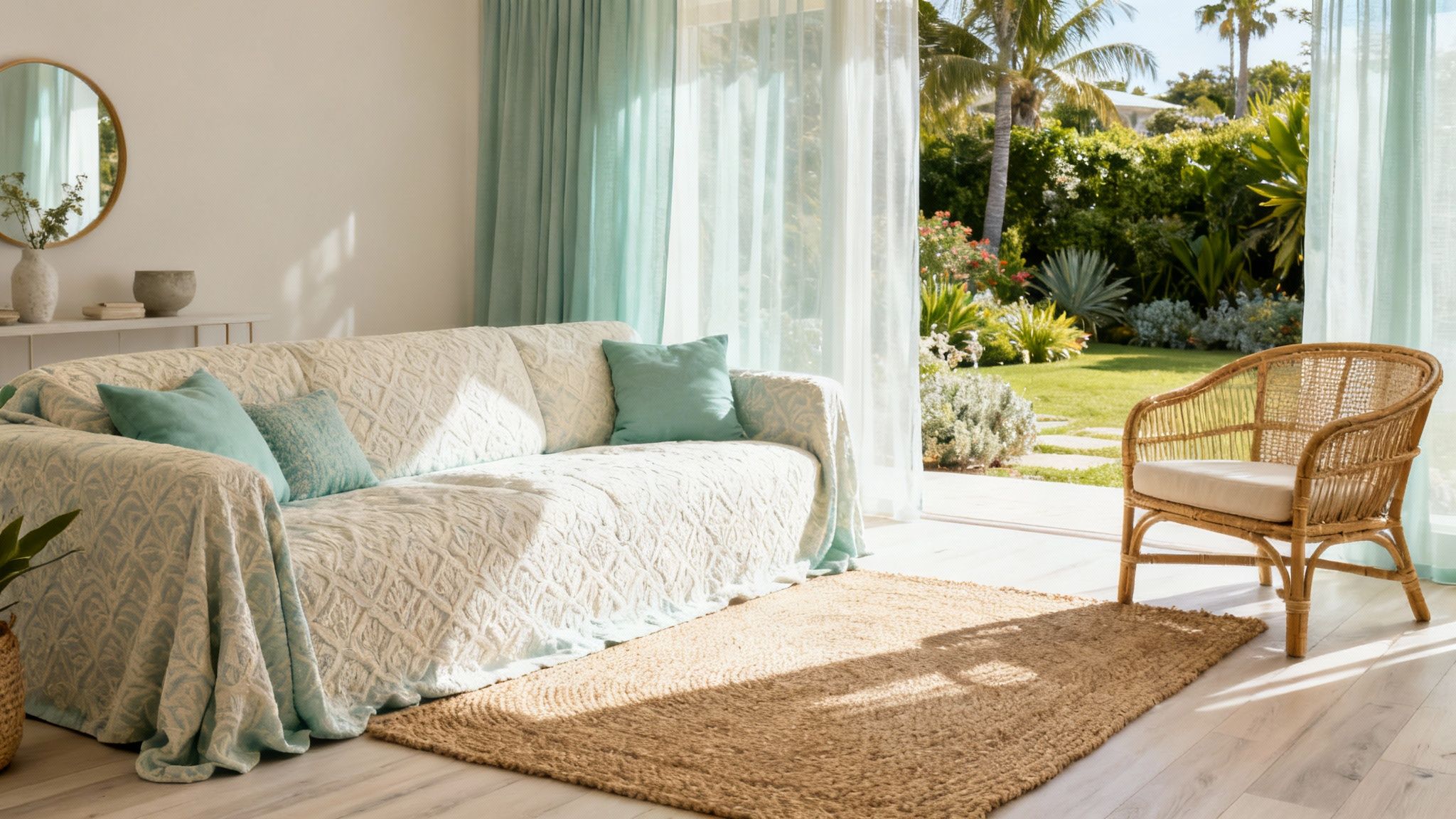
Forget the cluttered beach shacks filled with seashells and anchors. The modern take on coastal is about creating a serene, retreat-like atmosphere that feels both elegant and completely effortless. It’s a direct reflection of our relaxed lifestyle, focusing on simplicity, light, and a deep connection to the natural environment.
This style has exploded in popularity across Australia, particularly in places like the Sunshine Coast and Gold Coast, and it's easy to see why. Recent data shows that a huge 72% of Australian holidaymakers prefer coastal-inspired features, a trend that has quickly spilled into our own homes. In fact, coastal styles now make up 28% of all home designs in the country—a massive jump from just 15% in 2019. It’s a perfect match for our love of open-plan living, which is now a feature in 78% of new homes.
Key Principles of the Style
At its heart, this aesthetic is defined by a few core ideas that really set it apart from other coastal looks. Getting a handle on these is the key to building a space that feels authentic and cohesive.
- An Emphasis on Natural Light: It’s all about maximising sunlight. Think large windows, sheer curtains, and open layouts that create a bright, breezy feel.
- Organic, Tactile Materials: The style relies heavily on natural textures you want to touch. Light-toned timber, rattan, jute, linen, and soft cottons are used everywhere to bring in warmth and character.
- A Muted, Earthy Palette: Forget stark white and navy. This look moves into sandy beiges, soft greys, muted sea greens, and even hints of terracotta.
- Clean Lines and Uncluttered Spaces: Furniture and décor have simple, modern forms. The overall look is minimalist but warm, steering clear of any fussy ornamentation.
A common mistake is thinking contemporary coastal is just another name for Hamptons style. While both are beautiful, the Australian version is far more relaxed and organic. It prioritises genuine comfort and liveability over the formal, structured elegance you see in a classic Hamptons home.
Contemporary Coastal vs Traditional Hamptons Style
To really make the difference clear, it helps to see the two styles side-by-side. Nailing these distinctions is crucial if you want to get the right feel in your home. If you're curious about the more classic American look, you can learn more about styling a Hamptons style couch.
Here's a quick comparison to help you spot the key differences between the modern Aussie coastal look and the more traditional Hamptons aesthetic.
| Element | Contemporary Coastal | Traditional Hamptons |
|---|---|---|
| Colour Palette | Warm neutrals, soft greens, earthy tones | Crisp white, navy blue, beige, grey |
| Furniture | Relaxed, low-profile, clean lines, natural wood | Formal, structured, often dark timber or painted white |
| Overall Vibe | Casual, serene, and connected to nature | Elegant, sophisticated, and more formal |
| Key Textures | Rattan, jute, linen, textured cottons | Polished nickel, dark wood, formal fabrics |
Recognising these differences will help you lean into the right elements, ensuring your space feels like a true reflection of relaxed, modern Australian living.
Weaving Your Coastal Colour and Material Palette
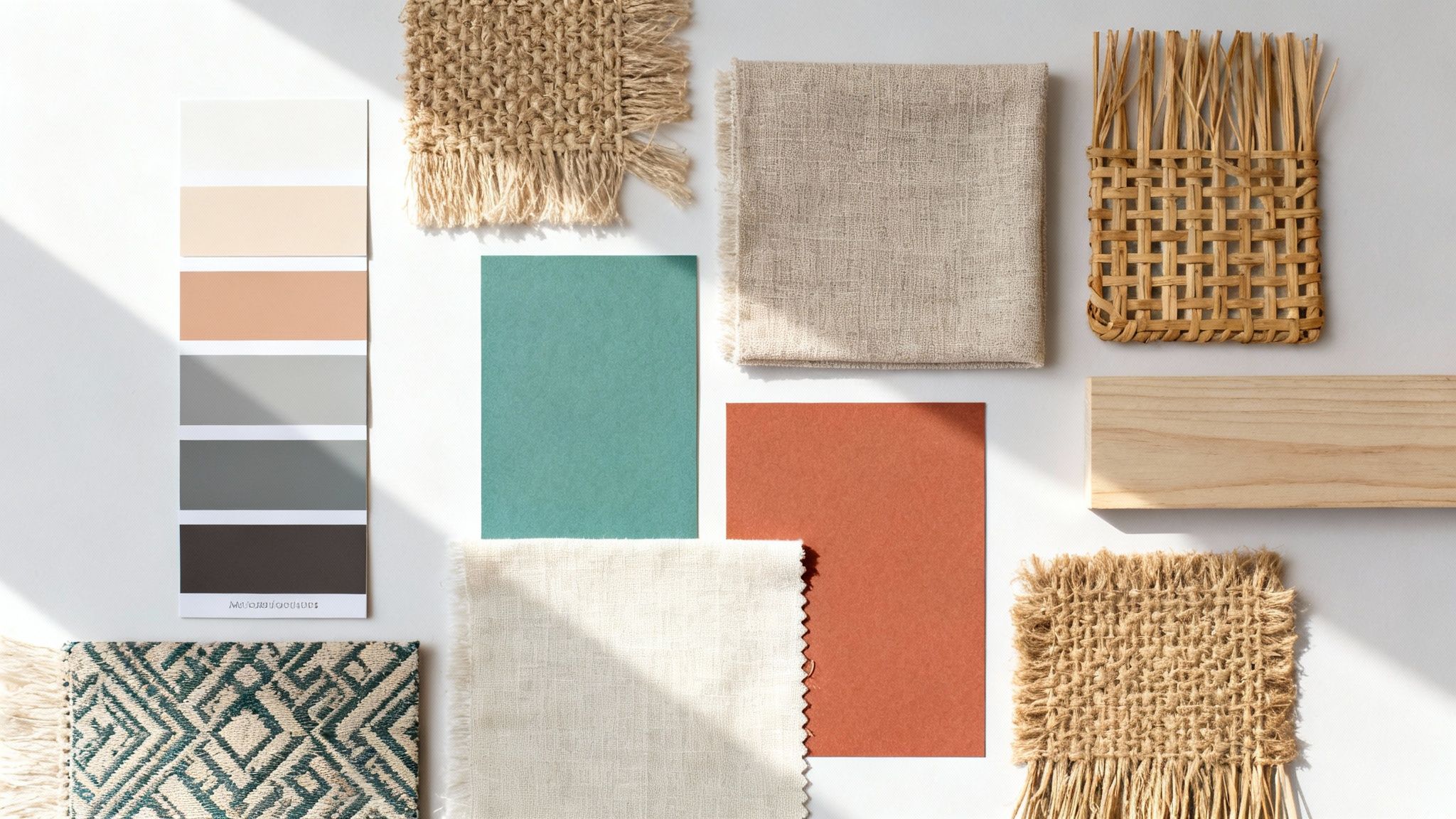
The real soul of contemporary coastal design is found in its palette. Forget the predictable navy and white; we're aiming for something far more sophisticated and layered here. The goal is to create a space that feels genuinely calm and connected to the Australian landscape, not like a themed beach house.
This modern approach steers away from those sterile, all-white interiors and leans into a much warmer, more inviting feel. Think of a windswept beach on an overcast day rather than a bright, glaring shoreline. It’s all about capturing a sense of peace and authenticity.
Building Your Core Colour Palette
First things first, let's lay down a foundation of warm, soft neutrals. These colours will be the backdrop for your entire space, making up about 60% of your colour scheme. They are the calming base that lets all the other elements shine without ever overwhelming the senses.
A great starting point includes:
- Sandy Beiges: From a light, creamy oat to a deeper, earthier sand, these colours bring instant warmth and comfort.
- Warm Greys: Look for greys with subtle beige or stone undertones, and be sure to avoid any cold, blue-based shades.
- Off-Whites: Choose creamy whites like alabaster or vanilla to create a soft glow, rather than a stark, clinical white.
This shift towards warmer palettes is a defining feature of modern Australian coastal style. While older designs were dominated by crisp whites, recent trends show a big change. On the Gold Coast and in Byron Bay, a notable 65% of luxury coastal renovations have embraced warmer palettes with pale ocean blues and soft olives, moving away from minimalism to add depth.
Introducing Accent Hues
Once your base is established, it's time to layer in the accent colours. These should make up roughly 30% of your palette and should feel like they're pulled directly from nature. This is where you can add personality and stop the space from feeling flat or one-dimensional.
Consider these beautiful, muted tones:
- Muted Sea Greens: Think of the soft green of sea glass or the grey-green of coastal succulents.
- Washed-Out Blues: Instead of a bright navy, opt for softer, dustier blues that feel calm and atmospheric.
- Earthy Terracotta: Just a small touch of warm terracotta or clay can add a surprising and welcome dose of earthy warmth.
For inspiration, especially if you're thinking about unique flooring or a statement splashback, exploring a diverse cement tiles colors palette can introduce organic hues and patterns that complement a coastal scheme perfectly. Getting a handle on how colours work together is key, and you can delve deeper into choosing the right colour schemes for your interior.
The Importance of Natural Materials
Materials are just as crucial as colour in nailing that authentic contemporary coastal look. They provide the texture and tactile quality that makes a space feel warm and genuinely inviting. The focus should always be on organic, natural, and touchable finishes.
Your material palette should feel raw yet refined. Think about incorporating:
- Light-Toned Timbers: Woods like Tasmanian Oak, Blackbutt, or even a pale, washed pine are perfect for flooring, furniture, and joinery.
- Rattan and Wicker: These bring a relaxed, textural element through armchairs, pendants, or decorative baskets.
- Jute and Sisal: Ideal for rugs, these materials add a robust, earthy texture underfoot that really grounds the space.
- Linen and Cotton: Use these for drapery, cushions, and throws to add softness and a breezy, casual feel.
When choosing a sofa cover, for instance, a textured jacquard fabric in a sandy beige can add immediate depth and interest. It’s such a simple way to introduce another layer of texture while tying back into your core colour palette. By balancing these warm colours and natural materials, you create a home that is a true coastal retreat—inviting, serene, and effortlessly stylish.
Choosing and Styling Coastal Furniture
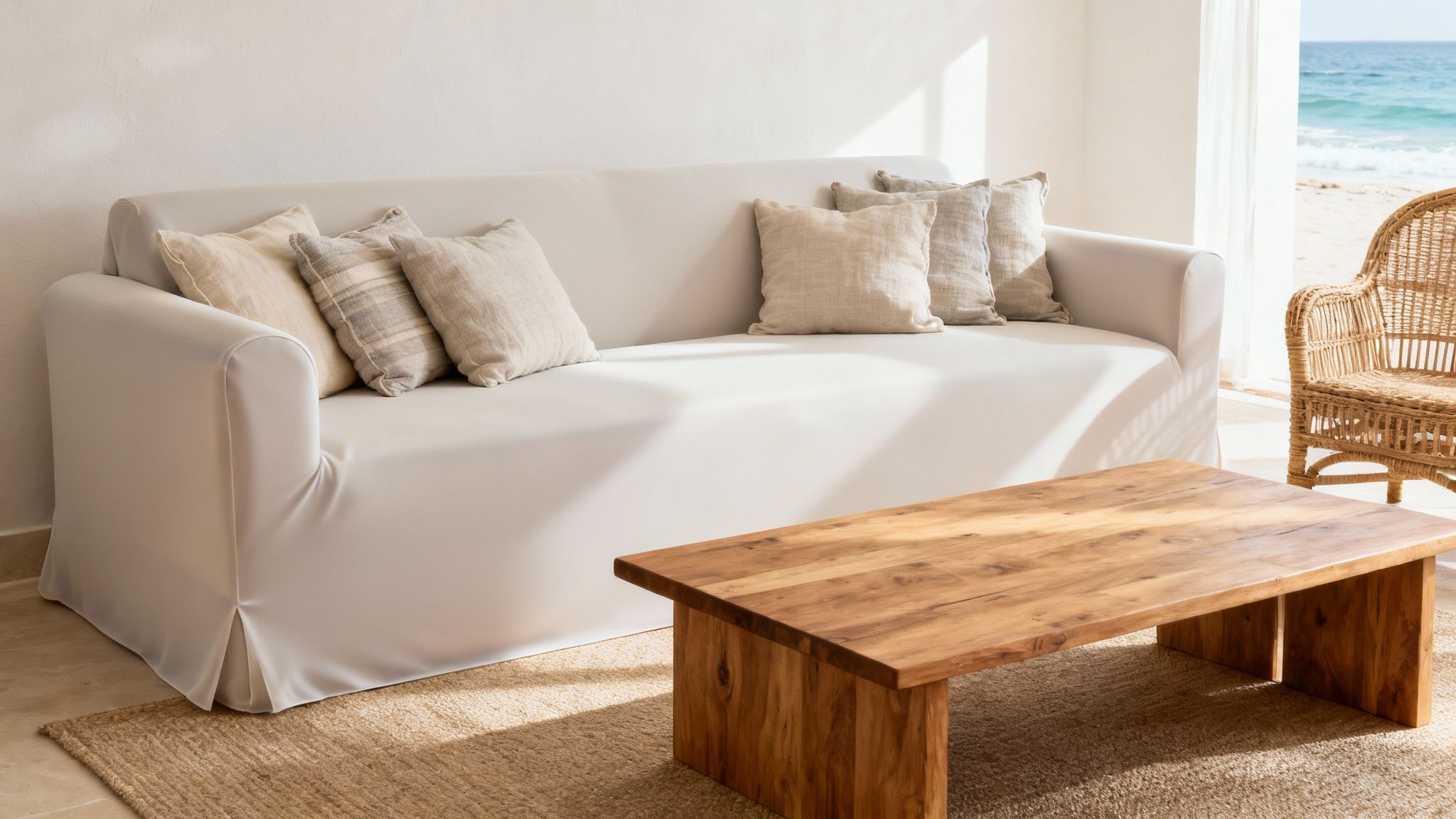
Once you’ve nailed your colour and material palette, it’s time for the fun part: choosing the furniture that will bring your contemporary coastal interior to life. The key here is to pick pieces that feel relaxed, authentic, and uncluttered. Think less about just filling a room and more about creating an inviting atmosphere that encourages calm and connection.
Furniture in a modern coastal home needs to be comfortable and functional, with a real focus on natural materials and simple, clean lines. You’ll want to steer clear of anything too ornate or heavy; the whole point is to maintain that airy, open feeling that’s so central to the style.
Selecting Your Anchor Pieces
The sofa is, without a doubt, the hero of the living room. It sets the tone for the entire space. For that contemporary coastal look, an oversized, comfortable sofa with a relaxed silhouette is absolutely ideal. Look for deep seats, soft cushions, and a low-profile design that feels grounded and inviting.
Beyond the sofa, a few other essential pieces will help pull the look together:
- Coffee Tables: Opt for simple designs in light-toned timber, or maybe a piece with a travertine top to introduce another layer of beautiful natural texture.
- Armchairs: A woven rattan or wicker armchair is the perfect accent. It adds that organic texture and a touch of casual elegance.
- Side Tables: Keep them minimal. A simple timber stump or a small, clean-lined table is all you need to maintain that uncluttered aesthetic.
The core idea is to strike a balance between comfort and simplicity. Your furniture should feel substantial enough to be cosy and liveable, but visually light enough that it doesn't dominate the room. It’s all about creating an effortless look that feels both curated and completely natural.
The Power of Sofa Covers in Coastal Design
A light-coloured sofa—in a shade of sandy beige, soft grey, or creamy off-white—is the quintessential choice for this style. But let's be honest, the thought of spills, pet fur, or everyday grime can be a major turn-off for many families. This is where sofa covers become an indispensable tool.
Modern sofa covers allow you to get that coveted light and airy look without the constant worry. They offer a practical solution that makes the contemporary coastal style genuinely liveable. Imagine having that dream white sofa, but with the peace of mind that comes from knowing the cover is completely machine-washable.
A high-quality stretch-fit cover can also be a brilliant, budget-friendly way to update a sofa you already own. If you have a structurally sound but dated couch, a modern cover in a neutral, textured fabric can instantly transform it, saving you money and stopping perfectly good furniture from ending up in landfill. It's an approach that's both stylish and sustainable.
Practical Styling Tips for a Perfect Fit
To make sure your covered sofa looks seamless and intentional, a few styling tricks make all the difference. For a snug, custom-like appearance, use the foam inserts that come with the cover to tuck it securely into the crevices of the sofa. This simple step stops the fabric from shifting and helps define the sofa's shape for a crisp, clean finish.
Don’t underestimate the impact of layering, either. Throws and cushions not only add comfort but also help integrate the covered sofa into your overall design. A chunky knit throw draped artfully over an arm or a collection of linen cushions can break up the solid colour and introduce more of those essential coastal textures. You can find more inspiration by exploring some creative ways to style your sofa with covers.
For homes with pets or young kids, a waterproof sofa cover is an absolute game-changer. These covers provide an impermeable barrier against spills and accidents, making sure your furniture underneath stays pristine. They offer the perfect blend of style and practicality, making the contemporary coastal aesthetic accessible to everyone, no matter their lifestyle. By choosing the right pieces and using smart solutions like covers, you can create a beautiful, functional, and worry-free coastal retreat.
Layering Textures for a Warm and Inviting Space
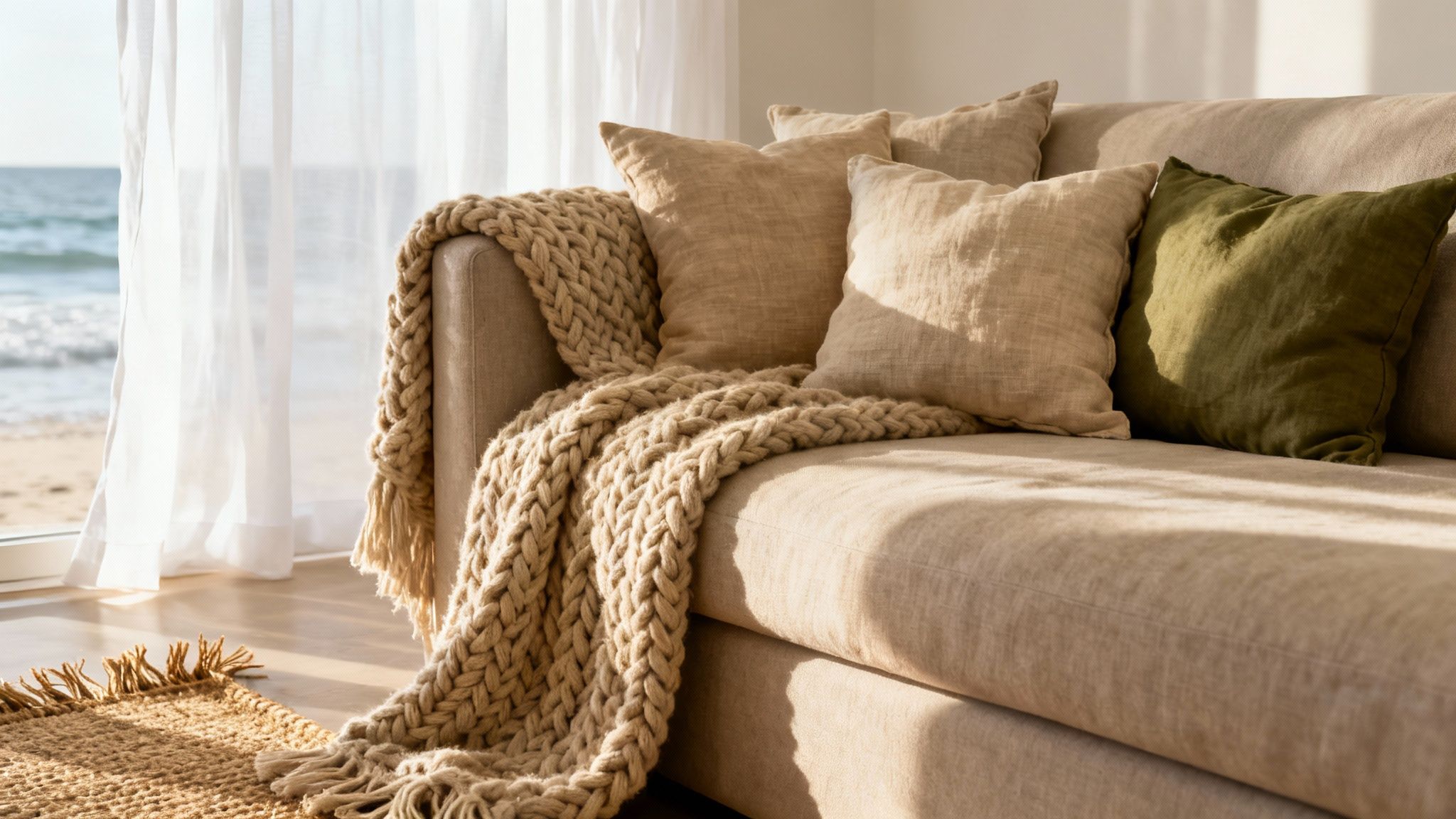
If colours and furniture are the bones of a room, then texture is its soul. It's the secret ingredient that transforms a contemporary coastal house into a real, lived-in home. This is what creates that deeply inviting feeling, making you want to sink in and stay a while. By artfully layering different materials, you build a space that’s a feast for the senses, encouraging touch and true relaxation.
This move away from flat, minimalist surfaces is what truly defines the modern Australian coastal look. We’re seeing a huge shift, with trend reports showing that over 80% of designers are seeing a growing demand for expressive, layered textures in coastal homes. It even mirrors how we holiday, with data revealing 58% of travellers prioritise natural materials like rattan and linen in their accommodation, which in turn inspires how we style our own homes for that ultimate-comfort feel. You can discover more about these evolving design trends and what’s shaping them.
Start with a Solid Foundation
Every beautifully layered room I’ve ever styled begins from the ground up. A large, soft rug is the perfect starting point, anchoring your living area and instantly dialling up the warmth.
A low-pile wool rug in a sandy neutral is a classic, but a chunky jute or sisal rug is fantastic for adding a robust, earthy element that feels incredible underfoot. Think of the rug as the textural base upon which everything else will be built.
Layering Soft Furnishings on Your Sofa
Your sofa is ground zero for showcasing a rich mix of textures. This is where you can really have some fun, playing with different materials to create a look that feels collected and cosy, not just decorated. The key is to create contrast in both how things look and how they feel.
Start by mixing up different cushion materials and sizes:
- Linen Cushions: The quintessential coastal fabric, their slightly raw, breathable texture is a must-have. Go for solid, muted colours like sea green or dusty blue.
- Cotton Cushions: A soft, brushed cotton or a textured jacquard weave can introduce a different hand-feel. Look for subtle patterns or a slub finish for a bit of extra interest.
- Knit or Woven Cushions: This is where the magic happens. A chunky cable-knit or a woven wool cushion adds the ultimate cosy touch, creating fantastic visual depth against the smoother linen and cotton.
Draping a throw blanket over the arm or back of the sofa is the final, essential move. A chunky knit throw in a creamy off-white adds a luxurious, welcoming feel, while a lightweight linen or cotton waffle throw is perfect for a breezier, more casual vibe. This one simple addition makes the whole space feel instantly more relaxed.
Don't be afraid to mix and match. The goal is an "effortlessly collected" look, not perfect symmetry. Combine a square linen cushion with a rectangular cotton one and a round knit pillow for a dynamic, interesting arrangement.
Extending Texture Throughout the Room
Once your sofa is styled, don't stop there. Weave this layered approach into other areas of the room to create a cohesive, immersive experience that flows from one element to the next.
Consider these finishing touches:
- Window Treatments: Swap out heavy curtains for sheer, floaty linen drapes. They diffuse that beautiful Aussie light, softening the entire room while adding a delicate, breezy texture.
- Woven Accents: Bring in rattan or wicker through smaller pieces. Think decorative baskets for storing extra throws, a statement pendant light shade, or even an armchair.
- Ceramics and Decor: Finish the look with objects that invite touch. A matte ceramic vase, a stack of books, or a smooth piece of driftwood on a coffee table adds those final, subtle layers of texture that truly complete your contemporary coastal interior design.
Arranging Your Layout and Lighting
Open-plan living is the absolute heart of the Australian coastal vibe. It’s all about creating that incredible sense of space and connection to the outdoors we all crave. But let's be honest, a huge, undefined room can quickly feel chaotic rather than calming.
The secret is to create distinct 'zones' for living, dining, and relaxing. This approach gives each area a clear purpose without putting up walls or sacrificing that airy, spacious feeling that’s so central to the style.
Creating Functional Zones with Furniture
Think of your furniture as your best tool for creating soft boundaries. A large area rug, for instance, is brilliant for anchoring your main living zone. By placing your sofa and armchairs on the rug, you visually separate the lounge area from everything else. It’s an instant, defined space.
Another great strategy I love is using the back of a sofa to create a subtle divide. Placing a slim console table behind it gives you a handy spot for keys or a decorative lamp, clearly defining the edge of the living zone without blocking the view. It maintains that open feel while giving each space its own identity.
A well-zoned open-plan area should feel intuitive. The layout should naturally guide you from one space to the next, with clear pathways that prevent the room from feeling like a furniture obstacle course. Aim for at least 90cm of clearance for major walkways.
Maximising Natural Light
Natural light is completely non-negotiable for this look. Before you do anything else, you have to celebrate the sunlight your home already gets. Heavy, dark curtains are out. Instead, go for sheer linen or cotton drapes that diffuse light beautifully, creating a soft, ethereal glow throughout the room.
Mirrors are your secret weapon for amplifying brightness. A large, strategically placed mirror can dramatically increase the amount of light in a room and make it feel twice as big. Pop one on a wall opposite a window to bounce sunlight deep into the space—the effect is instant.
Designing a Layered Lighting Plan
When the sun goes down, your lighting plan takes over to create that warm, welcoming atmosphere. A single overhead light just won't cut it; it creates harsh shadows and makes a room feel flat and uninviting. The solution is layered lighting, which combines different types of light to add depth, warmth, and character.
Thinking about which fixtures to choose can be half the fun. Exploring some top brands for coastal style lighting fixtures is a great way to find pieces that perfectly match the aesthetic, from beautiful pendants to elegant sconces.
A great lighting plan is built on three key layers. It's a simple framework that designers use to make a space feel balanced and functional, no matter the time of day.
Coastal Lighting Plan Checklist
Use this simple checklist to map out your lighting layers. Ticking off each one ensures you're creating a scheme that's not just beautiful but also perfectly suited to how you actually live in the space.
| Lighting Layer | Purpose | Examples for a Coastal Home |
|---|---|---|
| Ambient | Provides overall, general illumination. | A large rattan or linen pendant over a dining table; a simple, chic flush-mount in the living area. |
| Task | Focused light for specific activities. | A stylish floor lamp beside an armchair for reading; under-cabinet strips in the kitchen for food prep. |
| Accent | Adds character and highlights features. | Wall sconces framing a piece of art; dimmable table lamps on a console to create a cosy mood. |
By layering these three types, you move beyond just "lighting a room" and start creating an atmosphere. It’s what gives a contemporary coastal home that warm, inviting glow long after sunset.
Common Questions About Coastal Interior Design
As you start pulling together your own serene coastal retreat, it's completely normal for a few questions to pop up. This style is loved for its clean lines and relaxed feel, but it can sometimes feel a bit tricky to maintain, especially in a busy family home.
So, let's tackle some of the most common queries I hear. From practical cleaning concerns to avoiding those classic design pitfalls, these answers should give you the confidence to bring this beautiful aesthetic to life.
How Do I Keep a Light-Coloured Home Clean with Kids and Pets?
This is easily the number one concern, and a very valid one. The thought of a pristine, sandy-beige sofa in a home filled with muddy paws and sticky fingers can feel pretty daunting. But the secret isn't constant, stressful cleaning; it's about making smart, proactive choices from the very beginning.
Washable sofa covers are your greatest ally here. Opting for high-quality, stretch-fit covers in those light, coastal hues means you can nail the airy aesthetic without the stress. When a spill inevitably happens, you can just pull the cover off and toss it in the wash. For homes with pets or toddlers, a waterproof sofa cover is an even better line of defence, creating a barrier that stops liquids from ever reaching the upholstery underneath.
Beyond the sofa, a few other practical tips can make a huge difference:
- Durable Rugs: Choose indoor-outdoor rugs made from materials like polypropylene for your main living areas. They do a great job of mimicking the look of natural fibres like jute but are incredibly easy to scrub clean.
- Performance Fabrics: For dining chairs or armchairs that you can't cover, look for performance fabrics that are inherently stain-resistant.
- Strategic Decor: Use washable throws and cushion covers to add layers of texture. They also double as an extra protective layer that can be easily laundered when needed.
Living with light colours doesn't have to be a constant battle. It’s about choosing materials and solutions designed for real life. Modern textiles and clever products like sofa covers make the contemporary coastal look more accessible and durable than ever before.
Is Contemporary Coastal Design Too Minimalist?
It’s a common misconception that this style is cold or sparse. While contemporary coastal design definitely values clean lines and uncluttered spaces, its soul lies in warmth and texture. It's less about stark minimalism and more about intentional, serene simplicity.
The key to avoiding a sterile feel is to go all-in on layering natural, tactile materials. Think of a chunky knit throw draped over a smooth linen sofa, a rough-hewn timber coffee table sitting on a soft wool rug, and sheer curtains that filter the light beautifully.
These elements add visual weight and a sensory richness that makes the space feel inviting and lived-in, not empty. It’s all about finding that perfect balance between modern simplicity and the cosiness of coastal living.
What Are the Biggest Decorating Mistakes to Avoid?
Getting the right balance is crucial. A few common missteps can take your design from a serene retreat to a clichéd theme park.
Here are the top mistakes I see and how to steer clear of them:
- Going Overboard with Theming: This is the big one. Littering a space with anchors, seashells, and "beach this way" signs is a huge error. Contemporary coastal design is about evoking a feeling, not creating a literal copy of the seaside. A single, elegant piece of coral on a bookshelf is chic; a jar of shells in every corner is not.
- Using a Cold Colour Palette: Sticking to just stark white and bright navy is a hallmark of older coastal styles. The modern Australian version relies on a much warmer base of sandy beiges, off-whites, and muted greens to create a more organic and calming atmosphere.
- Ignoring Scale and Proportion: An oversized, chunky sofa needs a substantial coffee table to balance it out. Likewise, small, disconnected pieces of furniture in a large, open-plan space can make the room feel disjointed and unfinished. Always consider how the pieces relate to each other and to the room itself.
Can This Style Work in a Home That Isn't Near the Coast?
Absolutely. Contemporary coastal interior design is less about your postcode and more about the lifestyle and feeling you want to create inside your home. It’s really a design philosophy centred on light, nature, and relaxation—principles that can be applied to any home, anywhere.
The focus is on creating a connection to the outdoors, no matter what’s actually outside your window. By maximising natural light, using a palette inspired by nature, and incorporating plenty of organic materials, you can craft that serene, holiday-at-home feeling even in a suburban or city setting. It’s all about bringing that sense of calm and escape indoors.
Ready to create your own coastal oasis without the worry? At The Sofa Cover Crafter, we make it easy to achieve that light and airy look with our range of stylish, washable, and pet-friendly sofa covers. Protect your furniture and perfect your style effortlessly.
Explore our collection today at https://thesofacovercrafter.com and find the perfect cover for your home.