


A standard Australian queen blanket is usually 228 x 228 cm, which is about 90 x 90 inches. That size is designed to sit properly over a 153 x 203 cm queen mattress, giving you usable drape at the sides and enough length at the foot for coverage rather than a skimpy, mattress-only fit.
The short version: if you want a blanket that fits a standard queen bed well in Australia, 228 x 228 cm is the baseline size to look for. Some retailers list 228.6 x 228.6 cm because they convert directly from 90 x 90 inches, and a few brands stretch the length slightly beyond 228 cm for extra foot coverage. In practice, those small differences are normal and rarely change the fit in a noticeable way.
How We Chose the Right Queen Size Blanket Dimensions
We judged fit against the dimensions of a standard Australian queen mattress: 153 x 203 cm, which matches the measurements used by major bedding references and mattress retailers in Australia. For inch conversions and queen-to-mattress comparisons, we also checked how broader bedding references define queen blanket sizing, including the common 90 x 90 inch standard and longer queen options listed by Parachute and Purple.
Our method was simple: compare blanket width and length to the mattress, then judge whether the result gives enough side drop, enough foot coverage, and enough flexibility for different preferences. We looked at five practical factors readers actually care about: mattress depth, expected overhang, whether you tuck the blanket or let it drape, whether one or two people are sleeping under it, and how brands handle minor size variations.
I also sanity-check these numbers the same way our team reviews blankets in real rooms: on a standard queen setup, on a deeper mattress, and folded over a sofa to see whether the blanket still feels proportionate rather than oversized in the wrong way. That matters because a blanket can look correct on a size chart and still feel short once a taller mattress uses up the side drop.
Understanding Standard Queen Size Blanket Dimensions
If you just want the answer, here it is: the standard queen size blanket dimensions in Australia are typically 228 x 228 cm, or roughly 90 x 90 inches. That is the most common queen blanket measurement you’ll see across Australian retailers, and it aligns closely with the international 90 x 90 inch queen blanket standard described by Parachute’s blanket size guide and Sienna Living’s queen quilt measurements guide.
You may also see 228.6 x 228.6 cm listed instead. That is not a different fit category; it is the exact metric conversion of 90 x 90 inches. In everyday use, 228 cm and 228.6 cm are functionally the same size. Some brands also offer slightly longer queen blankets, usually to add more coverage at the foot of the bed.
The key reason this size works is that a queen blanket is meant to be larger than the mattress itself. A standard queen mattress is 153 x 203 cm (about 60 x 80 inches), so a 228 x 228 cm blanket leaves extra fabric for drape, movement, and shared use. According to Parachute, a 90-inch-wide queen blanket is engineered to provide about 15 inches of overhang per side on a 60-inch-wide queen mattress, which is why it feels practical rather than exact-fit.
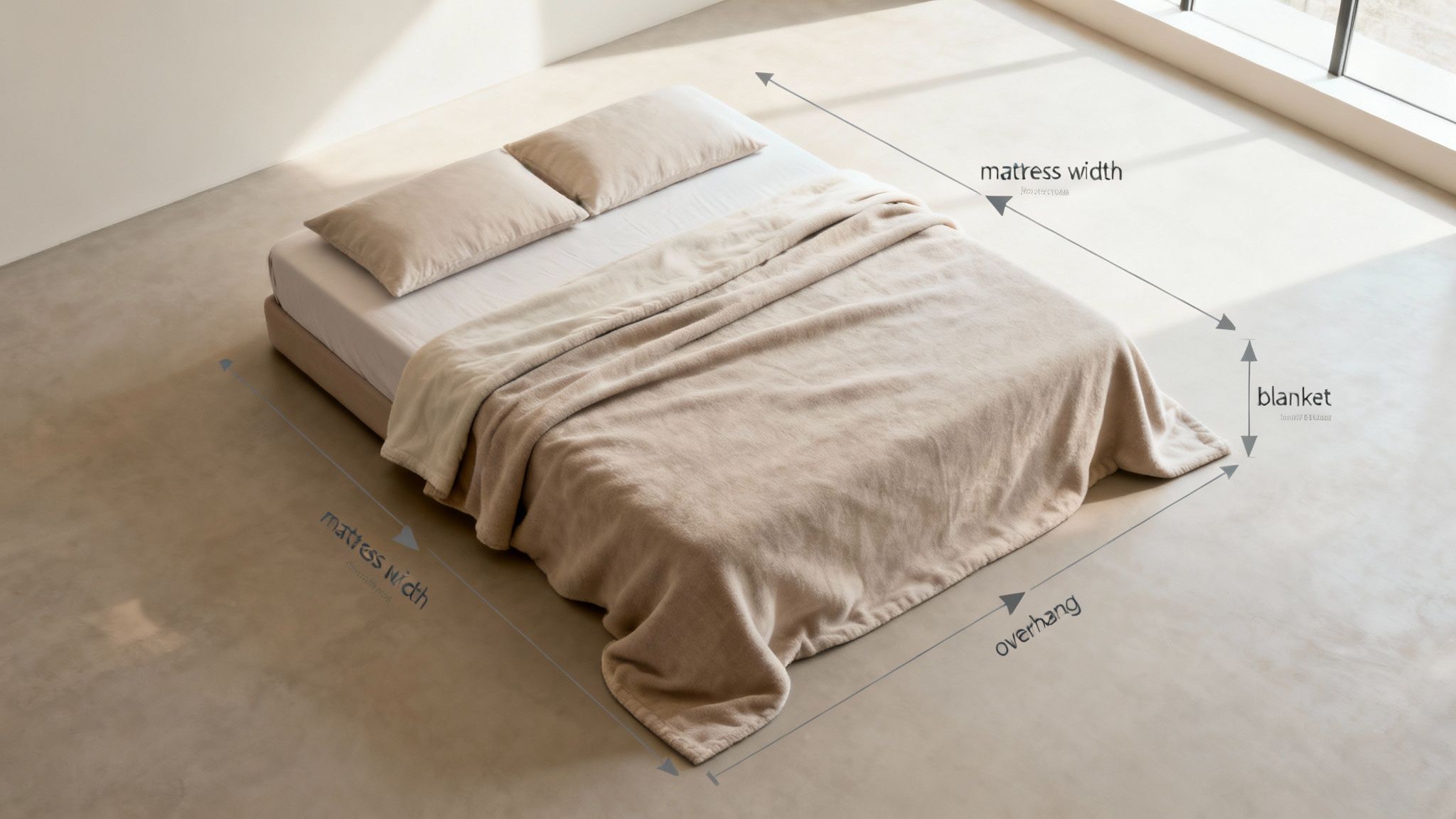
Standard Size vs Retailer Variation
“Standard” means the size you can buy confidently from most bedding sellers without expecting a surprise fit. For a queen blanket in Australia, that standard is 228 x 228 cm. Retailer variation usually falls into one of three buckets: exact inch-to-cm conversion (228.6 cm), rounding down to whole numbers (228 cm), or adding extra length for people who prefer more foot coverage.
That is why two queen blankets can both be correctly labelled queen while not being numerically identical to the last decimal place. I treat anything around 228 cm wide as the same queen-fit category, then pay more attention to the length if the bed is tall, layered, or styled untucked.
Why Blanket Size Exceeds Mattress Size
There’s a practical reason your blanket is bigger than your bed: it needs to cover the mattress width, drop down the sides, and still leave enough fabric to move comfortably underneath. On a queen mattress, a 90 x 90 inch blanket creates the extra margin that makes shared sleeping and proper drape possible, as outlined in Purple’s blanket size breakdown.
If you want another quick comparison tool, there’s also more from Lucas Furniture & Mattress that shows how comforter and blanket sizing is usually mapped against mattress sizes.
Quick Guide Queen Blanket vs Queen Mattress Dimensions
Here’s a quick reference table that breaks down the standard Australian dimensions and what they mean in practice.
| Item | Dimensions (cm) | Dimensions (inches) | What it means on a queen bed |
|---|---|---|---|
| Queen Mattress | 153 cm x 203 cm | 60" x 80" | The mattress itself, before any overhang |
| Queen Blanket | 228 cm x 228 cm | 90" x 90" | About 37.5 cm side drop per side, plus roughly 25 cm beyond mattress length |
That extra 75 cm of width translates to about 37.5 cm of side drop on each side. In plain English, that is enough for a proper drape on a standard queen bed without looking oversized. The extra 25 cm of length is what gives you coverage at the foot rather than stopping abruptly at the mattress edge.
| Item | Dimensions (cm) | Dimensions (inches) |
|---|---|---|
| Queen Mattress | 153 cm x 203 cm | 60" x 80" |
| Queen Blanket | 228 cm x 228 cm | 90" x 90" |
The Secret to Better Sleep and a More Stylish Bed? It’s All About the Blanket Size.
Blanket size changes how a bed works in everyday life. On paper, a queen blanket is just a measurement. In use, it affects whether two people can share it comfortably, whether the sides reach past a deeper mattress, and whether the bed looks neatly finished or slightly underdressed.
For solo sleepers, a standard queen blanket usually gives enough room to wrap, shift, and still keep one side draped over the mattress. For couples, that same extra width matters even more. The common 90 x 90 inch queen format exists because a queen mattress is only 60 inches wide; the added width is what creates usable coverage for two sleepers rather than forcing the blanket to sit flat across the top like a sheet, as explained in Parachute’s sizing overview.
Mattress profile also changes the result. A low-profile mattress leaves more visible drape because less fabric is spent covering the mattress depth. A deep mattress, pillow-top, or added topper can eat into that side drop quickly. In our checks, this is one of the biggest reasons a blanket that looks generous online can feel merely adequate once it’s on the bed.
Your styling preference matters just as much as the label. If you tuck the blanket under the foot or sides, you need extra length and width to make that work without pulling the blanket too tight. If you prefer an untucked, relaxed drape, a standard 228 x 228 cm queen blanket is usually enough on a regular queen mattress. If you want a fuller, almost bedspread-style look, sizing up to a king can make sense.
When sizing up to king makes sense
A king blanket on a queen bed is worth considering when your mattress is extra deep, your bed base is tall, or you want a more dramatic drop at the sides. It is also the safer choice if two people regularly pull the blanket in different directions while sleeping. More width gives you more forgiveness.
I usually recommend staying with queen first if your mattress is standard depth and you prefer a clean, practical fit. But when we test bedding on taller setups, the difference is obvious: the king size looks intentional, while a standard queen can start to feel just a bit short on the sides.
Style is still part of the fit
The visual side is not fluff; it is part of whether the size feels right. A blanket with enough drape softens the bed frame, hides some mattress depth, and makes the whole setup look more balanced. A blanket that is too small tends to expose the mattress sides and can make even good bedding look unfinished.
The best size is the one that matches how you actually use the bed: shared or solo, deep mattress or low profile, tucked or draped.
Mastering The Art Of Blanket Overhang
At this stage you move past the basic numbers and start thinking like a stylist. Blanket overhang—often called ‘drape’ in the design world—is the secret to getting that perfect, inviting look for your bed. It’s the amount of fabric that hangs over the sides and foot of your mattress.

Getting the overhang right is what allows you to create a specific mood, transforming your bed from just a piece of furniture into the true centrepiece of your room. Are you going for a crisp, hotel-like finish or something more plush and luxurious? The drape you choose is what gets you there.
This quick flowchart shows exactly how finding the right size directly impacts your comfort and the overall style you can achieve.
As you can see, it all starts with the right measurements. From there, you get better comfort, which ultimately lets you nail the aesthetic you're after.
Finding Your Signature Style
Your personal taste is the biggest factor here. Different looks require different amounts of fabric, so let's break down a few of the most popular styles and the kind of measurements you'll need to pull them off.
- The Neat Tuck: For that sharp, clean, hotel-bed finish, you'll need enough fabric to securely tuck underneath the mattress on all three sides. Aim for at least 25-30 cm of extra blanket on each side. This keeps everything looking tidy and is perfect for a clean, organised bedroom.
- The Elegant Drape: This is the most common style, where the blanket hangs gracefully about halfway down the side of the bed base. You’ll want around 35-45 cm of overhang on each side to create that soft, inviting look that feels effortlessly stylish.
- The Dramatic Puddle: For a luxurious feel, a floor-grazing blanket makes a bold statement. This calls for a much larger blanket, aiming for 50 cm or more of overhang. This allows the fabric to ‘puddle’ beautifully on the floor for a high-end, dramatic look.
Remember, these are just starting points. The perfect drape is whatever looks and feels right to you, turning your bed into a true reflection of your personal style.
The Most Overlooked Detail: Mattress Depth
Here’s the one detail that catches almost everyone out: the thickness of your mattress. It's a critical factor that is so often forgotten.
Modern mattresses, especially ones with plush pillow tops or built-in toppers, can be significantly deeper than older models. It's not uncommon for them to be 30 cm to over 40 cm deep.
A thicker mattress will eat up a lot more of your blanket's width just to cover its sides, leaving you with way less drape than you were expecting. Before you even think about buying, grab a tape measure and find out your mattress's actual depth. Add this measurement to your desired overhang on each side to find your ideal blanket width. This is the only way to guarantee you’ll get that beautiful, flowing look you've envisioned.
A Simple Guide To Measuring Your Bed or Sofa
Getting the right measurements is the single most important step to finding the perfect blanket, but it doesn't need to be complicated. Forget the guesswork. Following these simple steps will ensure your new blanket fits flawlessly, whether it’s for a queen bed or your favourite sofa. Armed with a tape measure, you can shop with total confidence.
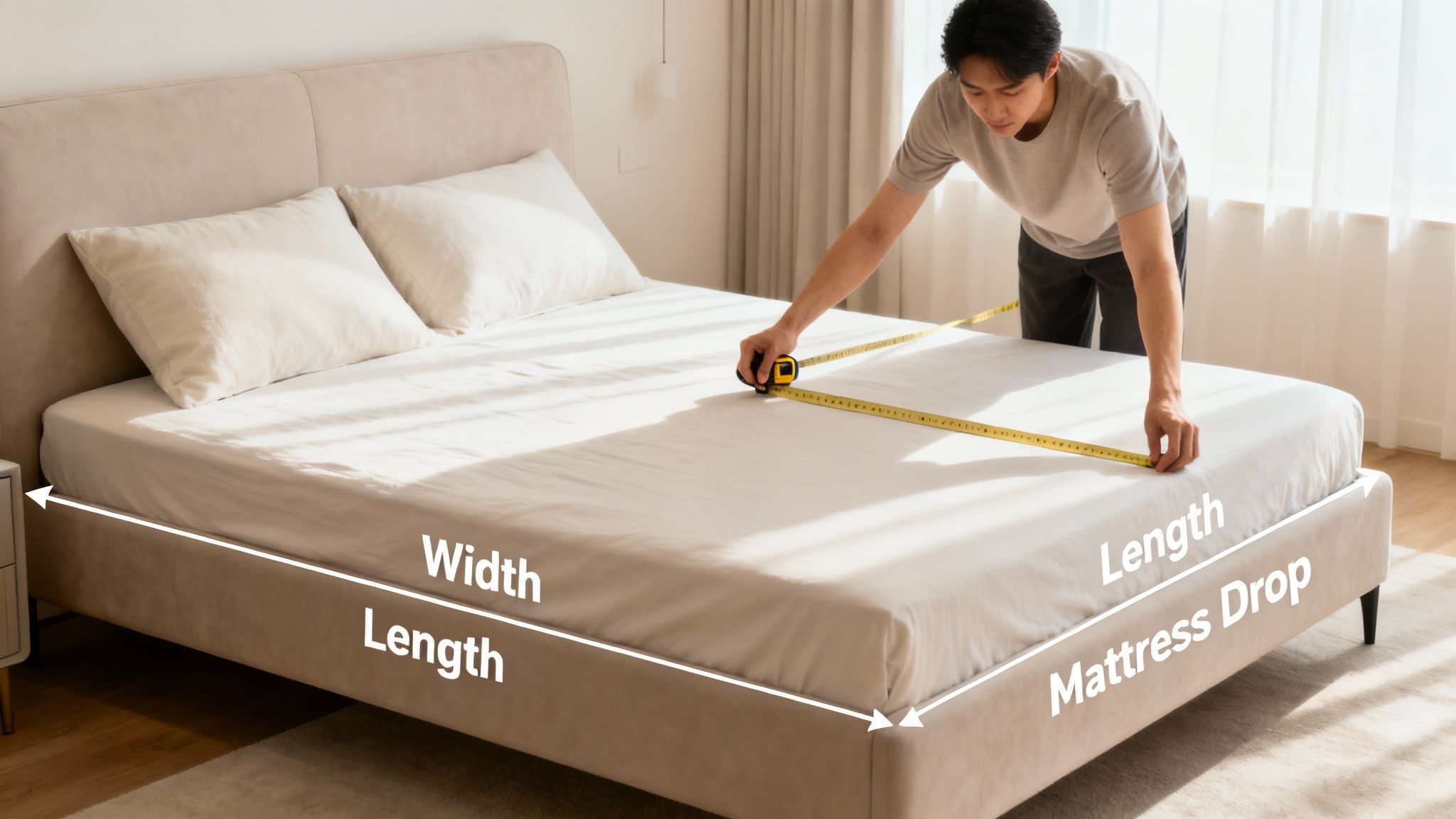
This process removes all doubt and helps you choose the right queen size blanket dimensions for your specific needs, not just what the label says.
Measuring Your Queen Bed
To find your ideal blanket size, you need three key measurements. This ensures you account for the mattress itself and the stylish drape you’re hoping to achieve.
- Measure the Width: Run your tape measure across the top of your mattress from one side to the other. A standard Australian queen is 153 cm wide.
- Measure the Length: Next, measure from the head of the mattress all the way to the foot. This should be around 203 cm.
- Measure the Drop: This is the most important step for getting the style right. Measure from the top edge of your mattress down to where you want the blanket to end. This could be just past the bottom of the mattress, halfway down the base, or even all the way to the floor.
To calculate your ideal blanket width, simply double your desired "drop" measurement and add it to the mattress width. For example: 153 cm (mattress width) + 35 cm (drop) + 35 cm (drop) = a 223 cm wide blanket.
How to Measure Your Sofa for a Blanket
The same principles apply when you’re measuring a sofa for a throw or blanket, but your goal might be a little different. Are you after a small, stylish accent, or something that offers full coverage for snuggling?
- For a Decorative Drape: If you just plan to fold the blanket casually over the back or arm of the sofa, measure the area you want it to cover. A standard throw is often more than enough for this stylish, effortless look.
- For Full Coverage: If you want a blanket to cover the entire seating area, measure the width of the sofa cushions from arm to arm. Then, measure the depth from the back cushions to the front edge. Adding these together will give you the dimensions needed for a cosy, functional cover.
If you’re looking for even more detailed instructions, check out this handy sofa cover size guide that can also help with your blanket measurements.
Decoding Throws, Blankets, and Quilts
Have you ever wondered why a ‘queen throw’ is so much smaller than a ‘queen blanket’? It’s a common point of confusion, but the answer is all about their job description. Navigating the world of bedding can feel like learning a new language, with terms like throws, blankets, and quilt covers often used interchangeably. But in practice, each one has a very distinct role and size.
Think of it this way: a quilt cover is like a perfectly fitted suit for your duvet. It has to fit just right to look sharp and do its job. A blanket, on the other hand, is more like a versatile, oversized coat. It’s all about warmth and generous coverage, giving you plenty of flexibility. And a throw? That’s the decorative scarf, an accessory meant to add a pop of colour, texture, and a bit of casual warmth.
Understanding the Key Differences
The main distinction really comes down to function versus fashion. A blanket is primarily designed for warmth and to cover the entire bed, with plenty of overhang to tuck in or drape. A throw blanket is smaller and more decorative, designed to be casually draped over the arm of a sofa or folded at the foot of a bed as a stylish accent. You can dive deeper into how to choose the perfect throw blanket for you in our detailed guide.
Meanwhile, a quilt cover (or duvet cover, as it’s also known) is a protective and decorative case for your quilt insert. Its dimensions are much less flexible because they are dictated by the size of the quilt it needs to house.
The core idea is simple: blankets provide primary warmth and coverage for sleeping, while throws are smaller, multi-purpose accents for styling and light warmth in any room.
Australian Queen Size Guide: Blanket vs Throw vs Quilt Cover
Here in Australia, these differences are clearly reflected in their standard dimensions. It's helpful to have a clear picture of how they stack up, so you know exactly what you’re buying.
A standard queen-sized quilt cover in Australia is a very specific 210 cm x 210 cm. This square dimension sets the benchmark for much of our bedding. With this in mind, let's compare it to the other layers you might be considering.
| Textile Type | Typical Australian Dimensions (cm) | Best Use Case |
|---|---|---|
| Queen Blanket | 228 cm x 228 cm | Main bedding layer for warmth and full bed coverage |
| Queen Quilt Cover | 210 cm x 210 cm | Protective and decorative cover for a quilt insert |
| Standard Throw | 130 cm x 170 cm | Decorative accent for sofas, armchairs, or bed ends |
Knowing these differences in queen size blanket dimensions helps you choose the right piece for the right job. It’s the secret to making sure your bed and living spaces are not just functional and cosy, but beautifully styled too.
How To Style A Queen Blanket In Your Living Room
A gorgeous queen-sized blanket isn't just for the bedroom. Think of it as a versatile styling tool that can bring a welcome dose of warmth, colour, and texture right into the heart of your home—the living room. Draping a larger blanket over a sofa is one of the easiest ways to create an inviting atmosphere that encourages everyone to kick back and get comfortable.
Treat your blanket like a key piece of decor. It’s a simple, low-cost way to change the entire feel of a room without committing to the hassle of new paint or pricey furniture. It can soften the clean lines of a modern sofa or add a brilliant pop of colour to a neutral scheme.
Master The Classic Fold
For a clean, organised, and intentional look, the classic fold is your go-to technique. This method works beautifully on just about any sofa, but it’s especially effective on couches with a more defined, structured back.
Start by folding your queen blanket lengthwise into thirds to create a long, neat rectangle. Then drape this rectangle over the back of your sofa, either dead centre or slightly off to one side for a bit of asymmetry. Tucking it neatly behind the back cushions will help secure it in place, giving your living room that tidy, hotel-lobby feel. See 3-seat sofa dimensions to learn how this styling works with different couch sizes.
Embrace The Casual Toss
If you prefer a more relaxed, effortlessly chic vibe, then the casual toss is perfect. This technique is all about creating a look that feels lived-in and welcoming, rather than staged or fussy. And luckily, it’s surprisingly simple to master.
To get that perfect "toss," pinch the blanket somewhere near its centre, lift it up, and just let it fall naturally over one corner of your sofa. The goal is to create soft, organic folds and a bit of diagonal movement.
Give the fabric a little nudge, allowing it to drape over the arm and onto the seating cushion. The key is not to overthink it; the beauty of this style is all in its imperfection. This method is brilliant for showing off a blanket's texture and makes any space feel instantly more comfortable and ready for relaxation.
Frequently Asked Questions
What is the size of a queen blanket?
A standard queen blanket is typically 228 x 228 cm in Australia, which is about 90 x 90 inches. Some brands sell slightly longer versions, but 228 x 228 cm is the most common reference point.
What size is a queen size blanket in Australia?
In Australia, a queen size blanket is usually 228 x 228 cm. You may also see 228.6 x 228.6 cm, which is the exact metric conversion of 90 x 90 inches.
Will a 90x90 blanket fit a queen bed?
Yes, a 90 x 90 inch blanket fits a standard queen bed well. On a 60 x 80 inch queen mattress, it gives roughly 15 inches of side overhang per side and around 10 inches of extra length at the foot before mattress depth is factored in, which is why it is such a common queen size standard according to Parachute.
Can I use a queen blanket on a double bed?
Yes, and it usually gives a fuller, more generous drape than a double blanket. I often like this option for styling because the extra width makes a smaller bed look more finished rather than barely covered.
Can I use a king blanket on a queen bed?
Yes, if you want extra overhang or have a deep mattress, a king blanket can work very well on a queen bed. The trade-off is that it will look much fuller and may hang lower than you want on a low bed frame.
Is queen blanket size the same in Australia and the US?
Not always. Australian queen blankets are commonly listed around 228 x 228 cm, while US queen blankets are often shown as 90 x 90 inches or 90 x 100 inches, so it is worth checking the exact dimensions before buying internationally.
What size throw blanket is best for a queen bed?
For styling, a throw around 130 x 170 cm works well folded at the foot of the bed. For actual lounging or extra warmth, I’d look closer to an oversized throw around 150 x 200 cm so it feels useful rather than purely decorative.
Ready to add that perfect layer of comfort and style to your home? Explore the beautiful and cosy collection of throw blankets at The Sofa Cover Crafter and find the ideal accent for your bed or sofa. Visit us at https://thesofacovercrafter.com to see our latest range.