


A 7-seater corner lounge is the ultimate problem-solver for modern Australian homes, hitting that perfect sweet spot between comfort, style, and smart use of space. It’s designed to tuck neatly into a corner, giving you maximum seating for family and friends without completely taking over the living room. Think of it as the social heart of your home, ready for everything from movie marathons to long, lazy chats.
Why the 7 Seater Corner Lounge Is a Family Favourite
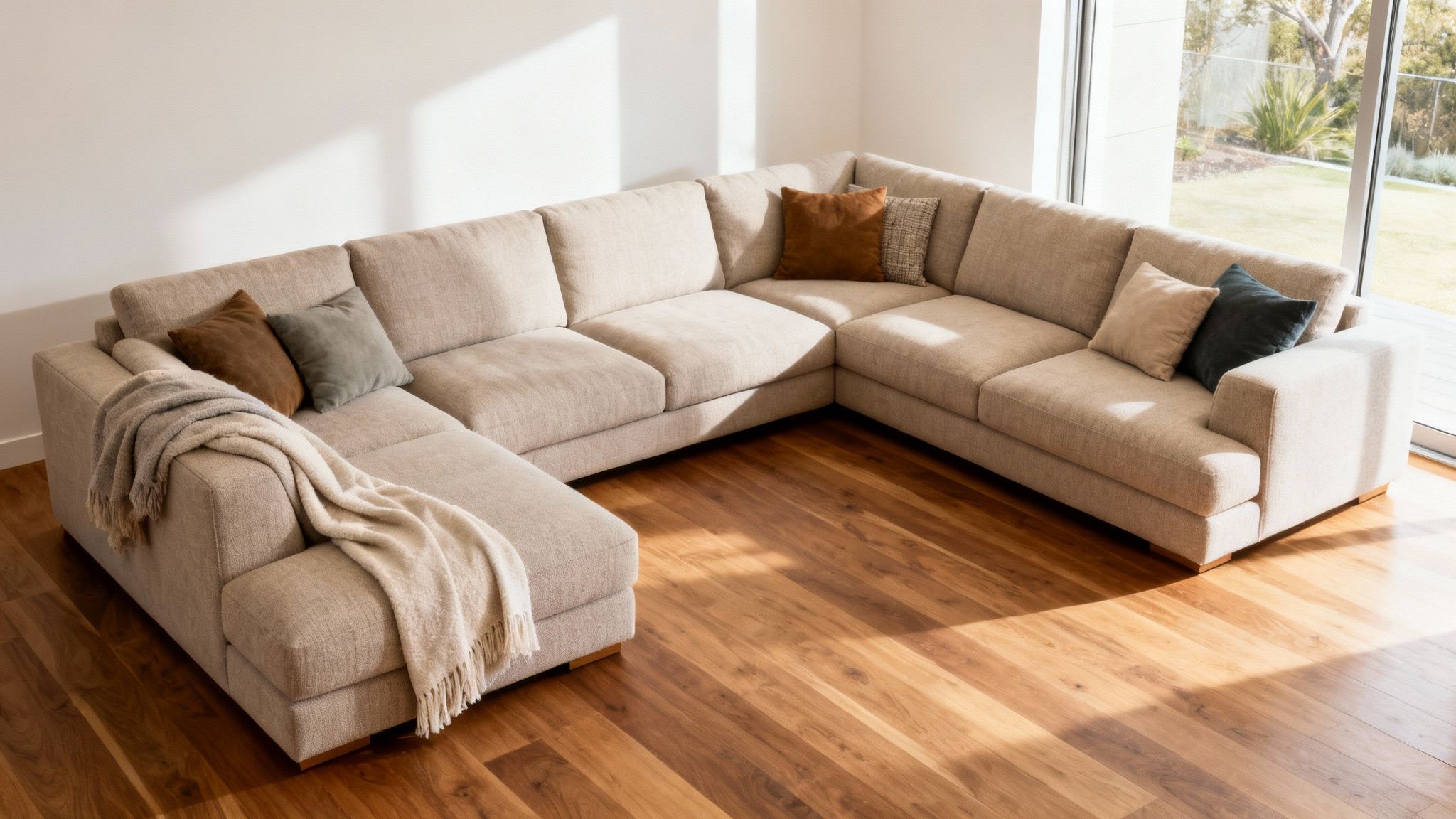
The old-school three-piece suite is slowly making way for something a whole lot smarter. The 7-seater corner lounge has become the centrepiece of contemporary Aussie living, and it’s not hard to see why. It’s more than just a piece of furniture; it’s a practical investment that flexes to fit the ever-changing needs of a modern family.
This shift makes perfect sense, especially in Australia’s cities. With over 70% of us now living in urban areas, we’re all looking for furniture that works harder in smaller spaces. The Australian furniture market, valued at a whopping USD 10.87 billion, is seeing huge growth driven by multifunctional pieces like these. They just fit the bill for compact city living. You can find out more about how our lifestyles are shaping market trends from the IMARC Group.
Understanding the Common Configurations
One of the biggest wins for a corner lounge is its modular design. Unlike a standard sofa that’s just one solid piece, these lounges come in different shapes that can be tailored to your room’s layout and your family’s habits. Getting your head around these common configurations is the first step to picking the right one.
- L-Shape Lounge: This is the classic setup. It has one main sofa section and a shorter return that creates that tell-tale 'L' shape. It’s perfect for tucking into a corner, creating a defined zone in an open-plan living area, or even acting as a subtle room divider.
- Chaise Lounge: A hugely popular spin on the L-shape, this design features a main sofa with one end seat extended out. The chaise part has a backrest but no arms, making it the perfect spot for putting your feet up and properly stretching out. It adds a touch of relaxed luxury to any room.
- U-Shape Lounge: If you’ve got a big family or love to entertain, the U-shape is the ultimate social setup. It usually has two corner pieces with a section in the middle, creating a cosy, conversational pit where everyone can face each other and feel included in the chat.
The real beauty of a 7-seater corner lounge is its knack for offering maximum seating with a minimal footprint. It’s like getting the capacity of two separate sofas while taking up only a little more floor space than one, making it an incredibly efficient choice for just about any home.
Planning and Measuring Your Space Like a Pro
Before you fall head over heels for that stunning 7 seater corner lounge, it’s absolutely vital to make sure it will actually fit in your home. Think of this planning phase as a game of real-life Tetris. Your goal is to find the perfect block—your new lounge—and slot it seamlessly into your living room without causing any chaos.
A little bit of prep work now will save you the massive headache of a sofa that completely overwhelms your space or, even worse, doesn’t even make it through the front door. This isn’t just about measuring the spot where it will sit; it’s about mapping out its entire journey from the delivery truck to its final home.
Your Essential Measurement Checklist
First things first, grab a tape measure, a notepad, and maybe a helpful friend. It's time to gather the numbers that will guide your purchase. Don’t just eyeball it—exact measurements are your best friend in this process.
- Measure Your Room: Record the total length and width of your living room. This gives you the maximum footprint you have to play with.
- Measure Existing Furniture: Note down the dimensions of your coffee table, side tables, and any other big items that will be sharing the space.
- Measure Entry Points: This is the step everyone forgets! Measure the height and width of all doorways, hallways, and stairwells the sofa has to get through. Don't forget to account for any tricky corners or low-hanging light fixtures.
Mapping Out the Lounge Footprint
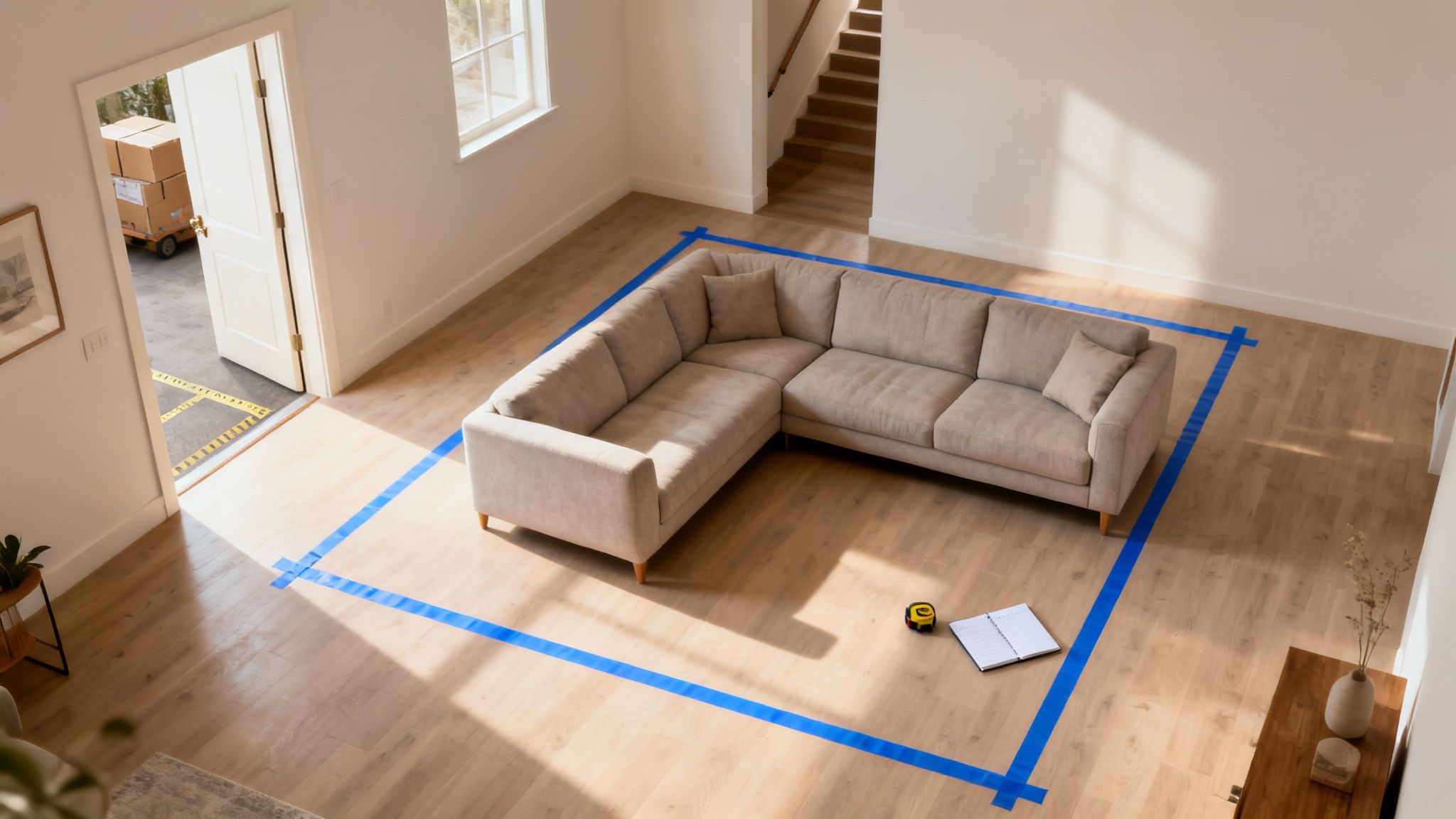
Once you have the dimensions of a potential 7 seater corner lounge, it’s time to bring it to life in your room. This simple visualisation trick is an absolute game-changer for understanding scale and flow.
Find the total length and width of the lounge you’re considering. Using painter's tape (which won't damage your floors), mark out the exact outline of the sofa on the floor where you plan to place it. This creates a tangible, real-world footprint of your future furniture.
This taping method does more than just confirm the fit. It lets you physically walk around the "sofa," check your traffic flow, and see how much space is left for other furniture. It’s the single best way to feel the impact of a large piece before you commit to it.
With the tape outline in place, you can finally answer those critical questions. Is there enough room to open the door to the balcony? Can you still walk comfortably between the lounge and the TV unit? Is the chaise section blocking a key walkway?
The Rules of Room Flow and Spacing
To create a comfortable and functional layout, professionals follow a few key spacing guidelines. These aren't strict laws, but they provide a fantastic starting point for arranging your living room around a large corner lounge. Aim for these clearances to make sure your room feels balanced, not cramped.
-
Walkway Clearance: Ensure there is at least 75cm to 90cm of clear walkway in major traffic paths. This allows people to move around freely without having to shimmy past furniture.
-
Coffee Table Distance: The sweet spot between your sofa's edge and your coffee table is between 40cm and 45cm. This is close enough to reach for a drink but far enough to give you plenty of legroom.
-
Breathing Room: If you can, try not to push your sofa flush against the wall. Pulling it out by just 8-12cm creates a little breathing room that can make the entire space feel bigger and more considered.
By taking these proactive steps, you move from hoping a lounge will fit to knowing it will. This careful planning ensures your new 7 seater corner lounge will be a source of comfort and joy, not a logistical nightmare.
Choosing the Right Fabric for Australian Lifestyles
The fabric of your 7-seater corner lounge is where looks and real life collide. It’s the surface that has to put up with spilled juice, muddy paws, and countless hours of kicking back. Honestly, choosing the right material is less about what’s trendy and more about what’s tough enough to handle your specific Aussie lifestyle.
Think of your fabric choice as casting the main character in your living room's story. Is it a resilient, no-fuss hero that can take a beating? Or is it a relaxed, breezy personality that creates a calming, coastal vibe? The right upholstery will not only look incredible but will be perfectly suited to the daily chaos of your home.
The Heavy Hitters: Leather and Polyester
For most families, durability is the absolute top priority. This is where hardworking fabrics like leather and modern polyesters really step up to the plate.
Genuine and Faux Leather: Often seen as the undisputed champion of toughness, leather is spill-resistant and develops a gorgeous patina over time. It’s a fantastic choice for homes with young kids and pets because most messes can simply be wiped away before they even think about becoming a stain.
Polyester and Polyester Blends: Don't write off this versatile synthetic. Modern polyester is surprisingly soft, incredibly resistant to fading from that harsh Aussie sun, and holds its shape beautifully. It's often blended with other fibres like cotton to improve its feel while keeping its tough-as-nails nature.
You only have to look at recent trends in the Australian furniture market to see this demand for durability. Data shows that leather variants dominated a massive 55% of sales on platforms like Gumtree, especially in homes with children—a key demographic considering 38% of Australian families have three or more kids.
Embracing Natural and Blended Fibres
If your home has a more relaxed, coastal, or organic vibe, natural fibres can be a beautiful choice, though they often need a little more looking after.
- Linen and Linen Blends: Pure linen gives you that classic, breathable, and effortlessly chic look that’s perfect for our warmer climate. The catch? It can wrinkle and stain quite easily, which is why linen-polyester blends are often a more practical pick, giving you that breezy aesthetic with some much-needed resilience.
- Cotton and Cotton Blends: Soft, breathable, and available in endless colours and weaves, cotton is a super comfortable and popular option. A tight weave, like a canvas or twill, will always be more durable than a loose one.
The secret to making natural fabrics work in a busy household is often found in protection. A high-quality, snug-fitting slipcover can give you the best of both worlds—the beautiful look of linen or cotton with the practicality of a machine-washable layer.
Understanding Fabric Durability: The Martindale Rub Count
When you're comparing fabrics, you might stumble across a technical term called the Martindale rub count. It sounds complicated, but it's just a simple, standardised test that measures how well a fabric stands up to abrasion.
Imagine a machine rubbing a piece of wool or sandpaper over the fabric until it shows obvious wear. The "rub count" is simply the number of rubs it can handle before two yarns break.
- Light Domestic Use (10,000 to 15,000 rubs): Best for decorative items like occasional chairs or cushions.
- General Domestic Use (15,000 to 25,000 rubs): Suitable for a main sofa in a home without heavy traffic from kids or pets.
- Heavy-Duty Domestic Use (25,000 to 30,000 rubs): This is the ideal range for a family’s primary 7-seater corner lounge.
- Commercial Use (30,000+ rubs): Extremely tough fabric designed for public spaces—and a great choice if you want ultimate peace of mind.
For a bustling family home, aiming for a fabric with a rub count of at least 25,000 is a very smart move. This ensures your lounge can handle the rigours of daily life without showing premature signs of wear and tear. If durability and easy cleaning are your top priorities, you might be interested in exploring our guide on machine-washable sofa covers, which offer an excellent protective solution.
How to Measure for the Perfect Stretch Slipcover
A great stretch slipcover is a total game-changer. It can protect your brand-new 7-seater corner lounge from the chaos of daily life or give an older, much-loved sofa a complete style makeover. But let’s be honest, the unique shape of a sectional can make the idea of measuring feel a little daunting.
The good news? It’s actually a straightforward job once you know the secret. Stop thinking of your corner lounge as one massive piece of furniture. Instead, see it as a collection of individual sections that just happen to fit together.
The key to a perfect, snug fit is to measure each of these sections separately, as if they were standalone sofas. This simple shift in thinking removes all the guesswork and ensures you get the right sizes for a result that looks almost custom-made.
The Essential Tools for the Job
Before you start, grab a few basic things to make the process smooth and accurate. You won’t need anything fancy — just the essentials to get the numbers right.
- A flexible tape measure: A soft, tailor-style tape is perfect for tracing the curves of your sofa, but a standard retractable one will work just fine.
- A notepad and pen: Jot down every measurement as you go. Don’t try to rely on memory!
- A helper (optional but highly recommended): An extra pair of hands makes it so much easier to hold the tape measure straight and taut, especially across the longer sections.
Measuring Each Section Step by Step
Let's break down how to tackle the most common parts of a 7-seater corner lounge. Always measure the total length along the back of each piece, following its shape from the outside edge of one armrest to the outside of the other.
-
The Main Sofa Section: Start with the biggest piece of your lounge. Stretch your tape measure from the outer edge of the left armrest, run it all the way across the back of the sofa, to the outer edge of the right armrest. Make sure you follow any curves along the way.
-
The Chaise Section: Now for the chaise. Measure from the back corner where it connects to the main sofa, along its backrest, to the outer edge of its armrest (if it has one). If you’ve got an armless chaise, just measure to the very end of the backrest.
-
The Corner Piece: This part is crucial. Measure from the back corner seam on one side, around the curve of the back, to the back corner seam on the other side. This captures the true length the cover needs to stretch over.
Don't just pull the tape in a straight line from point A to point B. For a stretch slipcover to fit properly, you have to account for the sofa’s height and depth by following its contours. This ensures the fabric has enough give to wrap around the whole piece without being stretched to its limit.
Accounting for Unique Shapes
Not all lounges are created equal. If your sofa has particularly high arms, extra-deep seats, or really thick cushions, it’s a smart move to add a few extra centimetres to your final measurements.
This gives you a little more wiggle room, making sure the cover tucks in neatly without popping out the moment someone sits down. Our guide to finding the best fitted slipcovers for sofas has even more tips for getting that perfect, tailored look.
This simple flowchart breaks down the key things to think about when choosing a fabric or cover, starting with durability and ending with style.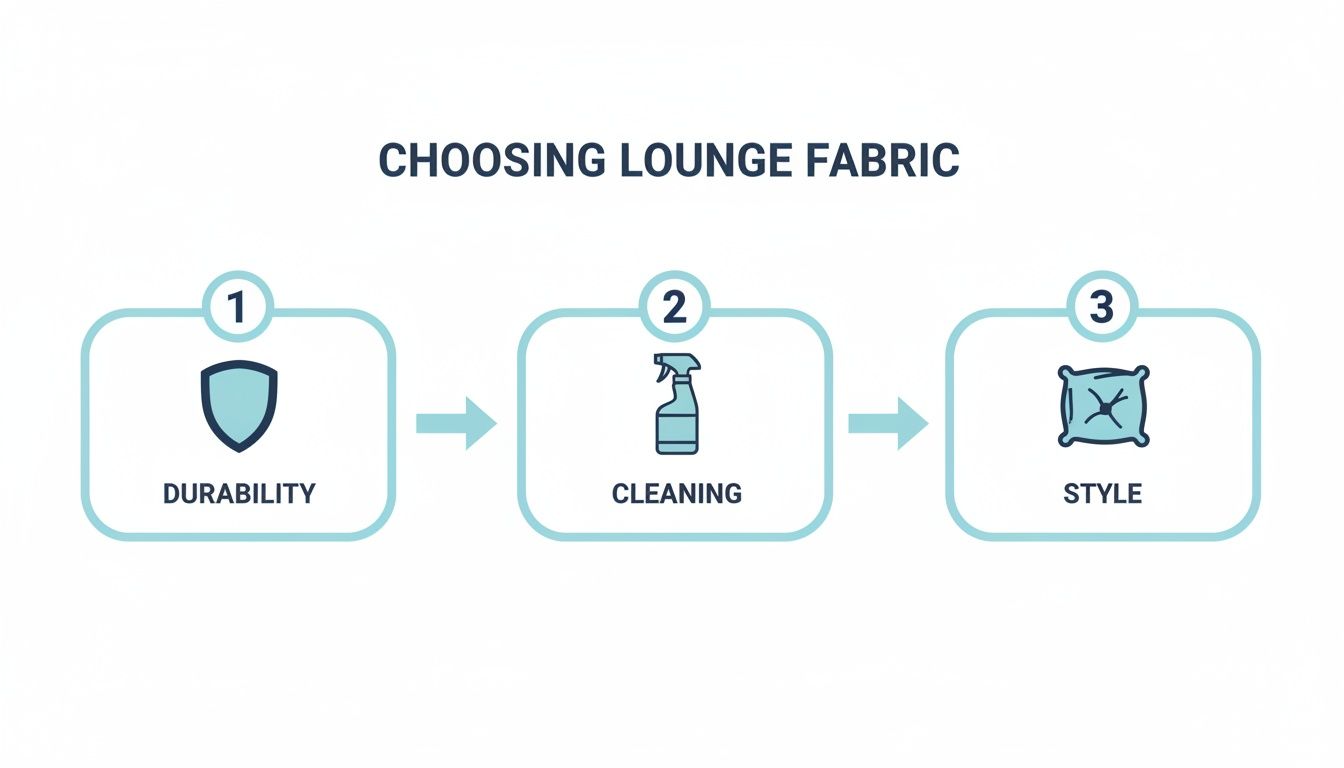
By measuring correctly and keeping these factors in mind, you'll make sure your slipcover not only fits like a glove but also suits your family's lifestyle down to the ground.
Styling Your Corner Lounge to Anchor the Room
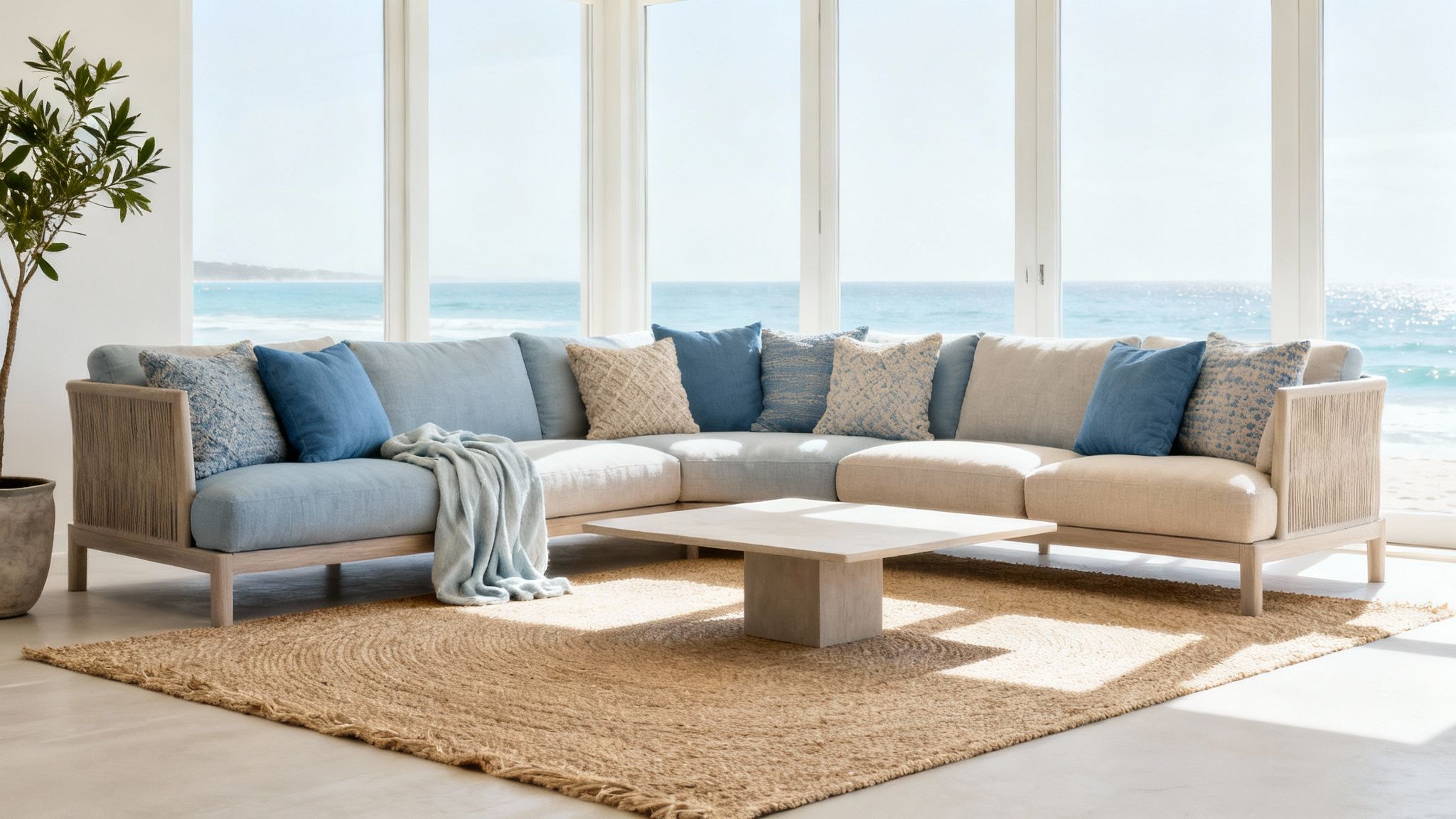
Your 7 seater corner lounge isn't just a place to sit; it’s the main character in your home's story, the anchor of your living room. The right styling choices are its supporting cast, transforming it from a simple piece of furniture into the heart of a beautifully curated space. Think of styling as the final, personality-packed layer that pulls everything together.
The goal is to create a look that feels both intentional and effortlessly inviting. This goes way beyond just plonking the sofa down and calling it a day. It's about a thoughtful mix of colours, textures, and accessories that work in harmony to show off your personal style and elevate your home's entire aesthetic.
Creating a Cohesive Look with Colour and Texture
The very first step is to nail down your colour palette. Are you dreaming of a calm, neutral sanctuary or a vibrant space buzzing with personality? A cohesive palette doesn't mean everything has to be a perfect match—in fact, the most interesting rooms layer different shades and tones of just a few key colours.
Texture is your secret weapon for adding depth and warmth. A smooth leather or simple fabric lounge can be completely transformed with the right accessories. Mixing different materials—like a chunky knit throw, velvet cushions, and a linen bolster—creates a rich, tactile experience that just begs you to get comfortable.
Think of styling your lounge like dressing for a special occasion. The sofa is your classic outfit, while the cushions, throws, and rug are the accessories that showcase your unique style and make the entire look feel complete and polished.
Let’s look at a couple of popular Australian interior themes for inspiration:
-
Coastal Retreat: Embrace that light and airy feel with a palette of whites, sandy beiges, and soft blues. A light-coloured lounge pairs beautifully with cushions in natural linen, textured cotton, and subtle striped patterns. Finish it off with a woven jute rug and a whitewashed timber coffee table for a breezy, beach-inspired look.
-
Modern Urban: For a chic, contemporary vibe, stick to a monochrome palette of greys, blacks, and whites, then punch it up with a single bold colour like mustard or deep green. Think clean lines and minimal fuss. Add cushions with geometric patterns, a sleek metal-and-glass coffee table, and a plush, low-pile rug to define the space.
The Art of Arranging Cushions and Throws
Cushions are easily the most affordable way to inject personality and comfort into your lounge. The real key to a professional look is variety, so don't be afraid to mix and match different sizes, shapes, and patterns to create a dynamic arrangement.
Start with your larger square cushions at the back, then layer smaller ones in front. A tried-and-true formula for a corner lounge is to place a trio of cushions in each corner—one large plain, one medium patterned, and one smaller textured cushion. This creates visual balance without looking too stiff or symmetrical.
A throw blanket is both functional and stylish. Draped casually over the corner or chaise section, it breaks up the large surface of the sofa and adds a touch of inviting softness. Choose a throw that complements your cushion colours and adds another delicious layer of texture. If you're hunting for more creative ideas, you can explore these 11 creative ways to style your sofa with covers and throws.
Anchoring Your Lounge with Rugs and Tables
The right area rug is absolutely crucial for grounding your 7 seater corner lounge and defining the living zone, especially in an open-plan home. A common mistake is choosing a rug that's too small. For a cohesive look, the rug should be large enough for at least the front legs of the entire lounge to rest on it comfortably. This visually connects all the furniture, making the area feel unified.
Your coffee table and side tables complete the functional setup.
- Coffee Table: It should be no more than 4 inches higher or lower than your sofa's seat height for easy access. To keep things in proportion, make sure it's at least half the length of the main sofa section.
- Side Tables: These should sit at or just below the height of the sofa's armrests, providing a convenient spot for a lamp or a drink.
By thoughtfully combining these elements, you can elevate your 7 seater corner lounge from a simple seating solution to a stunning focal point. To take your space even further, you can find more inspiration on how to revamp your family room with practical design tips.
Your 7 Seater Corner Lounge Questions Answered
Even after all the planning, it's totally normal to have a few last-minute questions before committing to a big piece of furniture like a 7 seater corner lounge. Think of this as your final checklist. We've gathered the most common queries we hear to give you clear, practical answers and help you feel 100% confident in your choice.
How Do I Clean and Maintain My Fabric Corner Lounge?
Keeping your fabric lounge looking fresh for years really comes down to a simple, regular routine. The best thing you can do is give it a quick vacuum once a week with an upholstery attachment. This lifts dust, pet hair, and those inevitable crumbs before they have a chance to work their way into the weave.
When a spill happens—and it will—the trick is to act fast. The golden rule is to blot, never rub, using a clean, dry cloth. Blotting soaks up the liquid, while rubbing can just push the stain deeper into the fibres and damage the fabric.
Before you reach for any cleaning solution, always find the manufacturer's care tag, which is usually tucked away under a cushion. It will have a cleaning code that tells you exactly what to do.
- Code 'W' means water-based cleaners are okay. A few drops of mild dish soap in water often works, but always test it on a hidden spot first.
- Code 'S' means you can only use a solvent-based, water-free cleaner.
- Code 'W/S' gives you the best of both worlds—you can use either type.
- Code 'X' means it's for professional cleaning only. Don't try cleaning this one yourself with any liquid.
Honestly, for total peace of mind in a busy home, a machine-washable slipcover is the ultimate solution. It takes all the stress and guesswork out of spills for good.
Can a 7 Seater Corner Lounge Work in a Smaller Room?
It might sound strange, but a large corner lounge can actually be a much smarter choice for a smaller room than a bunch of separate pieces. A single, well-placed sectional makes a space feel more cohesive and far less cluttered than a jumble of a two-seater, an armchair, and an ottoman.
The secret is all about smart placement and choosing the right design.
Push the lounge snugly into a corner against two walls. This simple move maximises your floor space, opens up the middle of the room, and creates a much better sense of flow. Also, keep an eye out for models with a lower back, slimmer arms, and visible legs. These details create an illusion of lightness, stopping the lounge from feeling too heavy or bulky.
Here’s another brilliant trick: choose a light colour for your lounge or slipcover. Soft greys, beiges, or pastels reflect more light, making the entire room feel bigger and airier than it really is.
What Is the Difference Between a Left and Right Hand Facing Chaise?
This is one of the most common things that trips people up, but it’s super simple once you know the rule. The orientation is always determined as if you are standing in front of the sofa and looking at it—not as if you're sitting on it.
- A Left-Hand Facing (LHF) chaise means that when you’re facing the sofa, the long chaise section is on your left side.
- A Right-Hand Facing (RHF) chaise means that when you’re facing the sofa, the long chaise section is on your right side.
Before you click "buy," stand in your living room and picture where the sofa will go. Figure out which wall the main part of the sofa will sit against and which way you want the chaise to stretch out. Getting this right is crucial to making sure your new lounge fits the layout perfectly and doesn't block a doorway or a major walkway. This one decision dictates the entire flow of your room.
Ready to protect your investment or give your current lounge a stunning new look? Explore the range of stylish, durable, and machine-washable slipcovers at The Sofa Cover Crafter.
Find the perfect cover for your 7 seater corner lounge today!