


First things first, let's get one common mix-up out of the way. Jacquard isn't actually a type of material or fibre. It’s a truly remarkable way of weaving a pattern directly into the very structure of the fabric.
Think of it this way: the design isn't just stamped or printed on top. Instead, it's intricately built, thread by thread, using a special loom. This means the pattern has a beautiful depth and texture you can feel, and because it’s part of the fabric itself, it will never, ever fade away.
The Enduring Appeal of Woven Patterns
Imagine trying to create a digital picture, but instead of using pixels on a screen, you’re using individual threads on a loom. That’s the easiest way to understand what jacquard fabric is all about. This technique, which started with the revolutionary Jacquard loom, allows for incredibly complex and durable designs that are literally built right into the textile.
It’s the reason a jacquard sofa cover feels so premium and substantial—the pattern has a tangible, textured quality that you just don't get with other methods.
This is a world away from printed fabrics, where ink or dye is simply applied to the surface. While printing is faster and often cheaper, that surface-level design can crack, peel, or fade with washing and everyday wear. A jacquard pattern, on the other hand, is in the fabric's DNA.
Why It Matters For Your Home
The real magic of this weaving process is how it combines stunning looks with serious durability. This is a huge plus for high-use items in Aussie homes, from the family sofa in a bustling living room to a favourite armchair in a sunny reading nook.
- Longevity: Because the pattern is woven in, it’s going to last as long as the fabric itself. No fading, no rubbing off.
- Texture: The raised patterns add a rich, tactile dimension that instantly elevates the look and feel of your furniture.
- Versatility: This weaving method can be used with almost any fibre, from soft, breathable cottons to hard-wearing polyesters.
The invention of the Jacquard loom was a massive turning point for textiles. It completely changed how intricate patterns were made, dramatically cutting the cost of complex woven fabrics and making them affordable for a much wider audience.
Today, that cost-efficiency still holds true. Jacquard fabric is only a little more expensive than similar woven textiles, with the price mostly reflecting how complex the pattern is. For homeowners and renters looking for an affordable way to refresh a living room, this makes jacquard an incredibly smart and valuable choice. You can read more about the history and impact of this fabric on sewport.com.
The Weaving Magic Behind Jacquard Fabric
To really get what makes jacquard fabric so special, we need to look past the finished product and dive into the fascinating way it's made. At its heart, all weaving is about interlocking two sets of threads: the lengthwise warp threads and the crosswise weft threads. On a basic loom, those warp threads are lifted in big, uniform groups to create simple patterns like a plain weave or a twill.
But the Jacquard loom is playing a whole different game. Its genius was the ability to control each individual warp thread independently. This unlocked a level of artistic freedom and pattern complexity that was completely impossible to achieve through weaving alone. It’s the difference between painting a wall with a wide roller and creating a detailed portrait with a fine-tipped brush.
The Original Coded System
Think of an old player piano. A roll of paper with holes punched in it tells the piano exactly which keys to play, creating a complex melody. The original Jacquard loom, invented way back in 1804 by Joseph Marie Jacquard, used a similar system with a series of punched cards. Each card corresponded to a single row of the design, telling the loom precisely which warp threads to lift.
This meant that for the first time, weavers could create incredibly detailed patterns without needing a highly skilled assistant there to manually lift thousands of threads.
The Jacquard loom is often considered a foundational step in the history of computing. Its use of punched cards to store and run a set of instructions—in this case, a fabric pattern—is a direct precursor to early computer programming.
Today, those physical cards have been swapped for digital computer files, but the fundamental principle is exactly the same. A computer now instructs the loom, allowing for even faster production and virtually limitless design possibilities.
This simplified process shows how a digital pattern gets translated into a finished jacquard fabric.
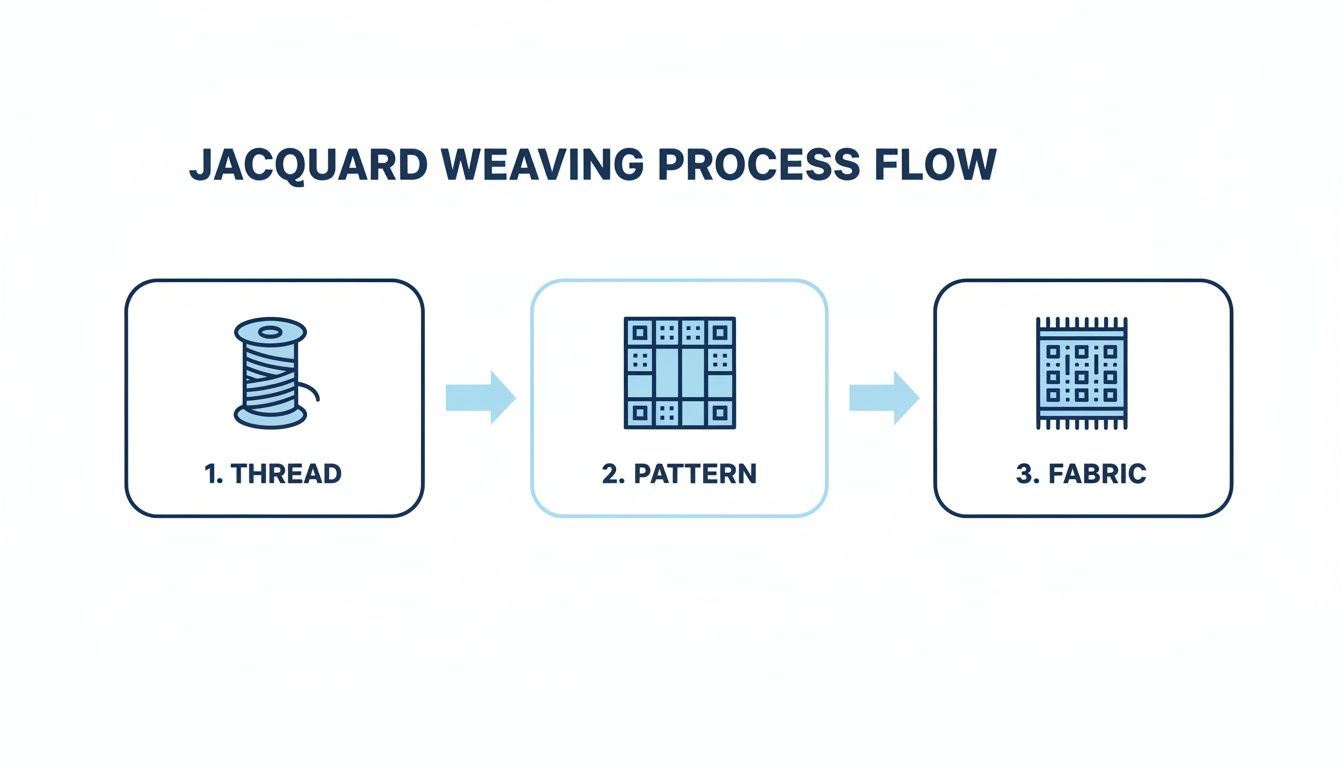
This digital control is what allows weavers to create everything from intricate florals to bold geometric patterns directly within the fabric's structure.
Why This Weaving Method Matters
This ability to control every single thread is what truly sets jacquard apart, making it an ideal choice for high-quality home textiles, especially sofa slipcovers.
- Unmatched Detail: It can produce patterns with a level of intricacy that simpler looms just can't replicate.
- Structural Integrity: The pattern isn't just an afterthought printed on top; it’s woven right into the fabric’s construction. This means it won't fade, peel, or rub off over time.
- Textural Depth: By lifting specific threads, the loom creates a raised, tactile pattern that adds richness and dimension to the final product. You can actually feel the design.
This clever weaving technique is why a jacquard slipcover can so effectively transform a piece of furniture, offering a sophisticated look combined with the durability needed for everyday life in a busy Australian home.
Jacquard Compared To Other Patterned Fabrics
Walking through a fabric shop or scrolling for sofa covers online can feel a bit overwhelming. You’re surrounded by beautiful patterns, but it’s not always obvious how they were created. Getting your head around the difference between a woven-in jacquard design and a surface-level printed pattern is crucial, because it has a massive impact on durability, texture, and whether you're making a smart long-term investment.
The real difference comes down to how the pattern becomes part of the fabric. With jacquard, the design is literally born during the weaving process, created by the clever interplay of thousands of threads. This is a world away from printed fabrics, where colour is simply applied to the surface of an already-made piece of cloth.
Think of it like this: jacquard is a mosaic made from coloured tiles, while a printed fabric is a painting on a canvas. One is built from the ground up, the other is an addition on top.
Woven-In vs Printed-On Designs
A printed pattern sits on the surface of the fabric. While it can be vibrant and full of detail, it’s also the first thing to show wear and tear. Over time, especially on high-traffic spots like sofa cushions, a printed design can crack, fade in the wash, or even start to peel away. The pattern’s lifespan is completely separate from the fabric itself.
On the other hand, a jacquard pattern is part of the fabric’s DNA. It’s not something that’s been added; it’s woven right into its very structure. This means the pattern will last as long as the fabric itself, which is exactly what you want for furniture that gets used every single day. You also get a rich, textured feel that printed fabrics just can’t replicate.
The real benefit of a jacquard weave is its structural integrity. The pattern doesn’t just sit on the surface; it is the surface. This inherent durability is why it’s a premier choice for upholstery and high-use items like sofa slipcovers.
Comparing Common Patterned Fabrics
To make the differences clearer, let’s see how jacquard stacks up against some of the other popular patterned fabrics you might come across when looking for a new style for your living room.
Woven vs Printed A Guide to Patterned Fabrics
This table compares jacquard with other common patterned fabrics to help you understand their key differences in construction, durability, and appearance.
| Fabric Type | Pattern Method | Texture | Durability | Best For |
|---|---|---|---|---|
| Jacquard | Woven directly into the fabric using a special loom | Textured, raised pattern with depth | Excellent. Pattern won't fade or rub off. | Durable sofa covers, upholstery, throws, and curtains. |
| Printed Fabric | Ink or dye applied to the fabric surface | Smooth and flat to the touch | Moderate. Can fade, crack, or peel with wear and washing. | Decorative cushions, lightweight curtains, and fashion items. |
| Damask | A type of reversible jacquard weave, often tone-on-tone | Subtle, flat pattern with a slight sheen | Very Good. Similar durability to other jacquards. | Formal tablecloths, drapery, and elegant upholstery. |
| Brocade | A non-reversible jacquard weave with a raised, embroidered look | Highly textured, often with metallic threads | Good. Can be prone to snagging due to raised threads. | Ornate upholstery, decorative pieces, and formal wear. |
Knowing these differences helps you make a much more informed choice. When it comes to something like a sofa cover that has to put up with kids, pets, and constant use in an Australian home, the built-in resilience of what is jacquard fabric makes it a clear winner. The woven-in pattern makes sure your investment looks fantastic for years, not just for a season.
Choosing The Right Jacquard For Your Home
The real beauty of jacquard fabric lies in its incredible versatility, and that all comes down to the different fibres used to weave it. Getting your head around these materials is the secret to picking the perfect jacquard for your home’s unique style and, just as importantly, your day-to-day life.
The choice of fibre has a massive say in the fabric’s final look, feel, and performance. From the soft, breathable touch of natural materials to the hard-wearing resilience of synthetics, each one brings its own personality to the finished product.
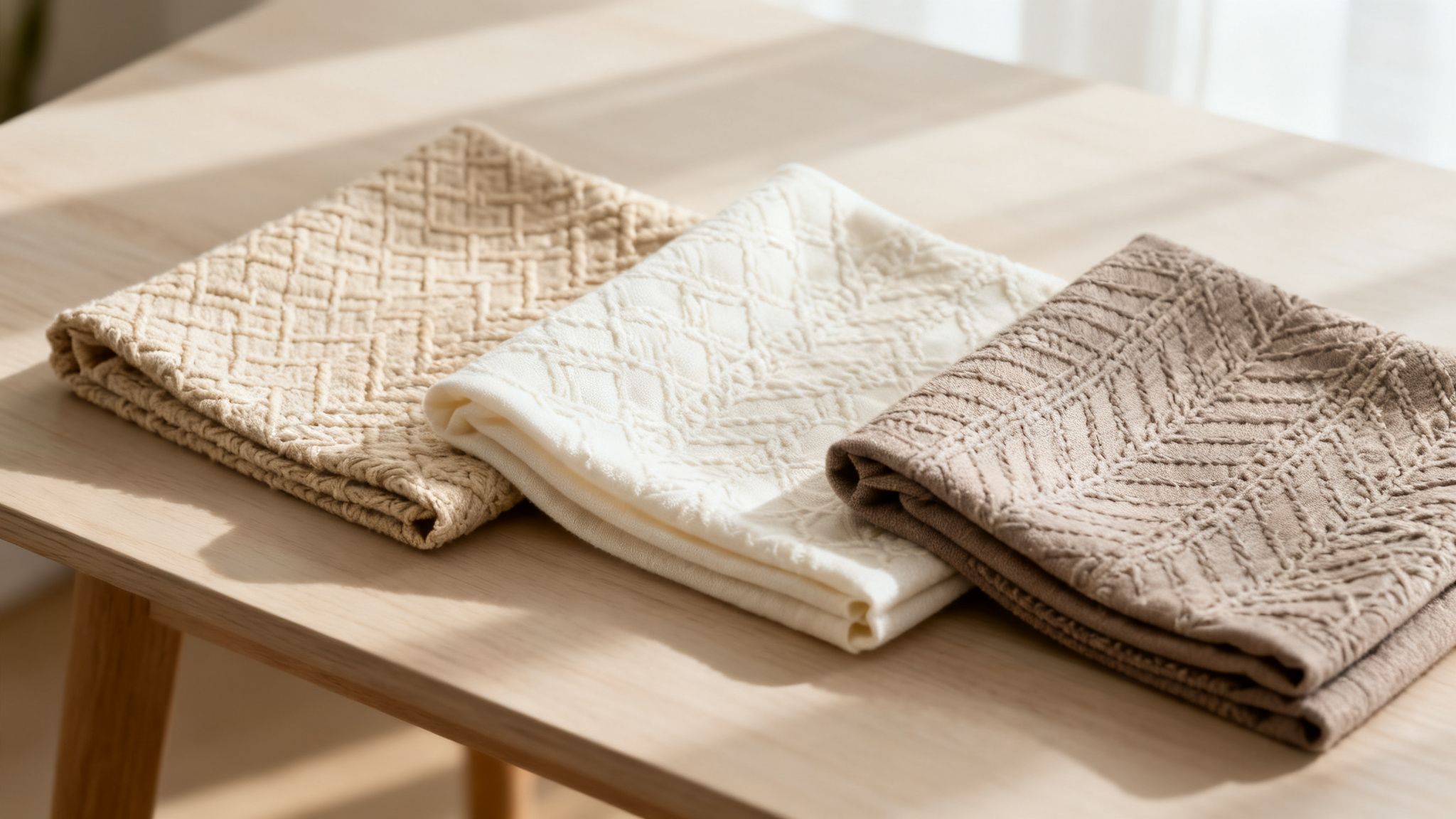
This is especially true for things like sofa covers, which need to strike that perfect balance between being comfortable enough to curl up on and tough enough to handle daily life.
Common Fibres in Jacquard Home Decor
Let’s break down the most common fibres you'll come across and what they bring to the table.
- Cotton Jacquard: Famous for being soft and breathable, cotton is a fantastic choice for the warm Australian climate. It feels comfortable against the skin and gives off a lovely natural, relaxed vibe.
- Polyester Jacquard: This is the real workhorse of home textiles. Polyester is exceptionally durable, holds its own against wrinkles and fading, and is a breeze to clean—making it the go-to for busy family rooms with kids and pets.
- Spandex Blends: Often mixed in with polyester, a touch of spandex is the magic ingredient for stretch-fit sofa covers. It provides that essential elasticity for a snug, smooth, and almost custom-like fit over your furniture. It's why our sofa cushion covers hug every corner so perfectly.
- Silk Jacquard: As the most luxurious option, silk offers a beautiful sheen and a smooth feel. It’s usually saved for more delicate, decorative items like cushions or formal curtains because of its higher cost and more demanding care needs.
This variety also has a global impact. The Asia-Pacific region’s dominance in textile manufacturing, accounting for 52.3% of global jacquard revenues, is great news for Australian consumers. For manufacturers like us, this proximity means more efficient supply chains and competitive sourcing of materials. You can discover more insights about this on reportsanddata.com.
Matching Fabric to Lifestyle
So, how do you choose? It's simple: start by thinking about your daily life. A house with active kids and a shedding dog will get the most out of a durable and washable polyester-spandex blend. The tightly woven structure of this jacquard fabric helps it stand up to claws and constant use.
For a sun-drenched reading nook or a more formal sitting room, a cotton-blend jacquard can offer a softer, more refined feel. The key is to align the fabric’s properties with the room’s function.
At the end of the day, understanding what your jacquard fabric is made from empowers you to choose a textile that not only looks stunning but also performs perfectly for your needs. It's how you ensure it remains a beautiful and practical part of your home for years to come.
Why Jacquard Is Perfect For Your Sofa Cover
So now we know how jacquard is made, let's connect the dots. It’s pretty clear why this unique fabric is such a brilliant choice for sofa slipcovers and throws, especially in a modern Australian home where style and practicality absolutely have to go hand in hand. The benefits aren't just theoretical; they solve the real, everyday challenges of a busy living room.
First and foremost is durability. Think about it: a printed pattern just sits on the surface of the fabric, vulnerable to fading, cracking, or rubbing off over time. A jacquard pattern, on the other hand, is literally woven into the structure of the material. It's part of the fabric's DNA, which means it will last as long as the cover does, standing up to countless movie nights, family gatherings, and trips through the washing machine without losing its charm.
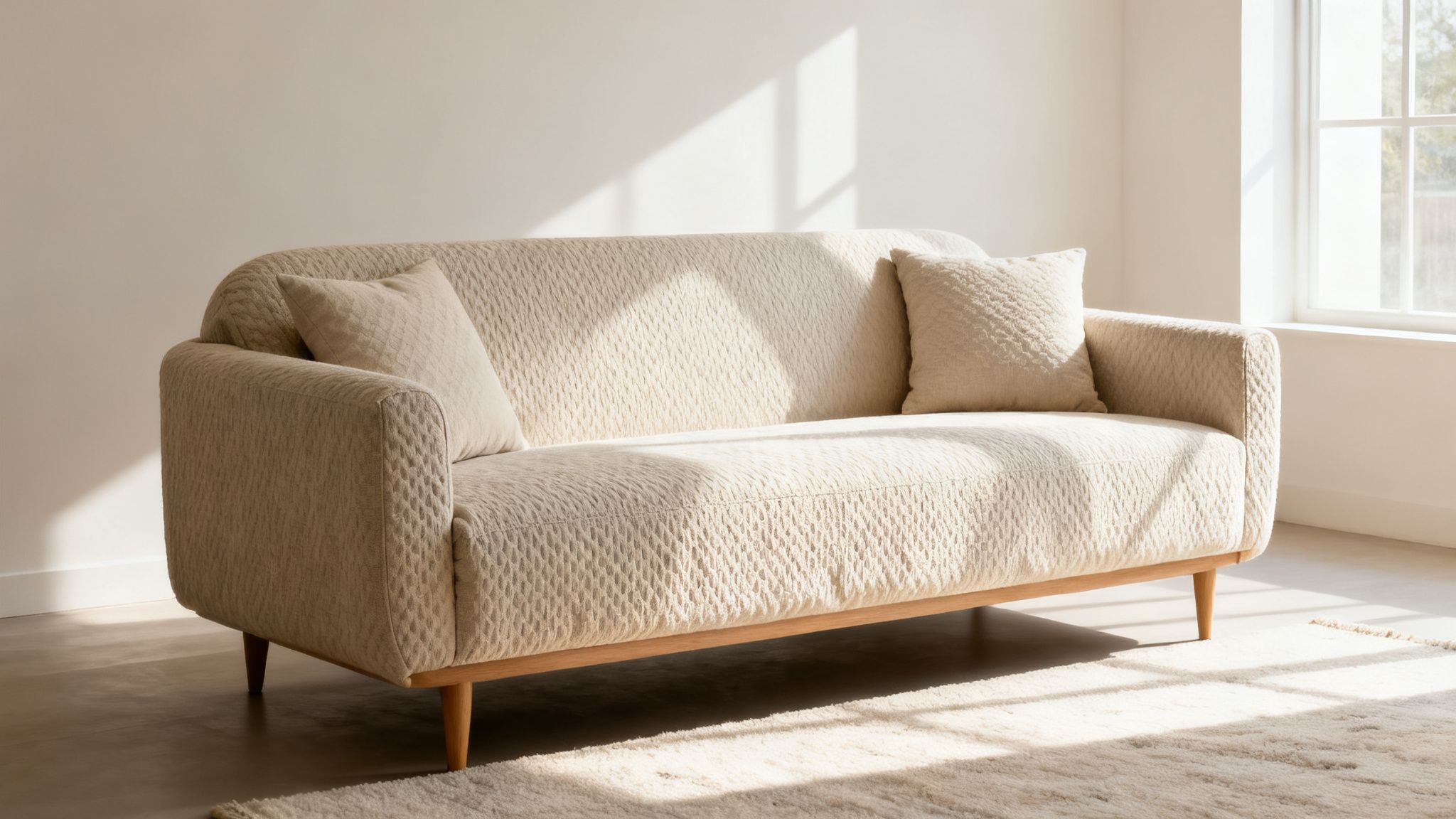
This built-in toughness is a total game-changer for high-traffic furniture.
Texture and Style Combined
The other massive advantage is texture. The weaving process naturally creates a rich, tactile feel that gives your furniture real depth and dimension. This isn't just about looking fancy; those subtle raised patterns are genius at hiding minor, everyday imperfections, from small spills to the general wear that comes with a well-loved sofa.
It's this combination of toughness and texture that makes jacquard such a smart and stylish solution for anyone wanting to protect their furniture or give their living space a refresh.
- For families with kids and pets: The tight weave is far more resistant to snags, and because most are easy-care polyester blends, messes are no big deal.
- For renters: It’s a high-impact, damage-free way to put your own stamp on a space while protecting the landlord's furniture.
- For style lovers: A jacquard slipcover is a quick and affordable way to completely transform the look of a room without splashing out on a new sofa.
It's clear that the demand for premium home textiles is on the rise. We're all investing more in our living spaces, looking for stylish and protective furnishings like sofa covers and throws that offer both beauty and practicality.
This trend is driving serious growth in the jacquard fabric market. Pet-friendly and even waterproof jacquard options are becoming more common, meeting the real-world needs of busy households. As Aussie consumers continue to prioritise their home environment, jacquard’s blend of good looks, resilience, and increasing affordability makes it a seriously attractive choice. You can learn more about these market trends and their findings from dataintelo.com.
The Perfect Fit For Your Furniture
Finally, let's talk about fit. Jacquard fabrics, especially those blended with a bit of spandex, offer an incredible stretch and recovery. This elasticity allows a slipcover to hug the contours of your couch, creating a smooth, almost-tailored look that feels far more premium than a simple loose throw. It’s the secret to getting that fresh, 'new sofa' look without the hefty price tag.
By choosing one of our adaptable and expandable jacquard couch covers, you’re not just getting a protective layer; you're making a smart investment in your home's style and longevity. It’s a practical, beautiful solution designed for the demands of modern Australian life.
How To Care For Your Jacquard Sofa Cover
So, you've fallen for the beautiful texture of a jacquard cover. Good choice! But now you're wondering how to keep it looking that good. Don't stress. One of the best things about modern jacquard fabrics, especially the polyester and spandex blends we see so often here in Australia, is that they're designed for real life.
With just a few simple tips, you can keep your new cover looking fresh and vibrant for years. Most are designed to be popped straight into the washing machine, making them a dream for busy households.
Simple Steps For Machine Washing
The golden rule is to always check the care label first, as that's your specific guide. That said, most polyester-blend jacquard covers follow a pretty similar routine that's easy to remember:
- Use Cold Water: Always, always wash your cover in cold water. Hot water is the enemy of elasticity and can damage the fibres, potentially leading to shrinkage.
- Select a Gentle Cycle: Choose the gentlest or delicate cycle on your machine. This minimises any stress on the fabric's intricate weave, helping it keep its shape and texture.
- Use a Mild Detergent: Steer clear of harsh chemicals or bleach. These can weaken the fabric over time and cause those beautiful colours to fade.
Once it's washed, drying is just as important. Never use a high-heat setting on your dryer—it's the fastest way to ruin the fabric's stretch and texture. The best approach is to air-dry the cover on the line, away from the harsh Aussie sun. If you need to use a machine, make sure you select a low-heat or tumble-dry low setting.
For those everyday marks and minor spills, you often don't need a full wash. Spot-treating is your best friend. A damp cloth with a tiny bit of mild soap will lift most stains beautifully, saving you time and effort.
By following these simple guidelines, you can make sure your jacquard sofa cover remains a durable, hassle-free, and stunning centrepiece in your living room. For a deeper dive into fabric care, check out our guide on how to clean your fabric sofa at home.
Still Have a Few Questions About Jacquard?
Even after diving into the details, you might still be wondering how this versatile fabric will fit into your own home. That’s perfectly normal. Let's tackle some of the most common questions that pop up, so you can feel completely confident about choosing jacquard.
Is Jacquard a Good Choice if I Have Pets?
Absolutely. In fact, it's one of the smarter choices you can make. The tightly woven structure of most jacquard fabrics, especially the durable polyester blends, makes them far more resistant to snags from claws compared to fabrics with a looser weave. This inherent toughness means they stand up beautifully to daily life with furry friends and are a breeze to machine wash to get rid of pet hair and dirt.
Does Jacquard Fabric Wrinkle Easily?
This really comes down to the fibres it’s made from. A jacquard woven from 100% cotton can definitely be prone to wrinkling, just like a cotton shirt. However, the vast majority of modern jacquard sofa covers are clever blends of polyester and spandex. These synthetic materials are brilliant at resisting wrinkles, keeping your sofa looking smooth and tidy with minimal fuss.
A common misconception is that all jacquard is thick and heavy like old-fashioned tapestries. In reality, modern jacquard looms can produce fabrics of almost any weight, from lightweight, breathable throws perfect for an Aussie summer to more structured and durable upholstery fabrics.
How Do You Stop Jacquard Fabric From Pilling?
Pilling—those annoying little balls of fibre that can form on fabric—is usually caused by friction from daily use. The best way to prevent it is by choosing a high-quality, tightly woven jacquard and giving it a little TLC.
- Wash Gently: Always use a cold, gentle cycle to minimise the agitation that can cause fibres to break and ball up.
- Air-Dry When Possible: Try to avoid the high heat of a tumble dryer, as this can damage the fibres and make them more likely to pill over time.
By choosing the right blend and caring for it properly, you can keep your jacquard looking smooth and beautiful for years to come.
Ready to experience the durable style of jacquard? Explore the stunning collection of stretch-fit, pet-friendly, and machine-washable sofa covers at The Sofa Cover Crafter and find the perfect look for your living room today at https://thesofacovercrafter.com.