


Ever wondered why some home projects feel like a breeze while others turn into a total headache? More often than not, the secret ingredient is standardisation. Think of standard window sizes like off-the-rack clothing—they’re designed to fit most homes, which makes them way more affordable and easier to find than a custom-made solution.
Decoding Australian Standard Window Sizes
This guide is here to demystify Australian standard window sizes, explaining how they make everything from a full-blown renovation to just choosing the perfect curtains so much simpler. Once you get your head around these common dimensions, you unlock a whole world of benefits that will save you time, money, and a lot of frustration. Instead of paying a premium for a bespoke window, you can pick from a huge range of products that are ready to go.
This approach offers some pretty brilliant advantages for any homeowner:
- It’s Cheaper: Manufacturers produce standard sizes in bulk, which seriously drops the cost for each window compared to a one-off custom job.
- It’s Faster: Off-the-shelf windows and coverings are usually in stock or have super short lead times, which can speed up your project timeline in a big way.
- You Get More Choice: When your windows are a standard size, you suddenly have access to a massive variety of blinds, curtains, and shutters from countless retailers.
- Replacements are a Doddle: If a window ever gets damaged, finding a standard-sized replacement is far easier and quicker than trying to get a custom one made all over again.
The Role of Australian Standards
Here in Australia, the window industry doesn’t just wing it with informal sizes. We have specific regulations in place to ensure every window meets strict quality and performance standards, which is absolutely crucial for our wild and varied climate. To really understand Australian standard window sizes, you need to know about the key regulations like the Building Code of Australia (BCA).
A key benchmark is the Australian Standard AS 2047, which sets out the minimum specs for window performance. This covers everything from structural integrity and water penetration resistance to air infiltration.
This standard makes sure that whether you’re installing a window in rainy Melbourne or sunny Perth, it’s built to do its job safely and efficiently. Sticking to these standards means your windows aren’t just a perfect fit for the hole in your wall—they’re fit for purpose, ready to protect your home for years to come.
How to Measure Your Windows Like a Pro
Getting your window measurements spot on is the bedrock of any successful window project. It doesn't matter if you're just buying new curtains or planning a full-on replacement; think of it like measuring for a perfectly tailored suit—every single millimetre counts if you want a flawless fit. This simple, step-by-step process will give you the confidence to measure with professional precision.
Before you start, grab a good quality steel tape measure, a pencil, and a notepad. It’s tempting to use whatever’s lying around, but try to avoid fabric or old, worn-out tape measures. They can stretch or sag over time, leading to dodgy readings that could derail your whole project before you’ve even begun.
The Three Essential Measurements
To make sure you’ve got all the info you need, you'll be measuring the width, height, and depth of your window opening. The golden rule here is to measure everything three times. It might sound a bit over the top, but it’s the best way to account for any slight variations in the window frame, which are more common than you'd think.
- Measure the Width: Take three horizontal measurements of the opening—one across the top, one in the middle, and one at the bottom. Jot down the smallest of these three numbers. This ensures that whatever you're fitting will slide in perfectly, even if the frame isn't perfectly square.
- Measure the Height: Next, do the same thing vertically. Take three measurements—one on the left, one down the centre, and one on the right. Just like you did with the width, you’ll want to record the smallest of these three figures.
- Measure the Depth: Finally, measure the depth of the window jamb, from the inside edge of your wall to the outside edge before the glass. This is a crucial measurement, especially if you’re planning to install inside-mounted blinds or shutters, as it tells you if there’s enough room for all the hardware.
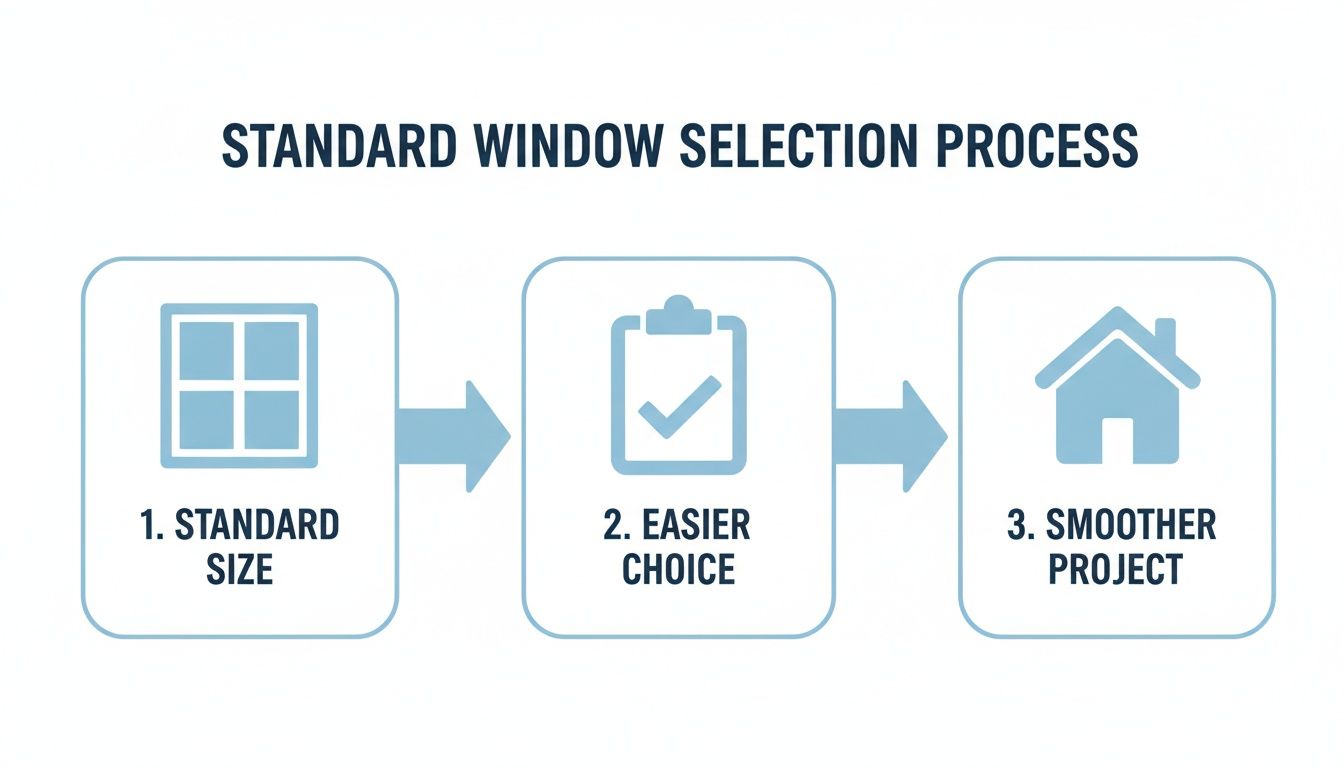
This process shows how getting your measurements right from the start leads to an easier and smoother home improvement project. By following these steps, you can confidently choose standard products that fit perfectly, simplifying everything from start to finish.
Rough Opening vs Frame-to-Frame
When you're measuring, it’s really helpful to know what two key terms mean. The rough opening refers to the structural gap in the wall where the whole window unit sits. In contrast, frame-to-frame measurements are taken from the inside edges of the visible window frame itself—the bit you actually see.
Always double-check which measurement your supplier needs. For a full replacement window, they’ll almost certainly want the rough opening dimensions. But for window coverings like blinds or curtains, you'll usually just need the frame-to-frame measurements.
Once you’ve got the basics down, you can apply these skills to more specific jobs. For example, a lot of homeowners find it useful to learn how to measure for blinds for a perfect custom fit, which just builds on these core principles. If you're tackling any other DIY installations, our detailed guides are here to give you some extra support. You can explore The Sofa Cover Crafter's complete https://thesofacovercrafter.com/pages/installation-guide for more practical tips on home projects.
Exploring Popular Window Styles and Their Standard Dimensions
Australian homes are a fantastic mix of architectural styles, and the windows often play a leading role in a property's character. Each window style doesn't just offer a unique look; it also comes with its own range of standard dimensions designed to work in different spaces and for different jobs.
Getting your head around these popular styles is the first step to choosing the perfect fit for your home. Let's look at some of the most common types you'll find across the country, from big sliding doors that nail that iconic indoor-outdoor flow to classic double-hung windows that add a touch of timeless charm.
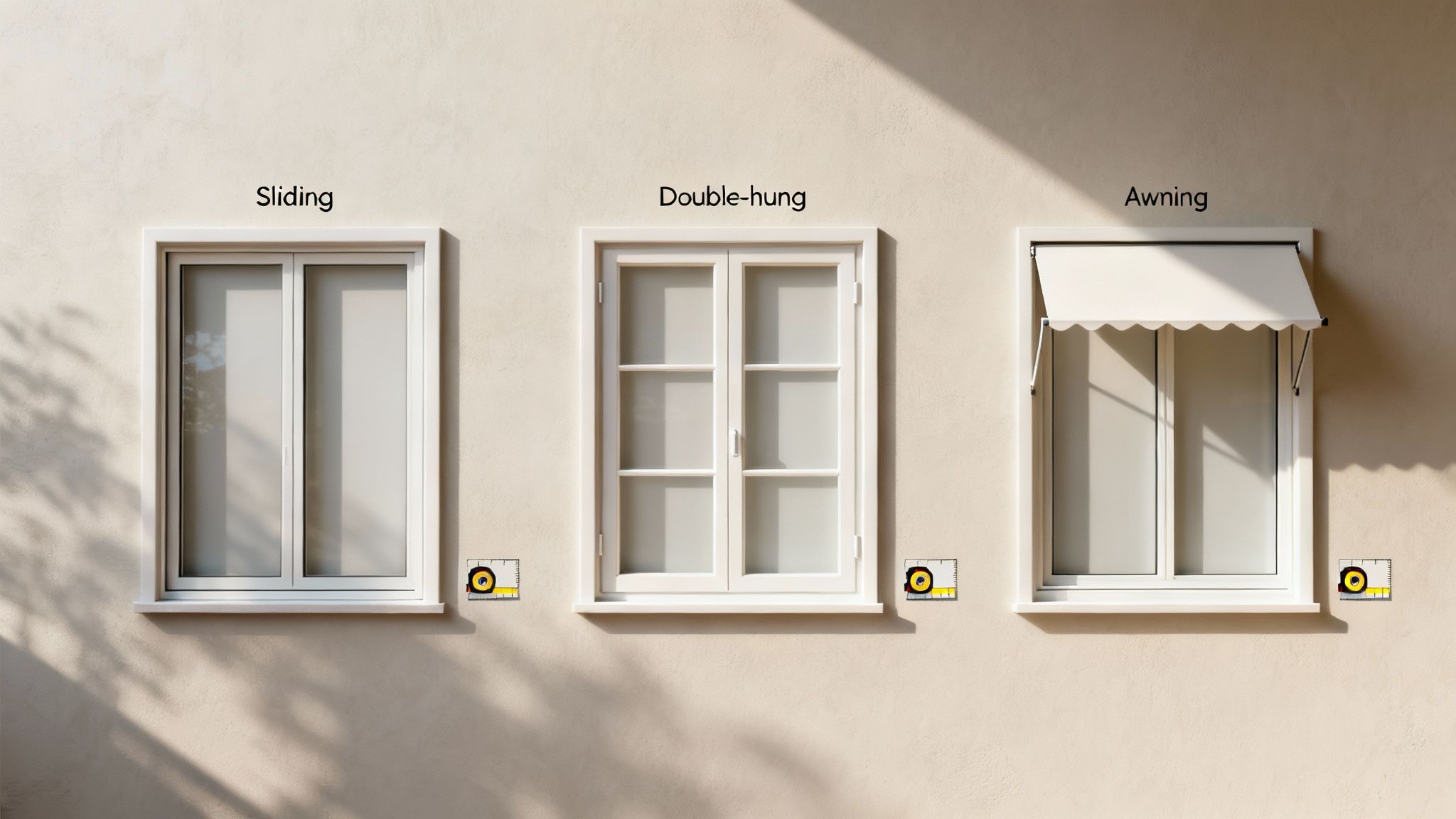
Sliding Windows The Aussie Favourite
Sliding windows are everywhere in modern Australian homes, and for good reason. They’re dead simple to operate, take up minimal space, and are perfect for framing a view of the backyard or patio. Their horizontal design makes them ideal for wider openings, especially in living rooms and kitchens where you want to let in as much natural light and air as possible.
Standard sliding windows absolutely dominate the market here, typically ranging from 600×610 mm to a huge 2100×2650 mm. This makes them the go-to for homes craving that perfect blend of light and breeze. This standardisation is largely driven by Australian Standard AS 2047, which makes sure windows can handle our unique coastal climates. You can find more information about Australian window regulations on Prestige Plus.
Double-Hung Windows Classic and Versatile
Double-hung windows feature two separate sashes that slide up and down, which gives you brilliant control over ventilation. You can open the top, the bottom, or both at the same time to create a natural cycle of air, drawing cool air in through the bottom and pushing warm air out the top.
This classic style looks right at home in a huge range of properties, from traditional cottages to more contemporary builds.
- Standard Widths: Typically range from 610 mm to 1200 mm.
- Standard Heights: Generally fall between 915 mm and 2100 mm.
Their timeless appeal and seriously practical design make them a reliable choice for bedrooms and street-facing rooms where both looks and airflow really matter.
Awning Windows Smart Ventilation
Awning windows are hinged at the top and open outwards from the bottom. It’s a clever design that lets you keep them open for fresh air even when it’s raining, as the sash acts like a little awning to keep the water out.
Because of this unique feature, awning windows are a brilliant choice for bathrooms and kitchens—areas where consistent ventilation is key to reducing humidity and odours without worrying about the weather. They are often placed higher on a wall to maintain privacy while still letting in light.
The Enduring Appeal of Double-Hung Windows
Double-hung windows are a true classic, and for good reason. They blend timeless charm with clever, modern functionality, making them a beloved feature in homes all across Australia. You’ll find them everywhere, from heritage cottages to brand-new contemporary builds, because their simple, elegant design just works.
What really sets them apart is their unique construction, which features two vertically sliding sashes. This means you can open the window from the top, the bottom, or even both at once. It’s this design that gives you fantastic control over air circulation, letting you create a gentle, cooling breeze without a harsh draft.
A Perfect Blend of Form and Function
Being able to control airflow so precisely is a massive advantage, especially in family homes. By opening just the top sash, you can let warm, stale air escape while keeping the lower part of the window safely closed. It’s a great safety feature for children's bedrooms or play areas. This natural convection is brilliant for keeping living spaces feeling fresh and pleasant all year round.
But beyond their practical perks, the look of double-hung windows is undeniable. Their vertical proportions and traditional style add a real sense of character and sophistication to a home's facade. They’re incredibly versatile, complementing a huge range of architectural styles and adding significant kerb appeal.
Double-hung windows effortlessly bridge the gap between classic style and modern living. Their design not only enhances a home's appearance but also improves its comfort and ventilation, making them a practical and beautiful choice for any room.
As a staple in Australian homes, double-hung windows come in a wide variety of standard sizes. These typically range from a compact 944 x 610 mm for a small bathroom, all the way up to a grand 2100 x 2650 mm for an expansive living room, showcasing just how adaptable they are.
In fact, according to Doors and Windows Brisbane, the popular 1200 x 1500 mm size was installed in roughly 35% of new homes built between 2000 and 2020. You can discover more insights about Australian window standards to see how these common sizes line up with national building regulations.
Choosing a standard size doesn't just make installation smoother; it also simplifies the process of finding ready-made curtains and blinds, letting you complete your room's look with ease. It’s this blend of style, practicality, and standardisation that ensures the double-hung window will remain a favourite for generations to come.
Why Awning Windows Are a Smart and Practical Choice
Awning windows are the true unsung heroes of home ventilation, perfectly suited to Australia’s incredibly varied climate. Unlike other styles that slide or swing open, they’re hinged at the top and push outwards from the bottom. This creates a clever little ‘awning’ that lets fresh air in while keeping light rain out.
It's this simple but brilliant design that makes them so incredibly practical.
This unique feature makes them an ideal choice for rooms where constant airflow is essential, like kitchens and bathrooms. You can easily vent steam and cooking odours without having to worry about a sudden downpour soaking your floorboards. It’s a simple function that contributes to a much healthier home by cutting down humidity and getting rid of that stuffy feeling.
Maximising Comfort, Rain or Shine
It’s not just for the wet areas, though. Awning windows are becoming a really popular choice for main living areas and bedrooms, too. Their ability to provide weather-proof ventilation means you can enjoy a cool breeze and the sound of rain at the same time—something you just can't do with a standard sliding window.
They also offer an extra layer of security. Because they only open a crack from the bottom, they’re incredibly difficult to open fully from the outside, which gives a lot of homeowners real peace of mind. Their top-hinged design makes them a smart addition for anyone looking to get the most comfort out of their home.
Awning windows are more than just a functional choice; they are a lifestyle upgrade. They provide consistent, gentle airflow that improves indoor air quality and enhances the overall comfort of your home, no matter what the weather is doing outside.
In Australia, standard sizes for awning windows typically range from 600 x 610 mm all the way up to 2100 x 2650 mm, making them incredibly adaptable for different rooms and walls. They are particularly prized for that rain-proof ventilation in wetter coastal regions.
For busy family homes where kids and pets can add to the mess, these top-hinged wonders let fresh air in while blocking up to 90% of rain, protecting your interior furnishings like sofas and rugs. To get a better sense of how sizes work across the country, this guide to window sizes in Australia from Perth Window Replacement is a great resource. This makes them a perfect match for any household looking to keep their living spaces fresh and protected.
One of the absolute best things about having standard window sizes is the incredible world of affordable, ready-made coverings that opens up to you. It completely simplifies that final decorating step, letting you find blinds, curtains, or shutters that fit perfectly right off the shelf, without the custom price tag.
Knowing your window dimensions makes the whole shopping process a breeze. Instead of waiting weeks for a special order, you can walk into a store or browse online and find exactly what you need, right then and there. It’s a huge win for anyone looking for a quick and cost-effective home refresh.
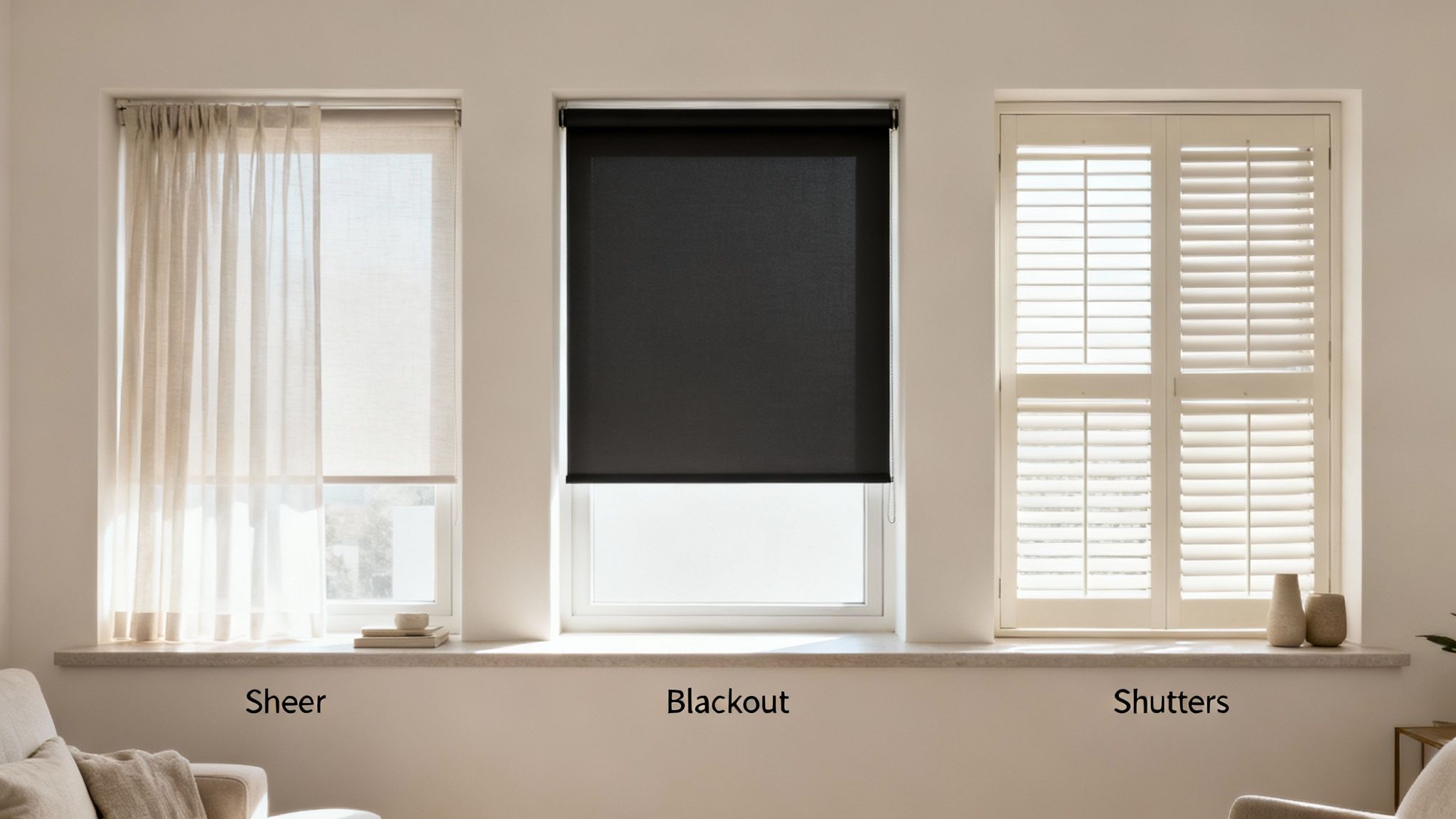
Matching Coverings to Your Needs
The right window treatment does so much more than just look good; it controls light, gives you privacy, and can even help with insulation. The trick is to think about what each room actually needs. A bedroom, for instance, will really benefit from blackout blinds for a better night's sleep, while a living room might feel amazing with sheer curtains that create a bright, airy vibe.
Here are a few of the most popular options:
- Blinds (Roller, Venetian): Brilliant for precise light control and privacy. They offer a clean, minimalist look that’s a perfect match for modern Aussie homes.
- Curtains: The perfect choice for adding softness, colour, and texture. Layering a sheer curtain with a heavier blockout drape gives you total flexibility for both light and privacy.
- Shutters (Plantation): A timeless and seriously durable option. They add real architectural character and give you amazing control over light and airflow.
Choosing a window covering is all about balancing how it looks with how it works. A standard window size gives you the freedom to choose from countless styles without being held back by availability or budget, ensuring you find the perfect fit for your home.
With so many choices at your fingertips, picking the right one can feel a bit overwhelming. We've put together a quick comparison to help you weigh up the pros and cons of the most common options for standard windows.
Comparing Window Covering Options for Standard Windows
| Covering Type | Pros | Cons | Best For |
|---|---|---|---|
| Roller Blinds | Sleek, modern, and very affordable. Huge range of colours and fabrics available. | Can offer limited light filtering options (either open or closed). | Kitchens, bathrooms, and minimalist living spaces where a clean look is key. |
| Venetian Blinds | Excellent, precise control over light and privacy by tilting the slats. | Can be trickier to clean and may collect dust. | Home offices, studies, and rooms where you need to reduce glare without losing all light. |
| Curtains | Adds softness, warmth, and texture. Great for insulation and sound dampening. | Can look bulky in small rooms; fabric choices can be overwhelming. | Bedrooms and living rooms, especially for creating a cosy, layered look. |
| Plantation Shutters | Extremely durable, adds value to the home, excellent light and airflow control. | Higher initial cost compared to other options; permanent installation. | Any room where you want a timeless, architectural feature and brilliant functionality. |
This table should give you a solid starting point. By thinking about both the style you love and the practical needs of each room, you’ll be able to confidently choose a covering that you’ll be happy with for years to come.
Creating a Cohesive Look
With such a massive range of ready-made options, it's easy to create a polished and unified style throughout your home. You could stick to a really consistent look, like using the same classic white plantation shutters in every room, or you could mix and match complementary colours and fabrics.
For example, you might pick a simple, neutral roller blind for the kitchen, and then carry that same colour into a patterned curtain for the dining area next to it. This simple strategy helps tie different spaces together beautifully. Using standard sizes means you can easily find matching sets from the same product line, making sure your home feels thoughtfully designed from one room to the next.
Frequently Asked Questions About Window Sizes
Diving into the world of window replacements and coverings can throw up a lot of questions, especially when you're trying to stick to standard sizes to keep costs down. Below, we’ve tackled some of the most common queries we hear from Aussie homeowners, giving you clear answers to get your project moving.
Even with a detailed guide, sometimes a specific situation can leave you scratching your head. This section is here to sort out those tricky "what if" scenarios.
Dealing with Non-Standard Windows
What should I do if my windows are not a standard size?
Discovering your windows are a non-standard size can feel like a spanner in the works, but it's an incredibly common issue, especially in older homes or custom builds. If your measurements don't line up with the common dimensions, you'll most likely need to look at custom-made windows or window coverings.
While this path is usually a bit pricier, it does guarantee a perfect, seamless fit. Your first step should always be to double-check your measurements—sometimes a simple slip of the tape is the real culprit. If they genuinely are an odd size, the next move is to get in touch with a local window specialist or a custom blind provider for a quote to explore your options.
Can I replace an old window with a new standard size?
Yes, you absolutely can, and it's a really smart move during renovations. This process usually involves adjusting the rough opening—that's the structural gap in the wall where the window sits—to fit the new standard-sized window perfectly.
It does require a bit of extra construction work, but choosing a standard size can be far more cost-effective in the long run. It saves you from ordering an expensive custom replacement just to fit an old, non-standard hole, and it opens up a much wider and more affordable range of choices for window coverings down the track.
Resizing an opening to fit a standard window is a strategic renovation move. It might add a little to your upfront labour costs, but it pays you back for years by giving you access to less expensive, off-the-shelf products.
Understanding Regional and Rental Rules
Are window size standards the same in all Australian states?
That's a great question. While the national benchmark, Australian Standard AS 2047, gives us a consistent framework for window performance and safety right across the country, you will find some minor variations.
Specific building codes and the most popular standard window sizes can differ slightly from one state to another, often influenced by things like regional climate zones and local building habits. However, the common sizes we've walked through in this guide are widely used and available nationwide, so they're a reliable starting point for any project, no matter where you are in Australia. For more detailed answers to your home improvement questions, you can find a wealth of information by exploring The Sofa Cover Crafter's full FAQ page.
Ready to give your living space a fresh, new look without the hassle of replacing furniture? The Sofa Cover Crafter offers a stunning range of stylish, protective sofa covers and cosy throw blankets designed to transform your home instantly. Check out our collection at https://thesofacovercrafter.com and discover how easy an affordable refresh can be.